Get AI Briefings, Transcripts & Alerts on Local & National Government Meetings — Forever.
Laredo utility staff outline $57 million in water projects, seek state and federal funds
Loading...
Summary
Water Utilities staff briefed the Laredo Economic Development Committee on April 20 about ongoing transmission mains, storage tanks and treatment upgrades, listing costs, schedules and funding sources including ARPA, an Army Corps grant and loan applications to the Texas Water Development Board.
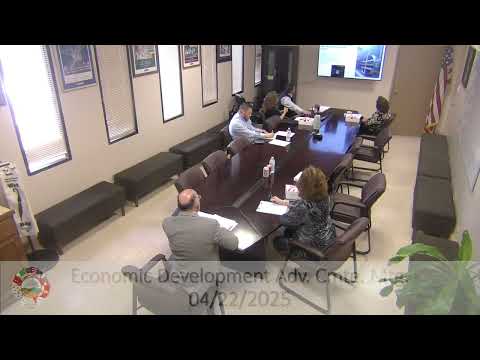
City of Laredo Water Utilities staff gave the Laredo Economic Development Committee an update April 20 on multiple ongoing and planned water system projects, detailing costs, estimated completion dates and funding sources.
The presentation covered several large pipeline and treatment efforts. Angie Cather, a Water Utilities Department representative, listed a 24-inch transmission main (described in the presentation as a $5,700,000 project and “estimated… to be done in June”), a 36-inch transmission main project described at $23,000,000, a transmission segment listed at $9,700,000 that is 27% complete and scheduled for October 2025, and the Lyon South Water Storage Tank ($9,200,000) which Cather said “is gonna be completed next month.”
Cather said some projects are funded wholly or in part with American Rescue Plan Act (ARPA) money: the Jefferson Water Treatment Plant west high service pump station ($11,600,000) was described as “funded 100% by ARPA,” and chlorine-dioxide improvements were described as “partially funded by ARPA and partially funded by the utilities” with an estimated cost of $5,200,000. She also summarized an ongoing meter-replacement initiative and a $57,000,000 tally of upcoming projects the department expects to pursue.
On outside funding, Cather said the city expects $20,000,000 from the U.S. Army Corps of Engineers toward a $26,700,000 waterline replacement package that would require a $6,700,000 local match. She said the department has submitted multiple project information forms to the Texas Water Development Board, including a $37,200,000 loan application for automatic meter replacement and a $26,800,000 application to build a 1,000,000-gallon booster station and a 1,000,000-gallon elevated storage tank in South Laredo. Cather also said the department submitted smaller applications to address emerging contaminants and planning and testing related to PFOS and similar compounds.
Committee members pressed procedural and timing questions. Myra (Mayra) Hernandez asked whether the bond sale proceeds are already allocated and whether the line-rehab dollars include personnel costs; Cather replied that the bond proceeds were allocated in 2024, that the $10,000,000 line-rehab account is a contingency for water breaks and general replacement (not tied to a single street), and that the loan and grant requests are strictly for construction — “All of these projects are always 100% funded for construction only,” she said.
Cather said construction work is outsourced and that the usual process is to apply for funds, award bids to contractors, and manage projects through completion. She confirmed that the department uses enterprise funding (rate revenue and project loans/grants) separate from the general fund and said the utilities are conducting a water/sewer rate study to assess future revenue capacity.
Next steps listed were pending responses from the Texas Water Development Board on the submitted forms, continued pursuit of Army Corps funding, and advancing the meter-replacement and booster-tank projects into procurement if loans/grants are awarded.
Contact: Angie Cather, Water Utilities Department (presented); committee staff recorded questions and follow-ups for future agendas.