Get Full Government Meeting Transcripts, Videos, & Alerts Forever!
Get email alerts on the Food Access topic
No spam. Unsubscribe anytime.
Garden groups and city officials push local solutions after food truck suspends service
Summary
Community gardeners, pantry volunteers and the city discussed ways to stabilize food access after a regional food-distribution truck stopped visiting New Carlisle; garden groups described education and on-site processing as part of the response.
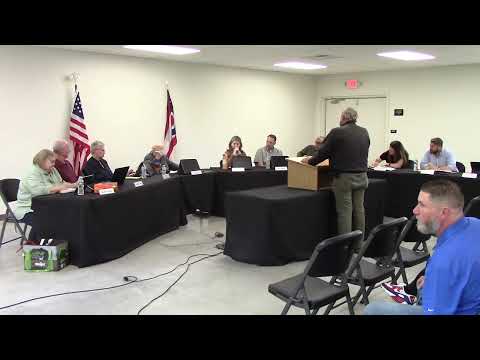
At a New Carlisle City Council meeting, city staff and local garden leaders described steps to mitigate a recent suspension of a regional food-distribution truck and to expand locally produced food distribution and education.
Speakers said a food truck run by a regional distributor stopped serving New Carlisle; community gardeners and pantry volunteers described expanded local activity — including market sales, a summer kitchen for group processing, and educational classes — intended to replace some lost capacity. "I call it 'harvest dilemma,'" Jefferson Street Oasis manager Terry Frederick said, describing the difficulty gardeners face getting fresh produce harvested and processed quickly enough for pantry distribution.
The meeting included multiple garden leaders and volunteers who urged the council to support local solutions. John Kraybacher, director of the New Carlisle Community Garden, said the garden recently received a conditional-use permit that will allow it to sell produce on-site: "So we are allowed now to sell at the garden," he said. Jefferson Street Oasis representatives described a wide program of public education and an on-site summer kitchen intended to help gardeners preserve produce for pantries and households. Pat Krebacher, who works with local gardens, said the groups emphasize training and longer-term cultural change: "Food is medicine," Krebacher said, summarizing the health justification for food-education efforts.
City Manager Donnie Hall told council the administration intends to continue the conversation in a dedicated work session: "I guess I'll earmark it for a potential upcoming work session," Hall said, and added that the administration would identify key local partners for further planning.
Discussion focused on practical, local responses rather than new contracted services. Garden leaders described programs that already exist or are starting: Jefferson Street Oasis said it runs roughly 40 food-education programs a year and has about 141 active gardeners; it also has a summer kitchen that can be used for group canning and freezing to extend shelf life. Speakers noted that produce from community gardens often uses varieties chosen for flavor rather than long storage life, which reduces shelf life compared with commercially grown produce and increases the need for timely processing and local distribution.
Council members and staff discussed next steps including coordinating with the local pantry, exploring delivery or box programs for homebound residents, and holding a focused work session to map resources and responsibilities. No formal ordinance or funding action was taken at the meeting on this subject; city staff and community organizers left with a plan to continue planning and to return with more concrete proposals.
Ending: Council members thanked the volunteers and garden leaders for their presentations and said they would follow up in the planned work session to assess needs and potential city support.