Get email alerts on the Post Conviction Dna topic
No spam. Unsubscribe anytime.
Tennessee appellate panel hears argument in Walton bid for additional post‑conviction DNA testing
Summary
A three‑judge panel in Knoxville heard oral argument in Dwight Randall Walton v. State of Tennessee over a request for additional DNA testing of a degraded sample that defense counsel says could exclude the victim as the minor contributor and undermine the conviction.
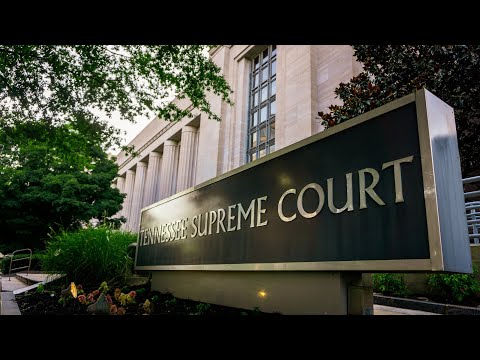
A three‑judge panel of the Tennessee Court of Criminal Appeals heard oral argument in Knoxville on a post‑conviction petition by Dwight Randall Walton seeking additional DNA testing on evidence from his 2014 trial.
Defense attorney McMurray told the court that the defense seeks testing under the Post Conviction DNA Analysis Act and argued the advanced testing could exclude the victim as the source of a secondary DNA profile found on the couch cushion at issue. “What we're asking for under the Post Conviction DNA Analysis Act, we're asking for further testing of that DNA evidence,” McMurray said.
The case matters because new testing protocols and expanded marker sets can change statistical weight assigned to degraded samples, potentially altering whether DNA evidence bolstered witness testimony at trial. The panel questioned counsel about standards for relief under the statute and the proper standard of review for the post‑conviction court's denial.
At trial in April 2014, the state's DNA analyst, Agent Proctor of the Tennessee Bureau of Investigation, testified that sperm cells found on the rightmost couch cushion matched the defendant's DNA; that match is not contested on appeal. The state also presented evidence of the victim's testimony and a third‑party witness who said the defendant admitted the conduct. The disputed issue on appeal concerns a second, minor contributor sample on the same cushion.
McMurray told the panel that only two loci of the minor contributor matched the victim under the original testing and that the TBI protocol then used a 16‑locus panel. He said defense expert Catherine Cross testified at the post‑conviction hearing that modern testing, which can examine 26 or 28 loci, could identify additional markers and possibly exclude the victim as the minor contributor. McMurray argued that testing additional loci on other cushions from the same couch could show the sample was touch DNA distributed throughout the couch rather than a saliva sample specific to the victim. “If we find more markers that this victim does not have, that means it was not her DNA profile. It was not hers,” McMurray said.
Johnny Serresano, counsel for the State, told the panel that even under modern standards the minor contributor would likely remain inconclusive and that the victim's testimony and a confession recounted by a friend provide independent, corroborating evidence. Serresano noted the post‑conviction court found the petitioner and the defense expert not credible and emphasized the degraded condition of the samples at trial: only two of the tested loci yielded usable results. He argued additional testing had not been shown to be capable of producing a meaningful, outcome‑changing result. “I don't think that, even if the most exculpatory result, were to happen ... I don't think that would change the outcome of anything,” Serresano said.
The parties disputed statistics attributed to the two usable loci: Serresano reported the TBI concluded a 1‑in‑9 chance that a random person would match those loci, while Cross testified to a 1‑in‑3 figure for the same markers. The defense also emphasized that additional loci remained untested and that testing additional portions of the couch cushions, which are reportedly still in the state's possession, could clarify whether the signal reflected touch DNA present throughout the furniture.
The panel asked procedural and factual questions about when testing standards changed, the degree of degradation in the samples, and the applicable appellate standard of review. The court queried whether review of the post‑conviction court's denial is for abuse of discretion; counsel for Walton agreed the standard is abuse of discretion and pointed to precedent cited in the briefing. The state and defense also discussed the ineffective‑assistance‑of‑counsel claim lodged at post‑conviction for not retaining a DNA expert at trial; the post‑conviction court had credited trial counsel's testimony and denied relief on that point.
After argument, the panel said it would take the case under advisement.
AI generated
The text on this page is AI generated. Summaries, highlights, analysis, and video transcripts are all produced from the original source material.
AI can make mistakes, so if you spot one, and we will fix it for everyone.
Note: the source content is unaltered by us. Any content source we link to, be it a video, an audio recording, or a document, is presented exactly as its publisher released it. That publisher is usually a government body, sometimes an individual official or another organisation.