Get Full Government Meeting Transcripts, Videos, & Alerts Forever!
Get email alerts on the Behavioral Health Crisis Response topic
No spam. Unsubscribe anytime.
Council members say underused crisis facility and DCR staffing hinder behavioral health responses
Summary
Councilmembers on April 21 discussed reports that a new UW-linked behavioral health facility is underutilized and that shortages or allocation of designated crisis responders (DCRs) are a barrier to getting people into care. Members asked that the issue be raised at the Board of Health and with county partners.
Councilmembers used a report at the April 21 briefing to press county and state partners about underuse of a new behavioral health facility and barriers tied to designated crisis responder staffing.
Councilmember Moore described conversations with providers who said the city is not referring people to some treatment beds because DCRs are not making determinations that would enable transfers. “I just had a briefing with [a provider]…which provides a fantastic detox and inpatient long-term inpatient as well as outpatient treatment and has no people from the city of Seattle. None,” Moore said.
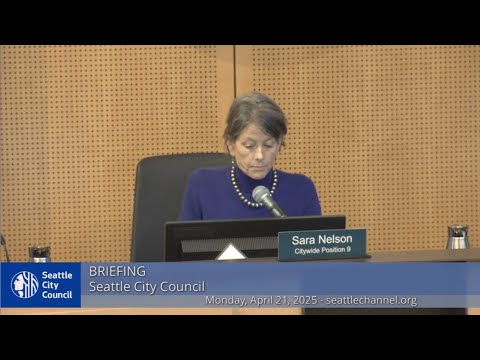
Council President Nelson said media coverage of the University of Washington facility confirmed the concern and called the situation “a portrait of bureaucratic dysfunction,” adding that available resources are not being used. “These folks are not being helped,” Nelson said.
Councilmember Hollingsworth and Rivera supported taking the issue to the King County Board of Health and to county leaders; Nelson and others said they would reach out to King County leadership and ask Board of Health members to put the topic on a future agenda.
Why it matters: the discussion addresses capacity and coordination in the behavioral-health crisis system that serves people who pose a danger to themselves or others; councilmembers flagged potential procedural, contractual or staffing obstacles that may require county or state action to correct.
What’s next: Council President Nelson and councilmembers who serve on regional boards said they would engage King County officials and the Board of Health to seek explanations and remedies, and councilmembers asked central staff to follow up on next steps.