Get Full Government Meeting Transcripts, Videos, & Alerts Forever!
Get email alerts on the Budget Personnel Supplements topic
No spam. Unsubscribe anytime.
Harrison County work session puts assistant middle-school coaches in budget book, weighs supplements and vehicle policy
Summary
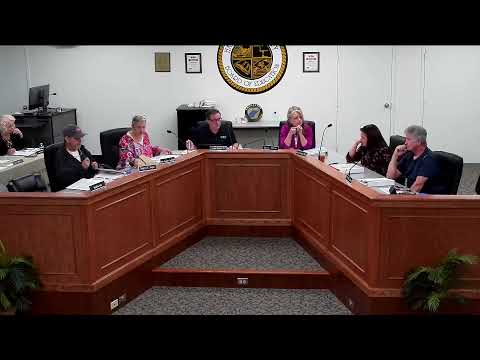
Harrison County Board of Education members at an April 20 budget work session instructed staff to include a proposal to pay assistant middle-school coaches in the 2025–26 budget book and reviewed vehicle-use policy, speech-language pathologist staffing and administrative supplements.
Harrison County Board of Education members at a budget work session on April 20 instructed staff to place an option to fund assistant middle-school coaches ("Option B") into the 2025–26 budget book and heard staff briefings on a range of personnel and policy questions that could affect the district’s contingency balance.
The direction to include Option B came during discussion of an updated administrative supplemental-pay schedule and extracurricular pay. Board members and staff described two budget presentation choices (Option A: broader changes; Option B: assistant middle-school coaches only). With no formal adoption during the work session, board members indicated no objection to adding Option B to the published budget materials; the formal budget hearing is scheduled for May 6 and adoption is set for the May 20 regular meeting.
Why it matters: including the assistant-coach supplement in the budget reduces the district’s contingency reserve and creates an ongoing personnel cost if later adopted. Staff told the board the amount shown in the packet for the assistant-coach option would be about $35,000 in total and that shifting the item into personnel from contingency would create a recurring cost in subsequent years.
Details of the coach proposal and contingency impact
Staff presented two options for the supplemental pay schedules. Option B would add assistant middle-school coach stipends based on team roster size (the packet used a roster threshold of more than 20 students to trigger the assistant-coach supplement). Staff estimated the maximum exposure for Option B at roughly $35,000 but noted the actual amount would be lower depending on qualifying team rosters. One figure cited during discussion was $3,536,000 described as the total contingency reduction under a maximum assumption; staff said the actual reduction would likely be lower because not every middle school would qualify for the full supplement.
Board members debated equity and legal supervision issues tied to paid assistants: several members said the supplement addresses situations in which a volunteer cannot legally supervise students alone and where a paid assistant avoids placing supervisory responsibility on volunteers or administrators. The board did not approve the change at the work session; members instead agreed to include Option B in the budget book for public hearing and possible later adoption.
Vehicle policy, rentals and cost comparisons
Staff reviewed Policy 4336 (use of vans for extracurricular transportation), telling the board the policy allows county-owned vehicles manufactured as non-passenger vehicles to be used for trips where small rosters (generally nine or fewer students per school per trip) make a van practical. The policy also contains a limit that only one county-owned vehicle be used for a single trip.
Staff estimated the purchase price for a passenger-style van in the $60,000–$70,000 range and said rentals averaged about $500 per trip in the district’s examples. Board members and staff discussed tradeoffs between buying a centrally maintained county vehicle (maintenance, fueling, keys, centralized check-out) versus continuing to rent private vehicles or use buses driven by district drivers. Staff cautioned that a county-owned van program would carry ongoing maintenance and oversight costs and could require multiple vehicles to serve different feeder areas.
Speech-language pathologist staffing and contracted services
The board reviewed a survey and salary comparison for speech-language pathologists (SLPs) prepared by staff. When the district’s total compensation package (base pay plus annual supplements such as medical allotments and Medicaid supplements) is included, Harrison County SLP pay compared favorably against neighboring counties; staff emphasized that some supplements are paid annually and were not included in state base averages.
Staff said the district currently contracts with Best Life Therapy to cover two SLP vacancies and expects to fill one of those vacancies for the next school year; one vacancy will remain after hires. Staff also explained that SLPs in the district are itinerant and that caseload limits are set by policy (Policy 2419 was cited in relation to caseload rules). Because of caseload restructuring during the year, the district did not replace every vacancy immediately.
National Board supplement and administrative pay schedule
Staff confirmed National Board-certified teachers would receive an increased supplement to correct prior underpayment, moving the National Board supplement up by $1,000 so the supplement matched other comparable supplements in the schedule.
The administrative supplemental-pay schedule before the board included other changes affecting principals and administrative levels; one debated item was whether to add a Level 4 supplement for large elementary schools. Board members questioned whether adding the Level 4 elementary supplement was appropriate in the current budget climate; after discussion the board decided not to include the Level 4 elementary increase in the materials to be published for the budget hearing.
Enrollment, recurring costs and contingency
Staff and board members discussed declining enrollment and its effect on supplement funding. Staff noted the district uses certified enrollment counts (and off-site pre-K counts included as 0.8 FTE) when calculating supplement eligibility. Board members warned that supplements carried forward in personnel budgets become recurring obligations unless reduced later under specific conditions (for example, if an excess levy fails). One board member said a change implemented in the budget would represent a recurring cost of about $64,000 annually if adopted and retained.
Process, next steps and meeting dates
Board members instructed staff to update the official budget book pages before publication. A public budget hearing is scheduled for May 6 at 5:00 p.m. (before the regular meeting), and the board intends to consider adoption on May 20. Staff also reviewed revised meeting dates and several upcoming work sessions and hearings listed in the packet.
The work session itself did not produce formal budget adoption; the only formal recorded vote at the end of the meeting was to adjourn. The board’s indicated direction to include Option B in the published budget materials will be considered in the May 6 hearing and may be adopted at a later public meeting.