Get Full Government Meeting Transcripts, Videos, & Alerts Forever!
Get email alerts on the Utilities Finance topic
No spam. Unsubscribe anytime.
Wilsonville staff propose steep near‑term sewer and stormwater rate increases to fund $243M capital plan; council asks for alternatives
Summary
City engineers and consultants presented a 10‑year financial forecast showing large capital needs at the wastewater plant and stormwater system, and proposed front‑loaded rate hikes beginning Jan. 1, 2026. Councilors raised questions about smoothing increases and timing of projects.
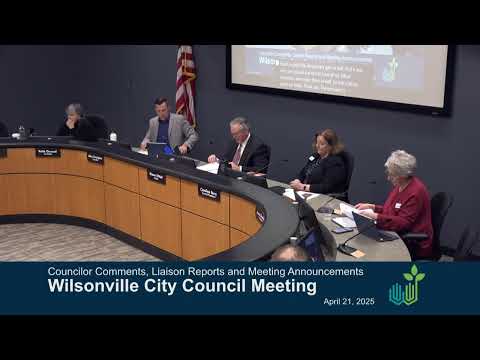
City staff and financial consultants presented a rate study for the sewer and stormwater utilities at the April 21 council meeting that shows large capital needs tied to recently adopted master plans and recommends substantial rate increases beginning January 1, 2026.
Zach Bridal, Wilsonville city engineer, introduced consultants from FCS Group (Taghi Acker and Zach Hazel) who presented the utilities’ standalone revenue forecasts, capital plans and options for funding that capital with cash, debt and system development charges (SDCs). The consultants said the forecast matches operating budgets with the capital program from the wastewater treatment plant and stormwater master plans and models cash reserves, SDC revenue and borrowing.
The consultants reported that the sewer capital program escalated to current construction cost assumptions totals about $243 million over the planning horizon, with the largest single package — membrane bioreactor (MBR) upgrades (phase 1 and 2) and related blower work — estimated at about $87.8 million. The model assumes a mix of funding sources including SDCs, some existing cash and significant revenue bond borrowing to fill funding gaps; in the model revenue bonds accounted for roughly two‑thirds of the plan’s funding needs in the near term.
For the sewer utility, consultants presented a revenue plan modeled as a set of across‑the‑board increases: approximately 27.5% per year for four years starting Jan. 1, 2026, followed by lower annual increases (about 3.5%) in later years. The consultants said the sharp near‑term increases reflect two factors: (1) long‑deferred rate updates (sewer rates had not changed since 2014 and were not indexed), so rates are materially below where they would be if adjusted for inflation, and (2) the need to generate cash and debt coverage for large bond financings beginning in 2029. The presentation used a single‑family residence with 5 CCF monthly consumption as an example: the existing monthly sewer bill was shown at about $46.39; if the city had kept up with inflation the comparable bill would be roughly $65.85.
On system development charges (SDCs) the consultants said historical sewer SDC revenue averaged just over $1 million per year but recent budgeted revenue for SDCs is closer to $600,000 annually; the forecast assumes only modest SDC contributions and warned SDC increases alone would not close the funding gap.
For stormwater the capital needs are lower but still substantial. The consultants highlighted major stormwater projects in the plan, including the Sharpenaue (Sharpeneau) repair/replacement at roughly $40 million over multiple years and near‑term street drainage projects such as Millie Road (about $12.4 million) and Day Road (about $8.8 million). The stormwater rate path in the consultant model showed near‑term increases of about 35.5% per year for three years followed by smaller increases thereafter.
Councilors probed whether the front‑loaded increases could be flattened by delaying or reprioritizing projects, or by increasing SDCs; consultants said some project timing adjustments might be possible but warned that delaying projects risks higher future construction cost and regulatory consequences, and that borrowing spreads costs but raises debt service. Staff and consultants said they would return with SDC updates and a cost‑of‑service analysis and rate design options before final council decisions.
No rate ordinance was adopted at the meeting. Consultants recommended a hybrid capital funding approach — some cash from rates plus targeted borrowing — and staff proposed returning with scenarios and cost‑of‑service allocations ahead of any final rate adoption. If council moves forward with the staff‑recommended pacing, the first rate changes would take effect Jan. 1, 2026.
Ending
Staff and consultants will return to council with SDC updates, cost‑of‑service analyses and rate design choices, and with any alternate scenarios council requests for flattening near‑term increases.