Get Full Government Meeting Transcripts, Videos, & Alerts Forever!
Get email alerts on the County Finances topic
No spam. Unsubscribe anytime.
County financial update: January sales-tax collections beat budget but commissioners eye cuts to outside agencies to narrow budget gap
Summary
Finance staff reported January sales-tax collections modestly beat the county’s budget estimate, but commissioners were briefed on a multi‑million dollar general-fund gap and directed staff to begin notifying outside agencies—beginning with Spokane Sports—about likely reductions.
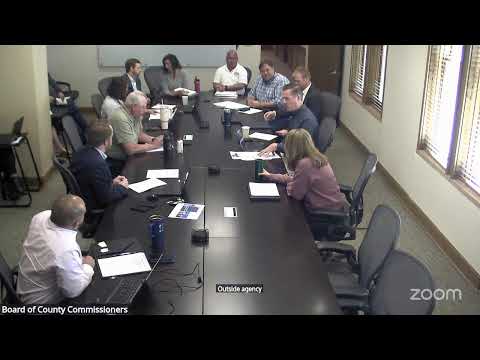
Finance staff presented the county’s monthly sales-tax and general-fund update to the Spokane County Commission at its April 22 strategic planning meeting, showing January collections were modestly above budget but underscoring a lingering budget gap and resulting discussion about outside-agency reductions and flat departmental budgeting.Sales-tax and revenue update: Finance staff (presenter) reported that January activity—collected in March—yielded about $5,700,000 in sales-tax collections, roughly $200,000 over January 2024 and about 2% above the county’s January budget estimate. Year-to-date cash collections were $19,300,000 against a budgeted $18,900,000. A rolling 12‑month growth rate was reported at roughly 1.5% versus a recent historical average of 3.9%. Sector detail: retail trade was down about 3% YTD; construction was strong (about +20% YTD), with nonresidential building up 17% and residential building up 21% year-to-date. New‑car dealers showed a notable drop for January activity (about −31% for new cars), while restaurants were up.Fiscal position and budget gap: Staff reminded commissioners that the adopted 2025 budget used about $2,000,000 of reserves to balance. Staff presented a projection sheet showing an operation-side gap of roughly $13.5 million after capital and some preliminary savings; prior to several staff-suggested attrition and position-removal steps, the stated headline gap had been around $20.6 million. Staff described a set of attrition and vacancy cleanups that have reduced headcount and generated preliminary salary savings (about $423,000 in the staff rollup, plus other items) and said additional, targeted position removals remain under review.Workforce and Workday: Commissioners discussed FTE counts and the transition to Workday payroll; staff said they are running parallel payrolls and continuing testing ahead of the targeted go‑live and that any request for additional Workday funds would be vetted through existing project budgets and obligations. Staff reported ongoing FTE cleanup: about 24 positions removed in recent weeks as vacancies were evaluated, and an estimate of roughly 1,951 funded regular full‑time positions (headcount fluctuates and some positions remain unfunded).Outside agencies and proposed outreach: The board signaled it wants to notify outside agencies early about likely reductions for fiscal 2026 planning. Finance staff highlighted Spokane Sports receives roughly $1.7 million from the Tourism Promotion Area (TPA) and an additional $220,000 from the county car‑rental tax; staff said directing some of the car‑rental tax away from Spokane Sports could relieve general-fund pressure. Commissioners discussed a draft letter to outside agencies; staff recommended asking agencies to submit grant/award applications by early July so the county can make award decisions in time for the September budget rollout. At the meeting commissioners collectively signaled willingness to reduce Spokane Sports’ county funding by at least 50% (a public, non-final notice would be sent); they also identified Unity in the Community, the MAC and other outside entities as early candidates for reductions or consolidation with county booths at events.Next steps: Staff will provide a more detailed outside-agency inventory (current budgets, which sources fund each payment, and which awards are discretionary vs. statutory), update the FY projection sheet with the suggested attrition savings and provide draft letters and timelines for outreach to outside agencies. Commissioners asked staff to prepare a department-level “flat budget” scenario that assumes status-quo budgeted dollars and asks departments to absorb likely salary and benefit inflation (staff suggested an illustrative 7% cost pressure to be absorbed), with department responses used to inform fall budget decisions.