Get Full Government Meeting Transcripts, Videos, & Alerts Forever!
Get email alerts on the Grants Policy topic
No spam. Unsubscribe anytime.
Spokane County staff propose raising grant-acceptance threshold to $50,000; request stronger indirect-cost recovery
Summary
Finance staff told commissioners they plan to update county financial assistance policies and procedures—last revised in 2013—recommending a higher board threshold for accepting grants (staff suggested $50,000), requiring indirect-cost recovery where allowed, and tightening administration for small awards that consume county resources.
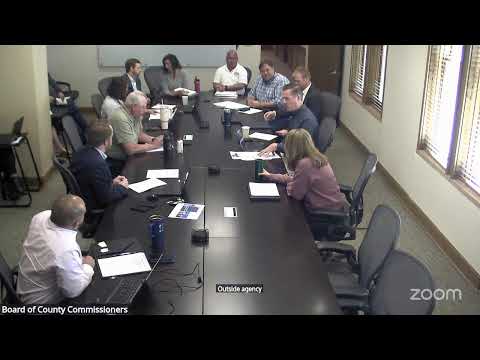
County finance and grants staff briefed the Spokane County Commission on April 22 about a planned update to the county’s financial assistance policy and procedures, noting the current policy dates to 2013 and recommending changes to threshold and indirect-cost treatment.The issue and staff recommendation: Heather (Grants/Finance) said the county’s minimum threshold for board-level acceptance of grants has been $5,000; staff advised that a large number of small awards (often $5,000–$20,000) are costly to administer, require cross‑departmental work (budget, purchasing, HR, AP, IT) and sometimes result in the county purchasing equipment for outside entities with no long-term benefit to county operations. Heather said staff recommends raising the threshold so awards under the new minimum would require express board approval on a case-by-case basis; staff suggested raising the threshold to $50,000 but said the board could set a different number.Indirection and cost recovery: Staff recommended requiring departments to include indirect costs where the funder allows them and, when indirects are not allowed, require departments to reimburse the county general fund for indirect costs from their departmental budgets. Staff also suggested adopting a standard administrative/indirect charge where cost recovery isn’t available (staff proposed using a federal 15% administrative allowance where applicable).Operational proposals and process changes: Commissioners discussed practical compliance steps: departments would be required to estimate internal administrative costs when they pursue grants, including HR, IT and purchasing time; grants only would move forward if estimates indicate the award covers or is worth the county’s administrative effort. Staff proposed requiring a “cover sheet” as part of the grant application showing estimated internal costs by type (HR, IT, AP, purchasing).Questions and commissioner input: Commissioners asked for a breakdown of recent grants by size (how many awards fall below $5,000, $5,000–$25,000, $25,000–$50,000, and above $50,000) and a listing of which awards did not include indirects or where departments declined to take indirect recovery. Commissioners also discussed potential double charging: some departments already pay cost-allocation charges and commissioners asked staff to explain whether the recommended approach would result in departments bearing the cost twice.Staff follow-up: Heather said staff will prepare a stratified inventory showing counts and dollar totals for awards by size over recent years, identify where indirects were available but not taken, and propose written language for the updated policy and the cover‑sheet template. Staff will also present options on how recovered indirects would be allocated.