Get Full Government Meeting Transcripts, Videos, & Alerts Forever!
Get email alerts on the Housing Production topic
No spam. Unsubscribe anytime.
Wilsonville advances six‑year housing strategy to hearings, keeps larger programs as ‘future’ options
Summary
City staff presented a draft housing needs and capacity analysis and a six‑year Housing Production Strategy. Councilors asked for refinements and emphasized senior household affordability; planners said the documents will be revised for Planning Commission hearings in May and June.
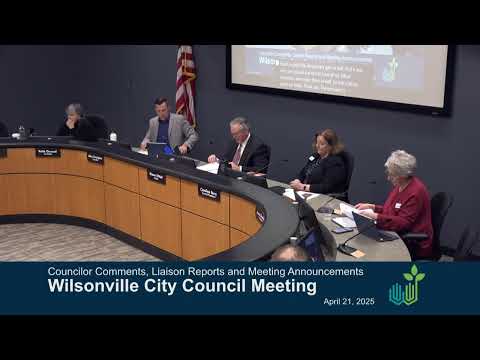
Wilsonville staff presented a final draft of the Housing Our Future housing needs and capacity analysis and a six‑year Housing Production Strategy (HPS) at the City Council work session on April 21, saying the documents will be revised and taken to public hearings in May and June.
The draft HPS lays out planning work program actions the city proposes to pursue over six years, and a separate “future” bucket of programs the city would not commit to implement within that six‑year period. Kim Bridal, senior planner for the city, told council the HPS lists actions, timing and the communities likely to be affected and that staff will bring hearing‑ready documents to the Planning Commission in May.
The HPS is paired with a technical housing needs and capacity analysis that examines land capacity and other metrics for the next 20 years. Bridal told council the capacity study shows Wilsonville “does have enough land to accommodate expected growth” but that the production strategy focuses on how the city will act to address gaps in affordability, homeownership, rental stability and housing for people experiencing homelessness.
Key recommended actions in the draft include: rezoning or redesignating land to add housing capacity; encouraging a wider variety of housing types beyond single‑family detached and “missing middle”; streamlining administrative review for clear‑and‑objective proposals; increasing accessibility requirements in some new housing; preserving an at‑risk income‑restricted affordable property; and two items described as essential to unlocking future programs — Action F (hiring a housing specialist) and Action G (establishing a dedicated funding source). Bridal said council had previously asked staff to broaden Action G beyond a construction excise tax to consider a range of funding options.
Several councilors pressed for changes to the documents and asked staff to highlight particular findings in the executive summary. One councilor asked that the proportion of multifamily housing be stated up front and noted Wilsonville’s relatively high share of rental housing. Councilors also urged stronger emphasis on the city’s older residents: the HPS summary reports about 46% of residents age 65+ have household incomes under $49,000 and 23% under $25,000, figures several councilors said should be emphasized because they point to housing stress among seniors.
Bridal and consultants from Echo Northwest — including Beth Goodman and Nicole Underwood (online) — answered clarifying questions about how the HPS distinguishes between actions the city is committing to within six years and aspirational actions that could be pursued sooner if funding or other opportunities arise. Bridal emphasized that the city will perform a three‑year midpoint review with the Oregon Department of Land Conservation and Development (DLCD) to report progress; if the city makes verified progress on a “future” item during the six‑year window, that item could be brought into the HPS at the midpoint review.
Councilors also discussed a proposed administrative review pathway (Action C) that would allow projects meeting clear‑and‑objective standards to be approved through an administrative decision rather than a public hearing. Staff said administrative review would preserve public notice and written testimony rights and would not remove appeal rights, but some councilors said they worry that absent the visual cue of a public hearing placard some neighbors will miss notice and lose the ability to appeal.
No ordinance or formal vote was taken; Bridal said staff will incorporate council feedback and public comments from the draft publication before forwarding the materials to the Planning Commission. Staff asked council for any additional implementation considerations to include in the hearing materials and for guidance on the final HPS language and timing.
City staff and consultants repeatedly described the HPS actions as goals the city will “make a good‑faith effort” to implement; Bridal said if the city cannot complete an action within the six‑year schedule it would discuss alternatives with DLCD at the midpoint review.
The council work session record shows the next procedural steps: Planning Commission hearings in May, a council adoption process thereafter and continued public engagement as individual implementation steps (for example, development code amendments or creation of a funding source) are scoped and brought forward.
Looking ahead, staff flagged that some HPS recommendations — rental housing inspection programs, a community land trust, homebuyer assistance and land disposition for affordable housing — are in the HPS’s “future” bucket and not firm six‑year commitments unless funding and other constraints change. Staff said those programs remain priorities for future consideration and that council goal‑setting may influence whether the city accelerates any of them before the midpoint review.
Bridal stated staff will return with hearings‑ready documents and said council direction tonight will shape the public hearing drafts.
Ending
Staff asked councilors to forward any additional editorial corrections and clarifications to planning staff promptly so the Planning Commission packet reflects council input. Formal public hearings are scheduled for May and June.