Get Full Government Meeting Transcripts, Videos, & Alerts Forever!
Get email alerts on the Youth Services topic
No spam. Unsubscribe anytime.
Residents and commissioners press for an urgent, coordinated plan to address youth safety at downtown RTA hub
Summary
Multiple residents, youth-service providers and commissioners called for a coordinated, time-bound plan to reduce unsupervised youth density at the downtown RTA bus hub, expand after-school options and convene stakeholders for solutions before the school year restarts.
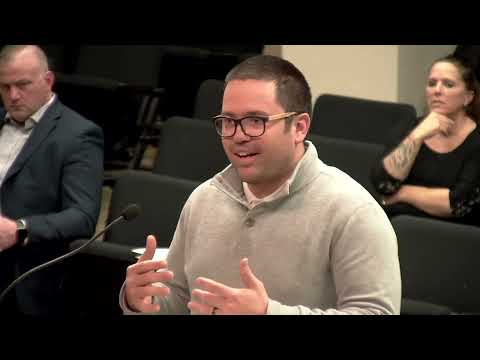
Multiple residents, youth-service providers and city commissioners pressed for urgent, coordinated action to address violence, unsupervised youth and transportation at the downtown RTA bus hub during public comment at the Dayton City Commission meeting.
Speakers including Crystal Allen, president and CEO of the Boys and Girls Club of Dayton, Tara Campbell of Dayton United for Human Rights, Maggie Burke (individual) and Lisa Wagner, executive director of Levitt Pavilion Dayton, urged more prevention, transparent planning and budgeted resources for summer and after-school programs, transportation alternatives and youth engagement. Allen said the city needs “prevention strategies, not reactive recourse.”
Several speakers criticized public rhetoric that they said frames young people as threats rather than assets and urged the commission to include youth voices in planning. Campbell called on the commission to “explicitly allocate youth center initiatives, expand after school programs, creative arts and expression spaces, mentorships and leadership trainings, mental health support, and safe, reliable transit options in partnership with Dayton Public Schools and RTA.”
Commissioners responded that multiple stakeholders have been meeting, that programs including Cure Violence and the Peace Campaign exist, and that the city has funded neighborhood and youth initiatives with federal ARPA allocations. Commissioner comments emphasized the need for a short, intensive process modeled on the city’s earlier police reform task forces to produce actionable recommendations and funding plans before the next school year. One commissioner said the city has “a 3 or 4 month window” to act.
The commission cited existing efforts that staff and partners are pursuing: Learn to Earn / My Voice My City My Vision planning, Cure Violence, the Peace Campaign, recreation center programming and a recent ribbon-cutting for a teen center. Commissioners asked administration to coordinate a task force or similar convening to produce funding options and program models that could be implemented for the coming school year.
Why it matters: Several speakers warned that unresolved youth needs and concentrated unsupervised downtown presence are harming public safety, the downtown business climate and youth outcomes; they urged funding and a clear timetable for implementation.