Get Full Government Meeting Transcripts, Videos, & Alerts Forever!
Get email alerts on the Education Finance topic
No spam. Unsubscribe anytime.
Committee expands charter school loan fund to include facilities, adds BESE oversight and accountability
Summary
The Senate Finance Committee advanced Senate Bill 71 to expand the Charter School Startup Loan Fund so authorized loans can be used for facilities, with BESE required to approve loan terms including interest and default provisions.
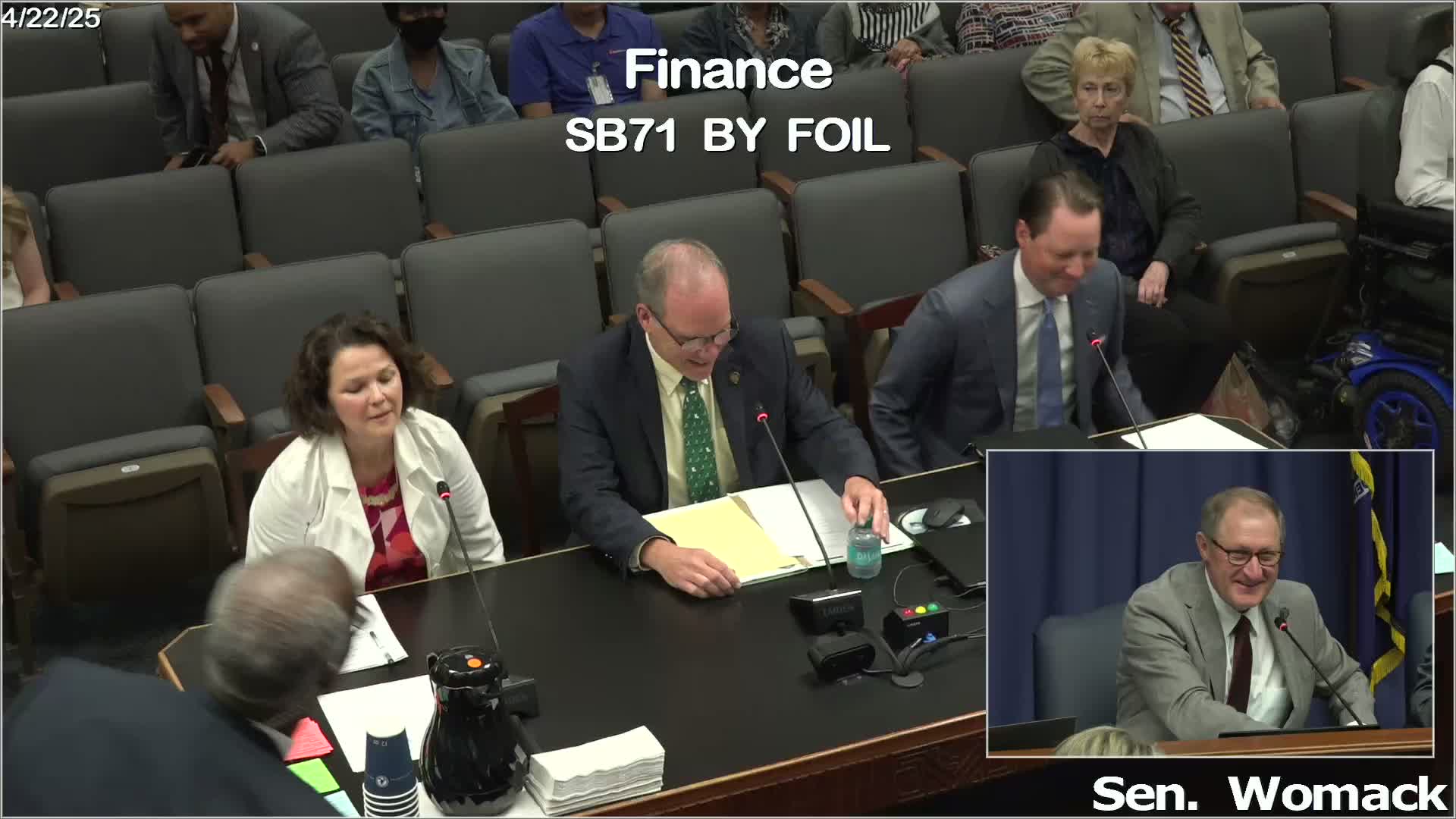
The Louisiana Senate Finance Committee advanced Senate Bill 71 after sponsors and advocates described expanding the state's Charter School Startup Loan Fund to make facility financing available to charter operators.
Sponsor remarks in committee said the bill changes the existing revolving startup-loan program — which was limited to one-time startup costs and a $100,000 cap repayable over three years — to permit loans for buying, renovating or expanding facilities and to remove the current $100,000 statutory cap. The bill does not itself appropriate new money to the fund; it allows state, federal and private dollars to be deposited into the revolving fund.
Caroline Romer, executive director of the Louisiana Association of Public Charter Schools, said facilities “is 1 of the hardest parts for a charter school to access,” noting charter schools cannot use local millages and often pay higher borrowing costs than traditional districts. Romer said the bill would let charter operators access a state-administered loan with potentially lower costs and would support school-startup and expansion.
Lee Reed, an attorney who assisted with drafting the amendments, told the committee the proposal expands who may borrow from the fund to include a charter school’s wholly owned real-estate subsidiary and places additional accountability requirements in the loan agreements, including default provisions and requirements for asset reversion if a charter closes. "We're giving a little bit more flexibility on how we spend it and over the time in which we repay it, but it's giving a lot more demand on" loan terms, Reed said, adding the statute would require BESE approval of loan agreements.
Committee members asked about repayment terms, interest and fund size. Reed and Romer explained the bill removes the statutory three-year repayment limit and $100,000 cap and instead requires the Board of Elementary and Secondary Education (BESE) to set loan parameters, including any interest and default rules. Romer and others noted there is no dedicated appropriation; the fund would grow from repayments, private donations, or future appropriations. Romer noted potential federal layering such as the federal School Facilities Incentive Grant (referred to as FIG) and private philanthropic capital that could increase the fund’s capacity.
The committee accepted the sponsor’s amendment (offered as amendment 614) clarifying borrower eligibility and requiring BESE-approved loan agreements, and then moved the bill favorably. No roll-call vote was recorded in the transcript.