Get Full Government Meeting Transcripts, Videos, & Alerts Forever!
Get email alerts on the Procurement Reform topic
No spam. Unsubscribe anytime.
Senate committee advances procurement-code update to speed state contracting
Summary
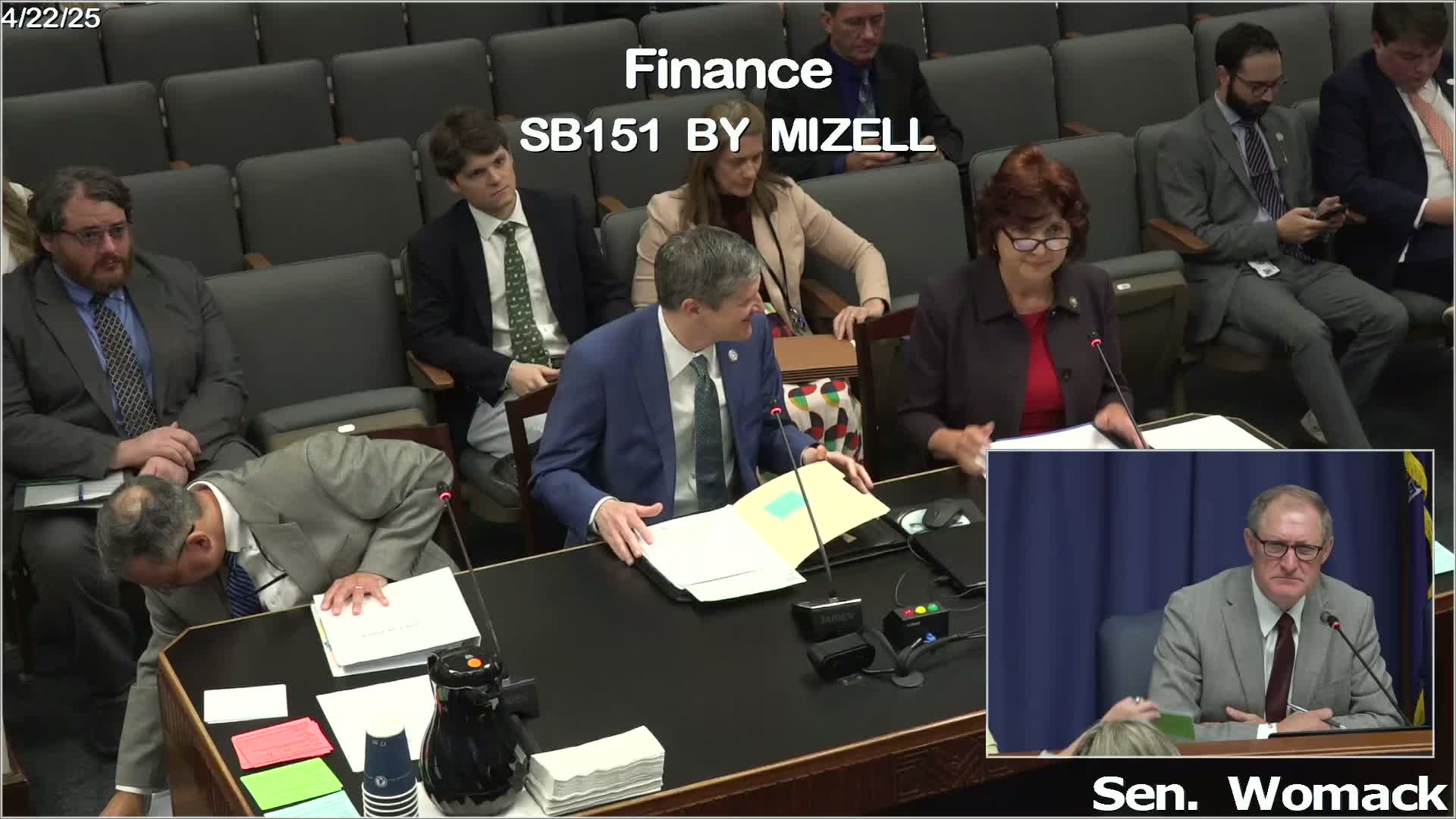
The Senate Finance Committee advanced Senate Bill 151, which increases procurement dollar thresholds, expands negotiation and cooperative-purchasing tools, and adds a protest-bond requirement intended to limit frivolous bid protests. The measure also allows local governments to opt into the updated code.
Senate Bill 151, a package of statutory changes to Louisiana's procurement code designed to speed state purchasing, was advanced by the Louisiana Senate Finance Committee after amendment and committee discussion.
Sponsor Senator Mizell told the committee the changes respond to long-standing concerns about slow procurement processes and rising project costs: “This addresses that need and gives us some options to be able to provide things, use the taxpayer funds wisely.” The bill would raise several dollar thresholds, expand contracting tools and negotiation authority, and change advertising requirements for certain solicitations.
Patrick Goldsmith, deputy commissioner for administration, walked committee members through key provisions. He said the bill would give state agencies the option to match higher local thresholds for bidding; raise the consulting-services contracting threshold (from its long-standing historical level to roughly $150,000); expand the invitation-to-negotiate authority beyond IT contracts; permit cooperative purchasing and task orders off statewide contracts; and make advertising in the official journal optional where electronic notices suffice.
Goldsmith also described changes to real-estate and small-lease procurement thresholds (for example, increasing a 5,000-square-foot lease threshold to 10,000 square feet and increasing permitted short-term storage-unit procurements to 1,000 square feet). On protests, he said the bill would require a protest bond of 25% of the contested award if a party seeks to halt procurement: “If you wanna protest, you just have to put a little skin in the game,” Goldsmith said, adding that other states use similar percentages.
Committee members asked how the changes would affect local governments that currently “piggyback” on the state code. Goldsmith and Carlos Romaniak, deputy general counsel for the Division of Administration, said municipalities and police juries could opt in to the state procurement code and would then be subject to the new provisions; adoption by the local body is required for the state rules to apply locally.
Several senators asked about accountability and contract administration. Senator Edmonds pushed for stronger back-end contract enforcement and clawbacks; Goldsmith said the administration is seeking ways to improve agency technical-writing assistance on RFPs and to require clearer accountability, including performance measures and remedies in contracts.
A technical amendment (identified in committee as amendment number 1514649622) correcting punctuation and clarifying the term “protested before an award” was offered and accepted. There was no roll-call vote recorded in the transcript; the chairman noted no opposition and the committee moved the bill favorably as amended.
The measure, as amended, remains subject to further chamber procedures and any floor votes. Committee discussion flagged the need for guidance from the Division of Administration on how agencies should implement optional provisions such as electronic advertising and when local governments should adopt parts of the code.