Get Full Government Meeting Transcripts, Videos, & Alerts Forever!
Get email alerts on the Water Quality topic
No spam. Unsubscribe anytime.
Delray Beach officials detail stormwater work and new fertilizer rules to protect Lake Ida
Summary
City officials, historical society staff and public-works leaders discussed Lake Ida’s history, factors that have reduced its size and the city’s ongoing stormwater and water-quality measures, including a recently strengthened fertilizer ordinance with seasonal restrictions and a 10-foot buffer from water bodies.
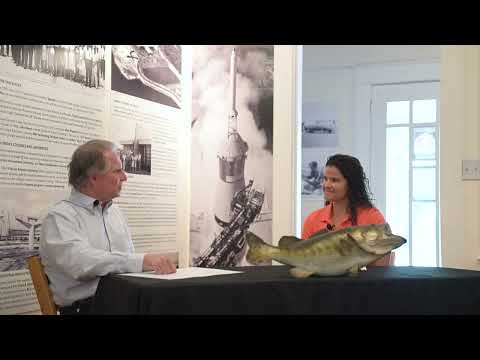
At the Delray Beach Historical Society, city officials and local historians discussed Lake Ida’s long history and current efforts to improve its water quality.
Kent Edwards, sustainability officer for the City of Delray Beach, opened the briefing and said the city was “here at the Delray Beach Historical Society” to talk about Lake Ida and water quality. He introduced Winnie Edwards and Tom Warenke from the Historical Society and Cynthia Busan from Public Works.
Tom Warenke, archivist at the Delray Beach Historical Society, described Lake Ida’s historical connections to the Everglades and early settlement patterns: “As a water body, Lake Ida was connected to the Everglades by way of the surficial aquifer.” Warenke traced documentary evidence back about 10,000 years in prehistory and noted maps from the mid-19th century; he said William Linton arrived in 1894, laid out streets and named the lake. Warenke also described agricultural uses around the lake, including pineapple fields and a farmer he identified as Mr. Schrader, and said that drainage projects in the 1920s by the Lake Worth Drainage District lowered regional water levels and shrank the lake.
City staff described how urban development and impervious surfaces have increased stormwater runoff that transports pollutants into the lake. Cynthia Busan, assistant director of Public Works, said the increase in roads, parking lots and buildings reduces green space that would absorb rain and that runoff can carry “oil, grease, and heavy metals” as well as fertilizers, herbicides, pesticides and grass clippings into Lake Ida.
Busan outlined city actions to address those sources. She said every capital-improvement project includes stormwater-quality features, the city has increased street-sweeping frequency, and it uses swales adjacent to roadways to collect and filter the first flows of runoff. Busan said the city also monitors Lake Ida’s water quality and has implemented Basin Management Action Plans (BMAPs) aimed at reducing pollutant loads and restoring the lake’s health. She described public education efforts and noted the city’s participation in the Palm Beach County MS4 National Pollutant Discharge Elimination System permit.
Busan described the recently revised fertilizer ordinance and its intended effects: “The city commission has recently passed an improvement to our fertilizer ordinance that aims to reduce the amount of nitrogen and phosphorus that enter these local water bodies, including Lake Ida.” Key provisions referenced in the briefing include seasonal restrictions on fertilizer application during the rainy season (June 1–Sept. 30), a 10-foot buffer where fertilizers cannot be applied adjacent to water bodies, and encouragement of slow-release fertilizer formulations. Busan said the ordinance also seeks to educate residents and landscapers about best practices and that the ultimate goal is to reduce nutrient pollution that can cause algal blooms and low-oxygen conditions.
Edwards pointed to a recent fish kill as an example of harms the city is trying to avoid, noting that “even last year we saw a fish kill.” The briefing also highlighted a municipal solid-waste agreement that provides a household-chemical drop-off facility, which staff said helps keep cleaners, solvents, oils and other household chemicals out of the stormwater system.
Speakers emphasized that Lake Ida remains an important habitat and recreational resource. Warenke called the lake “a gem” and said people still catch large bass there, while Busan said the goal of the city’s combined actions is to “restore Lake Ida to a healthier state benefiting both the ecosystem and the community.”
The briefing combined historical context with operational descriptions of stormwater management, monitoring and recent regulatory changes. Officials encouraged residents to follow best practices, use the household-chemical drop-off facility and learn more about Lake Ida at the Historical Society.