Get Full Government Meeting Transcripts, Videos, & Alerts Forever!
Get email alerts on the State Department Reorg topic
No spam. Unsubscribe anytime.
State Department unveils reorganization plan to fold USAID into regional bureaus, eliminate some offices including GEC
Summary
A State Department spokesperson announced a reorganization plan that would fold USAID functions into regional bureaus, consolidate offices, and eliminate some nonstatutory programs. Officials said implementation is a roadmap, not an immediate round of firings; details and staff impacts remain to be determined.
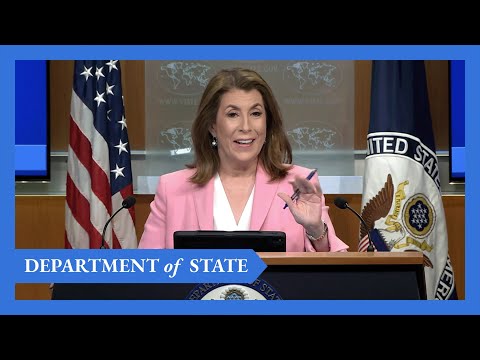
The U.S. Department of State announced a comprehensive reorganization plan that would fold United States Agency for International Development functions into regional bureaus, consolidate offices and eliminate certain nonstatutory programs, a State Department spokesperson said at a briefing on Oct. 12, 2025.
The spokesperson said the plan is intended to “reverse decades of bloat and bureaucracy” and to give regional bureaus and embassies more say over how U.S. aid is delivered. “This is a reorganization plan. It is not something where people are being fired today,” the spokesperson said, adding that the package is a roadmap and that congressional notice has been provided.
Why it matters: The proposal would change how U.S. foreign assistance is organized and administered, shifting some USAID responsibilities into State Department regional bureaus and placing more decision-making authority with embassy and ambassador offices. That could affect how grants and project funding are chosen and which offices inside the department handle democracy, human-rights and criminal-justice work.
What the department described: The spokesperson said USAID’s integration is “kind of the genesis of this,” and that the approach would embed aid-related functions within regional bureaus so embassy staffs and foreign-service officers would have more input on projects in the countries where U.S. assistance is delivered. The spokesperson described the reorganization as consolidating region-specific functions, removing redundant offices and ending nonstatutory programs “that are misaligned with America’s core national interests.”
On employees and implementation, the spokesperson repeatedly described the plan as a proposal and an implementation process. He said offices that are cut or folded into other bureaus could leave employees with the opportunity to apply for other positions inside the department: “So in the in again this is a proposal this obviously could change but as you have offices that are cut or even some bureaus that were set up for a specific situation that end up being cut entirely, that you will have people who then, foreign service officers, career workers, etc, being able to apply for something else.” The spokesperson declined to provide firm counts for likely job losses or transfers and said those details will play out during implementation; where numbers were raised in an internal document — including a reported path to reduce domestic staff by 15% — the spokesperson declined to confirm or endorse that figure.
Human-rights, war-crimes and specialized offices: Reporters pressed whether the reorganization eliminates policy priorities such as democracy promotion or the office that tracked war crimes and global criminal justice. The spokesperson said folding specialized functions into larger regional bureaus does not mean the work ends. “Just because a bureau is gone, that is certainly all these issues are important, it means that we’re looking at certainly blending in with the regional bureaus,” he said, adding that American values and priorities “remain” even if an office’s label changes.
The spokesperson also said the Global Engagement Center — the bureau that, in prior months, had been reorganized and renamed — has been eliminated; he cited the bureau’s prior funding level, saying in the briefing that it had been at about $50,000,000 a year and asserting it would no longer exist in that form.
Decision process and next steps: The spokesperson said the reorganization is a roadmap and part of a broader whole-of-government efficiency effort. He described undersecretaries as responsible for preparing implementation plans within the roadmap framework and said they would have about 30 days to submit their plans. He also said congressional notice had been sent and that normal government procedures would be followed.
What remains unclear: The briefing left several operational questions unresolved. The department did not publish a complete list of offices slated for elimination or give firm counts of staff affected; it did not specify which regional bureaus would take custody of particular functions such as global criminal-justice work; and it declined to spell out how the changes will affect embassies and consulates overseas beyond saying the plan emphasizes more embassy input in aid decisions. Where specific numbers or schedules were not given in the briefing, those items are listed below as “not specified.”
The State Department spokesperson said implementation details will be watched as they play out and that additional materials — a fact sheet, a frequently asked questions document and a statement from the deputy secretary, Landau — will be provided for department personnel and the public. He also noted that Principal Deputy Tommy Pigott will brief the press later in the week on additional developments.