Get Full Government Meeting Transcripts, Videos, & Alerts Forever!
Get email alerts on the Durable Power Of Attorney Trust Clarification topic
No spam. Unsubscribe anytime.
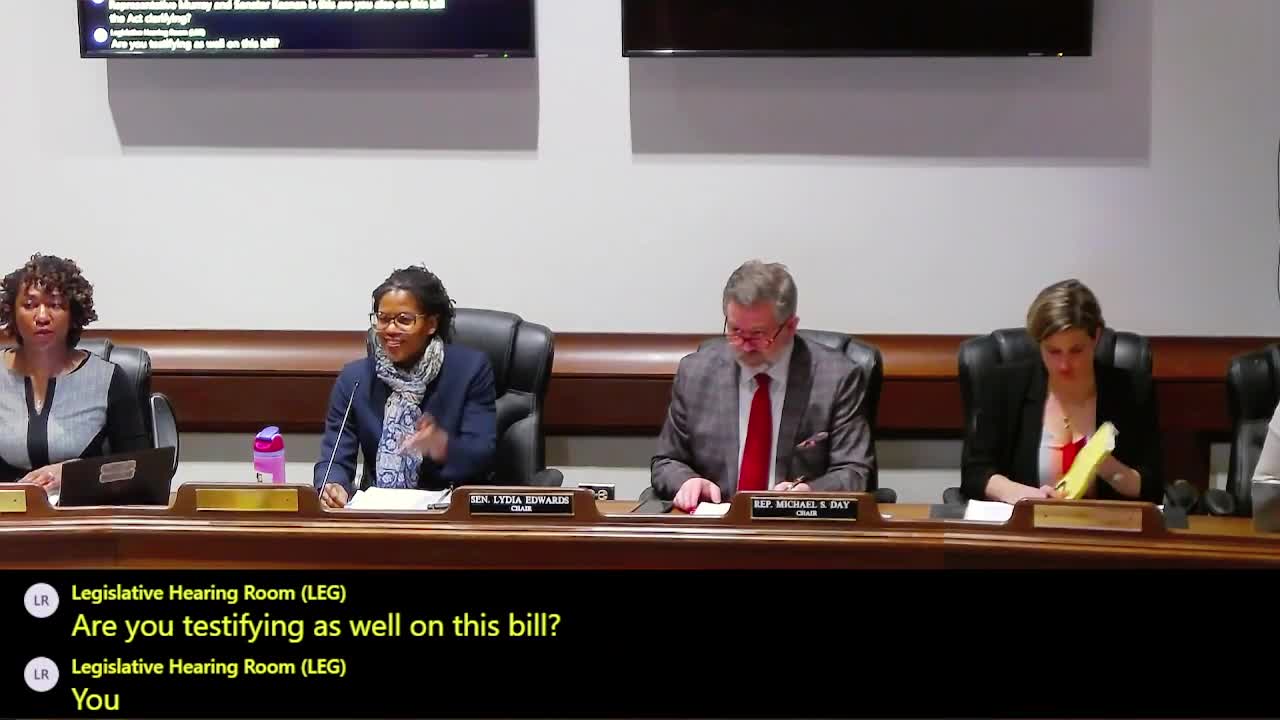
Lawmakers hear bill to clarify whether agents can create trusts under durable powers of attorney
Summary
Rep. Murray and Sen. Keenan and elder‑law groups urged the Joint Committee on the Judiciary to pass H1911/S1138 to confirm that a principal may authorize an agent under a durable power of attorney to create a trust, addressing uncertainty raised by the SJC's Barbetti decision.
Representative Murray and Senator John Keenan testified to the Joint Committee on the Judiciary in support of House Bill H1911 (filed as companion Senate language) to clarify the authority of an agent under a durable power of attorney to create a trust on the principal's behalf.
Rep. Murray told the committee the bill responds to the Supreme Judicial Court decision in Barbetti v. Stempenowitz, which left uncertainty about whether a power of attorney can authorize an agent to execute a trust. "The court indicated that the more prudent path is to allow the legislature the opportunity to decide whether and how to allow delegation of the power to create a trust," Murray said, describing the issue as an "arcane but important" technical point in estate planning.
Senator Keenan called the change a technical correction that would align Massachusetts with many other states and "comfort" seniors and people with disabilities who rely on powers of attorney to have their wishes honored. "The court found that, in fact, you did not have that ability, and therefore it was rendered void," Keenan said of the underlying case, adding that the SJC suggested the Legislature consider the matter.
Elder‑law groups and estate planning attorneys backed the bill. Clarence Richardson, executive director of the Massachusetts chapter of the National Academy of Elder Law Attorneys, said the bill would confirm the long‑standing practice that an agent may create a trust if the power of attorney explicitly authorizes the agent to do so. "The court did go on to suggest that a trust created using a power of attorney may still be void even if the power of attorney explicitly includes that authority," Richardson said; the bill would remove that uncertainty.
Estate attorneys described client burdens resulting from the uncertainty. Attorney Patrick Curley said families sometimes must seek court approval through conservatorship proceedings — a costly, stressful process — because of the ambiguity. He told the committee many states (he cited "at least 37") have enacted statutes allowing delegation for trust creation in a power of attorney and that the bills before the committee would bring Massachusetts into line with the majority of states.
Attorney Lauren DiMaggio described an older couple whose estate plan implementation was delayed more than five months because the agent had to seek court approval despite an explicit trust‑making grant in the power of attorney. "This was stressful, costly, and unnecessary," she said, urging the committee to report the bill favorably.
No formal committee action was recorded in the transcript; sponsors and elder‑law groups urged prompt legislative clarification to reduce unnecessary conservatorship filings and to provide certainty in estate planning.