Get Full Government Meeting Transcripts, Videos, & Alerts Forever!
Get email alerts on the Medical Panels Probate Family Court topic
No spam. Unsubscribe anytime.
Witnesses urge judges be given neutral medical panels for contested custody and guardianship cases
Summary
Supporters told the Joint Committee on the Judiciary that Senate Bill S1102 would allow probate and family court judges to convene three-physician panels to resolve disputed medical questions in contested guardianship and custody cases, saying the change would bring neutral medical expertise into life-altering decisions.
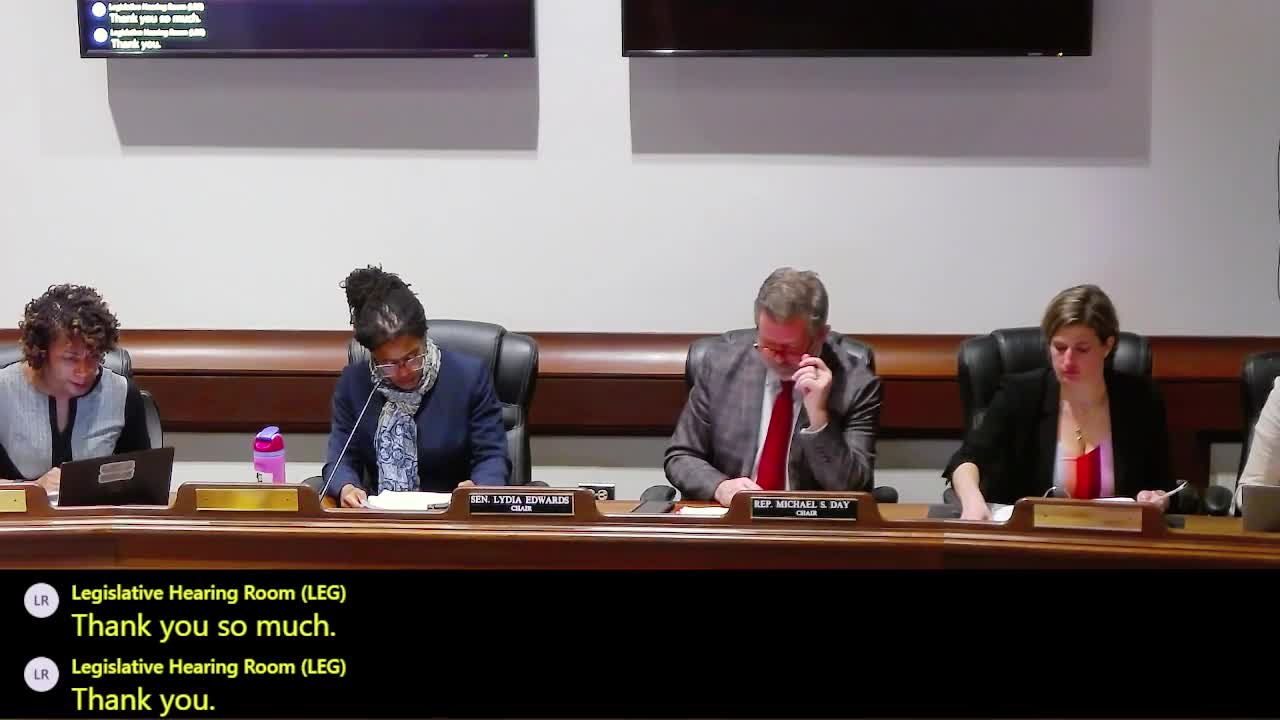
Chair Lydia Edwards and House Chair Michael Day heard more than a dozen witnesses Tuesday on Senate Bill S1102, an act to establish medical panels for the Probate and Family Court.
Supporters said the panels would let judges convene impartial, three-physician panels to answer contested medical questions in guardianship and custody cases, where judges now can be asked to resolve technical medical disputes without neutral expertise. "Right now, judges have to make life changing decisions, often without access to neutral medical expertise," testified Paola Rosetti, a Boston resident who said she represents attorneys and advocates who work with vulnerable adults.
The bill would create a tool modeled on long‑standing medical panels used for public employee disability and retirement determinations, witnesses said. "This model is not new. It's based on a long standing effective system used in Massachusetts for public employee disability claims," Rosetti said, asking the committee for a favorable report.
Parents and clinicians described personal and clinical examples. Brandy Dean, who said her son was diagnosed in 2020 by two Harvard‑affiliated physicians with PANS, described a post‑divorce dispute that she says led to her son being denied care despite specialists' diagnoses. "A neutral medical panel would have confirmed my son's diagnosis, protected his treatment, and prevented unnecessary harm," Dean said.
Physicians told the committee panels would help judges focus on medical facts. Dr. Leslie Vogel, a physician who testified in support, described an illustrative case in which parents disputed whether a child had asthma and whether inhalers were appropriate. "The panel would eliminate the melodrama and focus on the medical facts, enabling the judge to make a medically informed decision," Vogel said.
Other witnesses framed the change as protecting vulnerable groups, including children, people with disabilities, survivors of abuse and the elderly. Kayla Knight, a Foxborough resident and disability advocate, told the committee the panels could "save lives" by providing independent medical insight in contested cases.
Sponsors and supporters said the panels would be petitioned by a party to the case and would provide short, focused evaluations to inform judicial decisions. Proponents framed the bill as filling a "widespread urgent need" in probate and family court practice.
Opponents were not heard in person during the portion of the hearing captured in the transcript. Committee chairs said written testimony would remain part of the record and that the committee would accept additional materials.
If reported favorably, the bill would next move through the committee process; the transcript did not record any vote or formal committee action on S1102.