Get Full Government Meeting Transcripts, Videos, & Alerts Forever!
Get email alerts on the Fort Johnson Jrtc topic
No spam. Unsubscribe anytime.
Fort Johnson (JRTC) outlines brigade‑level training role, warns of force‑structure cuts and flags North Fort infrastructure needs
Summary
Fort Johnson officials told the committee the Joint Readiness Training Center hosts brigade training roughly 10 times a year, supports about 6,900 soldiers and 11,000 family members, and faces infrastructure priorities for North Fort bivouac modernization amid planned manpower changes.
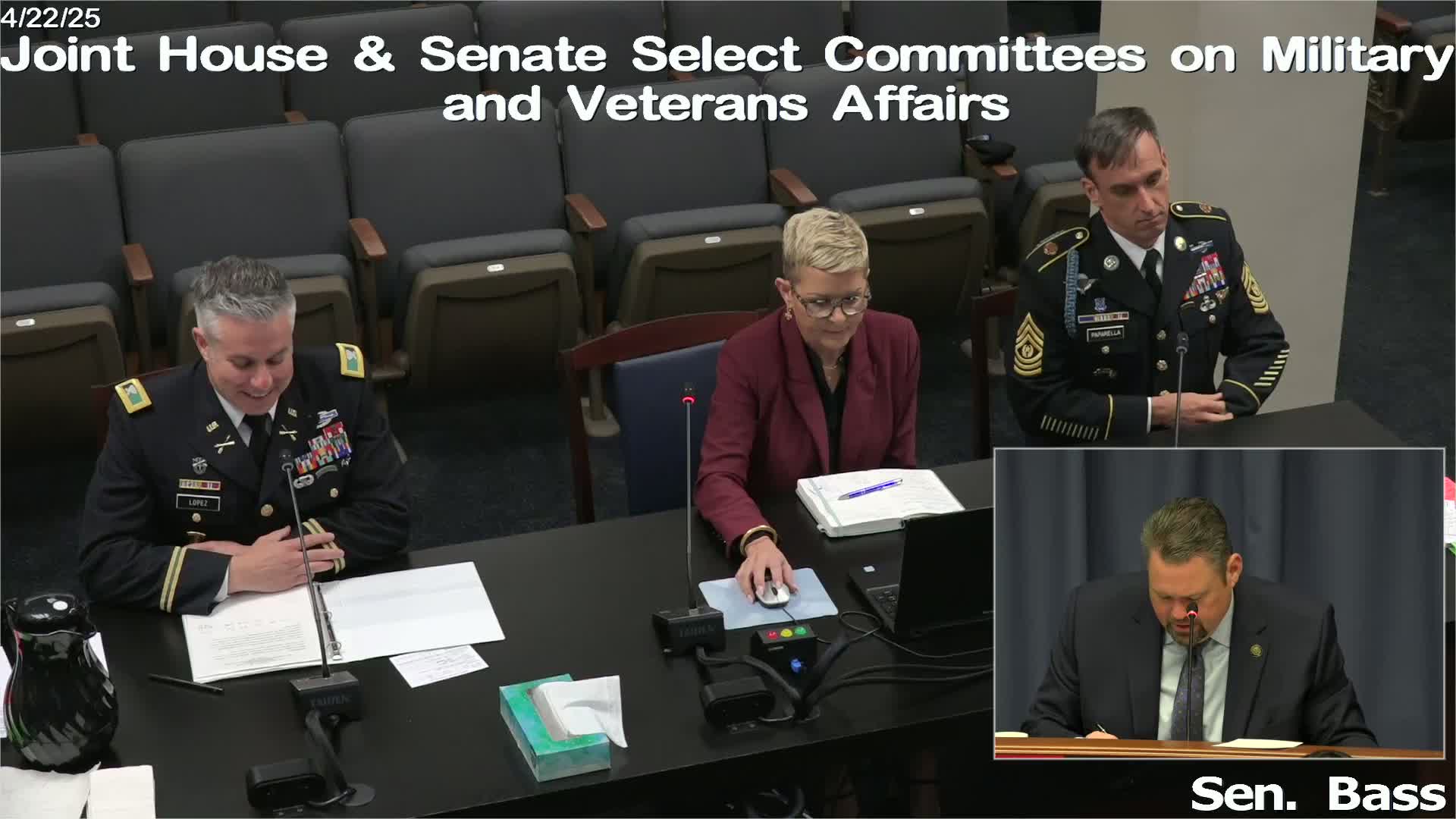
Colonel (Fort Johnson commander) told the Military and Veteran Affairs Committee that Fort Johnson and the Joint Readiness Training Center (JRTC) remain a brigade‑level training center of excellence and that rotational brigades train “about 10 times a year” at the installation.
Why it matters: Fort Johnson’s mission prepares brigade‑level units for large‑scale combat operations, and the installation’s training tempo and logistics network have statewide economic and readiness consequences. Committee members pressed Fort Johnson leaders on planned reductions in permanent stationing levels, housing and the need to modernize remote bivouac facilities.
Fort Johnson overview: The commander said training at JRTC is designed to prepare brigades for large, contested operations and stressed the installation’s unique training value — an opposing force (the 509th Parachute Infantry Battalion, referred to as Geronimo) and training infrastructure that emulate near‑peer threats. He said the installation supports approximately 6,900 soldiers and about 11,000 family members and that rotational training cycles draw about 8,000 personnel per rotation.
Force‑structure projections and concern: The commander walked lawmakers through stationing projections tied to Army restructuring. He said the garrison currently fields roughly 6,900 assigned soldiers and that stationing levels are projected to fall to about 6,300 by FY 2028 before recovering to roughly 6,700 in FY 2029 once planned re‑stationing actions finish. Committee members and Fort Johnson leaders noted that reductions affect on‑post patronage, school districts and local businesses and urged continued engagement with Army headquarters and FORSCOM.
Infrastructure priorities: The commanders identified the aging remote unit bivouac area on North Fort as the installation’s top infrastructure priority. Previous planning estimates cited in testimony placed a modernization cost in the hundreds of millions; an earlier figure discussed in committee meetings was roughly $235 million to create durable, weather‑resistant lodging and support in the North Fort training area. Fort Johnson leaders said they have ongoing projects including a new network exchange center, a child development center and improvements to on‑post housing executed with a private partner (Corvias), which has invested about $92 million in renovations and new construction on base housing.
Transition and community programs: Fort Johnson leaders described a BOOT program and other transition assistance and internship relationships that aim to keep separating service members and spouses in the local economy. The commander said the base has hosted more than 25 hiring fairs and that the BOOT program placed multiple hires locally; testimony cited roughly 49 hires and about 92 candidates in the program pipeline at the time of testimony.
Next steps and concerns: Committee members asked for historical stationing numbers and urged the state and federal delegation to press the Army on installation utilization, given the installation’s training footprint and community investments. Fort Johnson officials said they will continue outreach to lawmakers and other stakeholders and emphasized the North Fort modernization need as a near‑term priority.
Ending: Fort Johnson leaders thanked the committee for state and local partnerships and asked for continued support in conveying installation value to Army decision makers.