Get Full Government Meeting Transcripts, Videos, & Alerts Forever!
Get email alerts on the State Of Agriculture Commissioner Report topic
No spam. Unsubscribe anytime.
Agriculture commissioner outlines trade pressures, supply strains and disease risks in State of Agriculture briefing
Summary
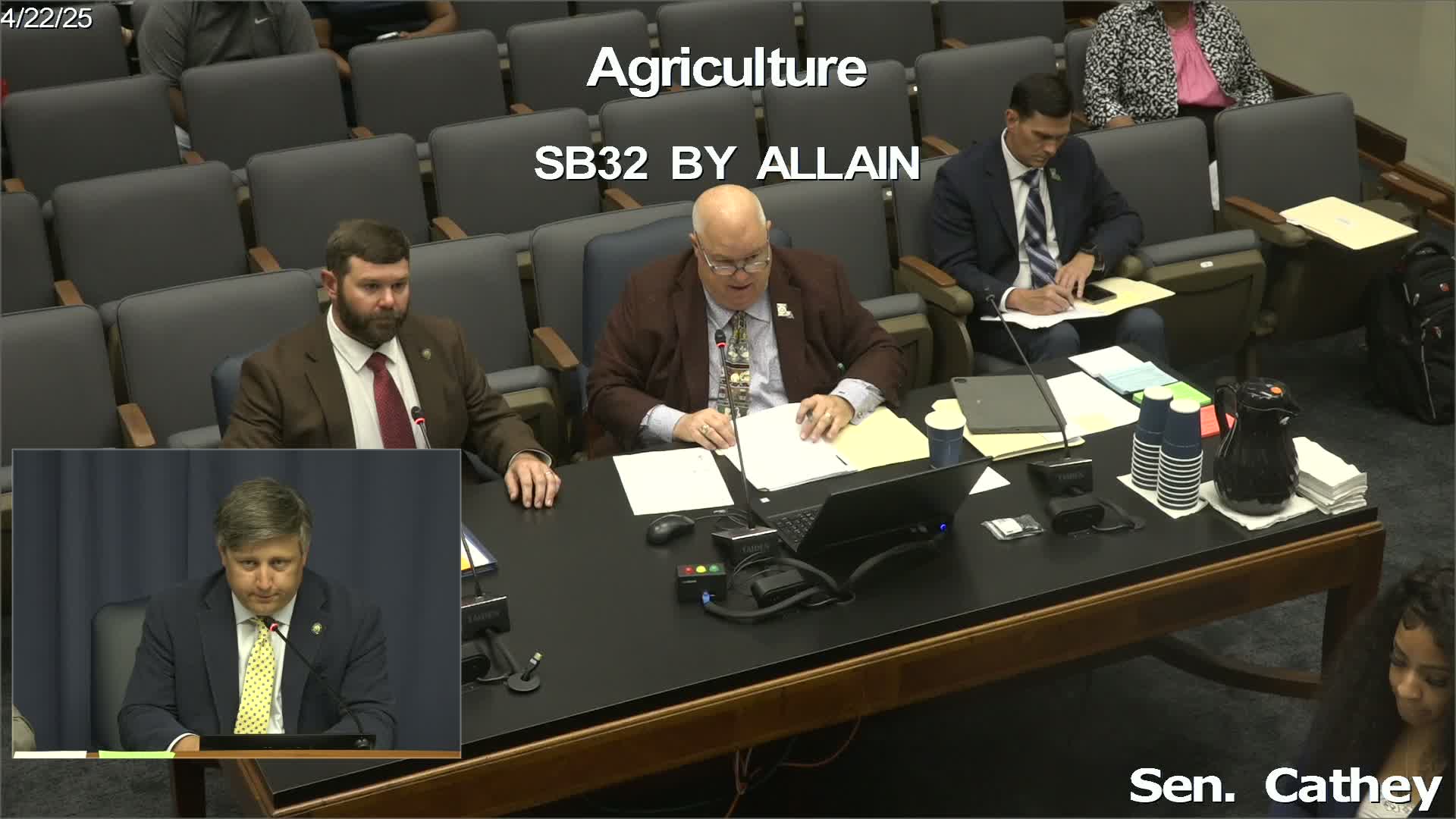
Mike Strain, Louisiana Commissioner of Agriculture and Forestry, told the Senate Committee on Agriculture on April 22 that global trade imbalances, fertilizer logistics, animal disease outbreaks and port capacity are central concerns for the state's farmers and seafood industry.
Mike Strain, Louisiana Commissioner of Agriculture and Forestry, delivered a State of Agriculture presentation to the Senate Committee on April 22, highlighting international trade pressures, fertilizer and fuel logistics, animal disease outbreaks and port/export infrastructure.
Strain opened by focusing on trade and currency issues, saying a strong dollar and weaker foreign currencies make exports harder and imports cheaper. He cited recent tariff talk by China on agricultural goods and emphasized the importance of reestablishing export markets. "If China doesn't buy from us, they've got to buy from somewhere else," he said, and he highlighted the Port of South Louisiana as "the largest exporter of soybeans in the world."
On fertilizer and inputs, Strain said sulfur is again becoming scarce in many soils after reductions in sulfur emissions from fossil fuels. He linked gypsum as one option to supply sulfur and noted logistics problems affecting nitrogen fertilizer distribution — including high river levels and larger-than-expected corn acres — meaning fertilizer exists but can be difficult to deliver to some farmers promptly.
The commissioner addressed animal disease concerns at length. He summarized the high‑path avian influenza situation and the related spread into other species, including commercial cattle herds. He said cattle can shed virus in milk up to three weeks before clinical signs and noted recent herd counts and farm impacts in multiple states. "We are a proponent of vaccinating our cattle and our poultry against bird flu," Strain said, citing a goal to stop the virus before it reaches the human population; he also referenced "70" human cases and said there had been one human fatality in Louisiana mentioned during the presentation.
Strain described federal and regulatory items affecting agriculture, including the Waters of the United States (WOTUS) rulemaking and the Clean Water Act litigation background, an ongoing atrazine review relevant to soybean production, and recent executive orders on seafood production and import transparency. He said the department will expand seafood promotion, testing and import labeling work and cited an executive order dated April 17 directing federal agencies to bolster the domestic seafood industry.
Export infrastructure and trade missions were a recurring theme. Strain said a planned container-capable port project near New Orleans (referred to in testimony as Dockville) could accept very large ships (slides referenced vessels carrying about 24,000 TEUs) and that the department works to open smaller or less-traveled markets through direct sales. He described recent trade missions to Cuba and said the department is selling rice, chicken and other products there, noting limitations related to Cuban production capacity and finance.
Other programs mentioned included an unwanted-pesticide collection program that the commissioner said has removed "850,000 to date" (the presentation did not specify units), and continuing efforts on aquaculture promotion; Strain reported Louisiana has hundreds of thousands of acres under active aquaculture use including oysters and crawfish.
Committee members thanked the commissioner for the briefing and reserved additional questions or follow-up for staff and written materials. No committee action was taken on the presentation itself; it was received as informational.