Get Full Government Meeting Transcripts, Videos, & Alerts Forever!
Get email alerts on the Veterans Affairs topic
No spam. Unsubscribe anytime.
House rejects proposal that would have allowed paid, non‑accredited providers to assist veterans with claims
Summary
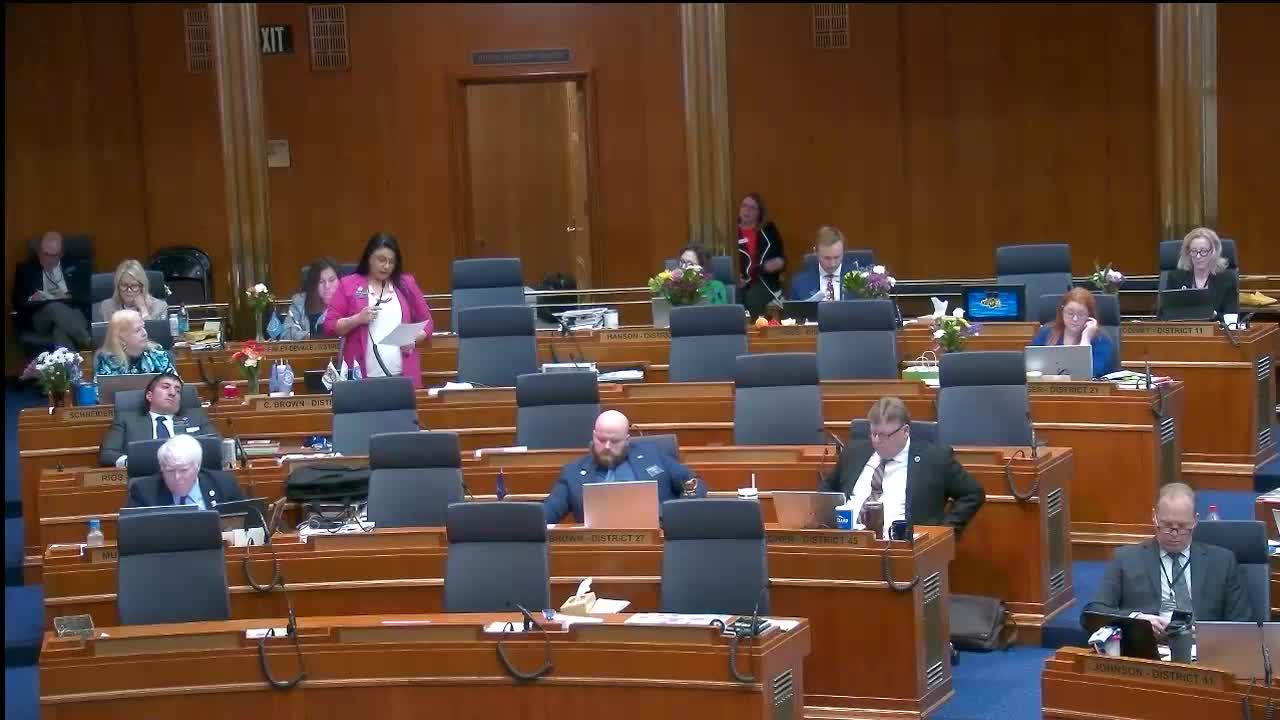
After lengthy debate about consumer protections and fees, the House voted 34-60 to defeat House Bill 11‑69, which would have created guardrails for non‑accredited providers who assist veterans with VA disability claims and capped fees at up to five times the monthly benefit increase.
The North Dakota House on April 20 defeated House Bill 11-69, a measure that would have established disclosure rules, background checks, and a compensation cap for private, non‑accredited providers who help veterans submit initial VA claims. The motion to pass the bill failed on a roll-call vote, 34 yea and 60 nay.
Representative C. Brown, who carried the bill on the floor, framed it as a consumer‑protection framework that preserves veterans’ freedom to choose help while requiring written agreements, disclosures about free state-accredited services and limits on upfront fees. Brown said the legislation “sets clear and reasonable standards for those unaccredited providers” and that it would add civil enforcement tools for abusive actors.
Opponents — including Representative C. Brown (a different earlier speaker who argued against the measure in committee), Representative Schauer and others — said the bill put veterans at risk by permitting for‑profit, non‑accredited actors to charge as much as five times the monthly increase in awarded benefits. Representative C. Brown (floor opponent) told colleagues, “Ethically, I cannot support this bill that puts our most vulnerable veterans at risk,” and pointed to the absence of a mandated accreditation requirement and the potential for large fees on low‑income disabled veterans.
Speakers on both sides described practical limits in North Dakota: supporters cited limited capacity among accredited veteran service officers (VSOs) and argued some veterans prefer a paid option to expedite claims; opponents emphasized that non‑accredited providers cannot represent veterans before the VA on appeals and therefore cannot defend work once a claim is filed. Several members urged adoption of federal compensation standards (cited during debate as 38 C.F.R. §14.636 or the federal “33 1/3%” guidance) rather than the higher cap included in the bill.
The bill was the subject of a conference committee process; committee members reported failing to reconcile a friendly amendment that would have aligned state compensation limits with federal rules. The House then took the final recorded vote and declared House Bill 11-69 failed, 34 yea and 60 nay.
Why it matters: The vote preserves the status quo in North Dakota: private non‑accredited providers may continue to operate, but this bill would have created a state regulatory framework and a statutory fee cap. Opponents argued that the statutory cap in the bill was too high and could enable predatory practices; supporters said statutory guardrails were needed because accredited VSOs do not have capacity to serve every veteran rapidly.
What’s next: Because the bill failed on the House floor, no state statutory changes from HB11‑69 will take effect. Supporters may return with narrower language or a different compensation standard in a future session.