Get Full Government Meeting Transcripts, Videos, & Alerts Forever!
Get email alerts on the Dependency Proceedings Party Status topic
No spam. Unsubscribe anytime.
Tribes back SB 815 to make ODHS a party when it files dependency petitions
Summary
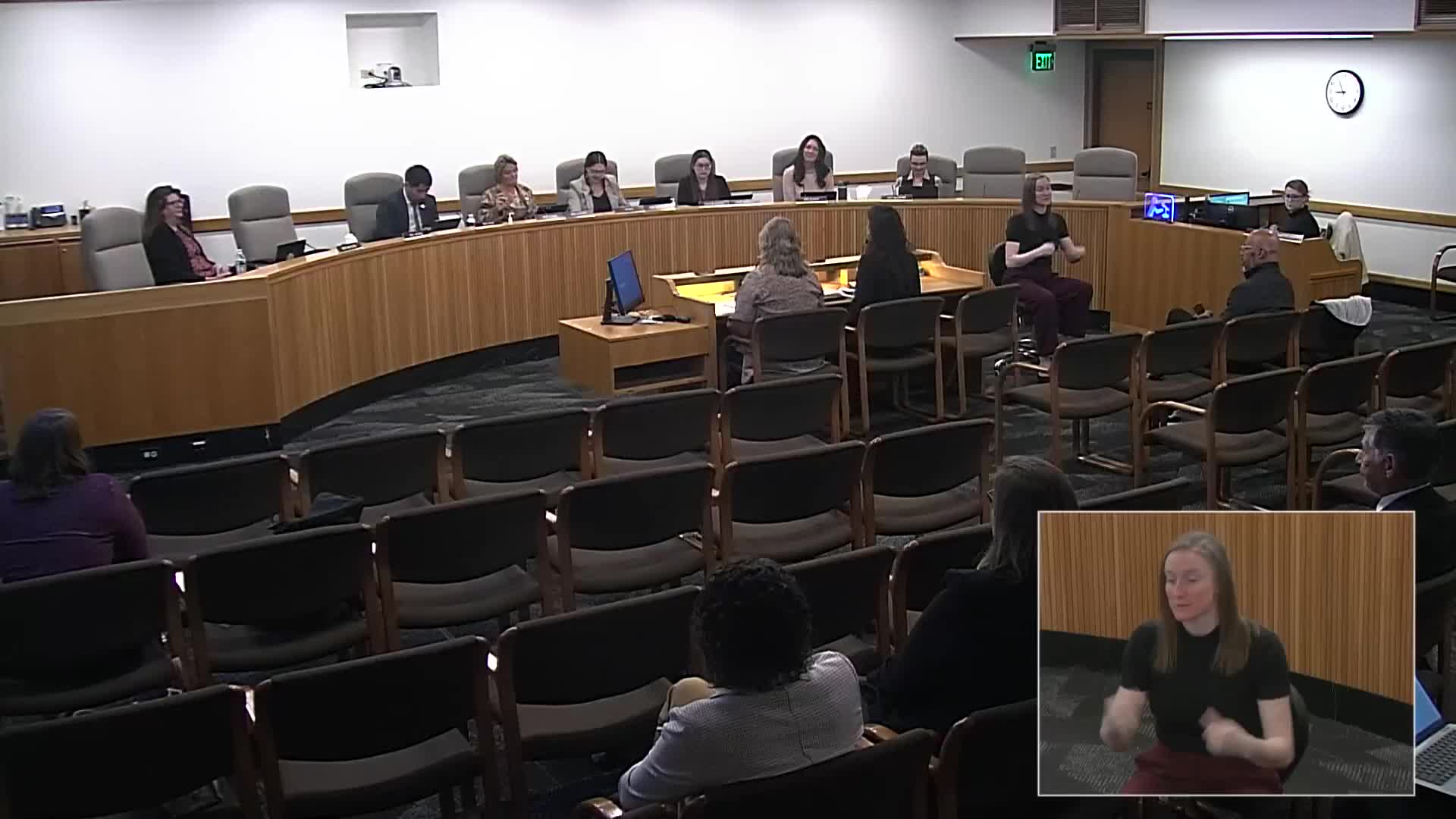
Senate Bill 815 was presented to the House Committee on Early Childhood and Human Services on April 22 to clarify that the Oregon Department of Human Services is a party to juvenile dependency proceedings from the time it files a petition alleging a child needs protection, even if the child is not removed from the home.
Senate Bill 815 was presented and heard April 22 by the House Committee on Early Childhood and Human Services. The bill would clarify that the Oregon Department of Human Services (ODHS) is a party to juvenile dependency proceedings from the time it files a petition alleging a child is in need of protection, regardless of whether the child is removed from the home.
Molly Miller, deputy director for ODHS child welfare, told the committee the proposal responds to a legal gap that could leave ODHS without party status — and thus potentially outside discovery obligations and court-ordered “active efforts” — when the agency files a petition but does not remove the child. “There was a time period between the time that we took protective custody and the time we were granted temporary custody that because of the way that the law had previously been written, it could have been interpreted that we did actually not have legal standing in the case,” Miller said.
Tribal witnesses urged the committee to adopt the change. Michael Collins, representing the Confederated Tribes of Warm Springs Reservation of Oregon, said the Warm Springs tribe supports SB 815 because “the protection of our tribal members, including their children is a core aspect of our inherent sovereignty” and the bill would help ensure ODHS meets obligations under ICWA and ORICWA. Brent Leonard, an attorney for the Confederated Tribes of the Umatilla Indian Reservation, said the tribe “strongly supports SB 815,” calling it a “critical fix” and warning that without clarification the law could create incentives to remove children unnecessarily. “Without it, I'm concerned that it actually provides an incentive to the state to remove children when they shouldn't be and actually undermine the whole point of ICWA,” Leonard told the committee.
Miller and Cheryl (interim Tribal Affairs director at ODHS) explained the statutory background: ODHS authority to take protective custody and ask for a shelter hearing occurs prior to some shelter or temporary-custody orders, and in some cases the department’s party status was ambiguous when no removal had yet occurred. The bill would treat ODHS as a party from the time a petition alleging a child needs protection is filed. ODHS staff said they would follow up on a committee question about whether the consultant who completed an implementation assessment interviewed families directly.
Representative Hartman asked a technical question about the bill language that mentions “child-caring agency” and whether those entities would be considered parties when they hold temporary custody; ODHS staff said they would confer and return an answer. Committee members did not take a vote at the hearing.
Ending: SB 815 received tribal and agency support at the public hearing; committee members asked for clarifying language about definitions and ODHS said it would return with technical clarifications before any committee action.