Get Full Government Meeting Transcripts, Videos, & Alerts Forever!
Get email alerts on the Public Safety topic
No spam. Unsubscribe anytime.
Subcommittee hears overview of DPSST budget, staffing and facility needs ahead of fee bill hearing
Summary
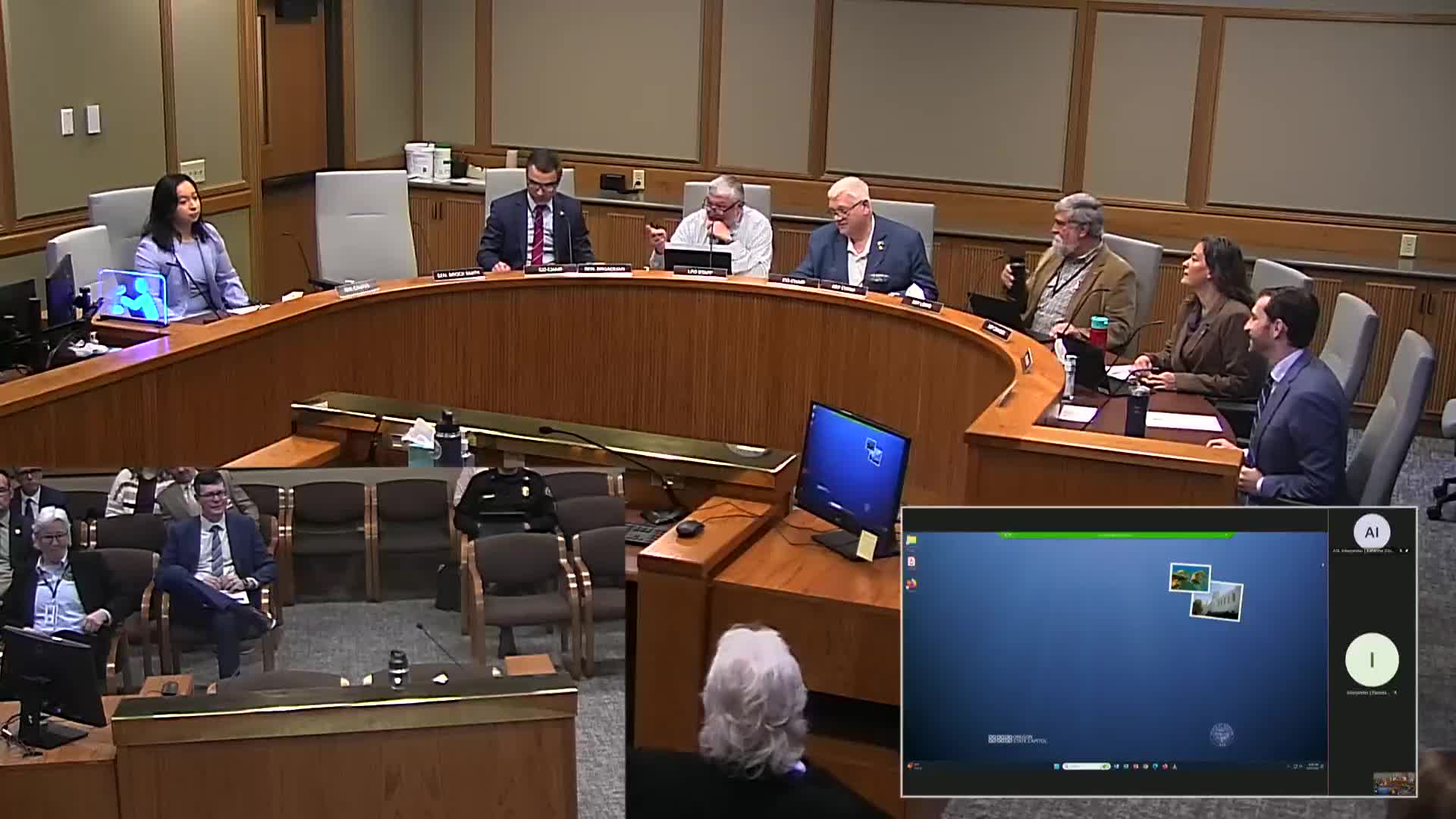
The Public Safety Subcommittee opened an informational hearing on House Bill 5,032 on the Department of Public Safety Standards and Training's 2025-27 governor's recommended budget, hearing agency leaders and the DAS finance office lay out revenue, staffing and facility challenges.
The Public Safety Subcommittee opened an informational hearing on House Bill 5,032 on the Department of Public Safety Standards and Training's (DPSST) 2025-27 governor's recommended budget, hearing agency leaders and the Department of Administrative Services (DAS) Chief Financial Office lay out revenue, staffing and facility challenges.
Jonathan Bennett, with the DAS Chief Financial Office, told the subcommittee that the agency's current service-level budget for 2025-27 is roughly $97,300,000 and that about two-thirds of DPSST's funding comes from the criminal fines account. "The criminal fines account accounts for about 2 thirds of the agency's budget and supports the criminal justice training and certification functions of the agency," Bennett said, and he warned the panel of declining revenues and increased allocations that are stressing that fund.
DPSST Director Phil Castle and Deputy Director Kathy McAlpine described program demand, training capacity and proposed budget priorities. Castle said the agency currently staffs about 184 positions at service level and that the governor's budget would add 16 positions to bolster training, maintenance and program staff. He also said the budget includes funding for a study to examine expansion or replacement of aging academy facilities and bond funding for a cloud-based learning management system.
McAlpine, who oversees professional standards, told the committee the agency's caseload for professional standards investigations has risen while closures have increased as well. She said DPSST had 324 open professional standards cases and that contested decertification hearings pushed legal costs higher: "We had 10 cases that went forward or contested, in 2024 to the tune of $265,000 in legal fees for us," McAlpine said.
Committee members asked about facility condition and capacity. Bennett and Castle said the governor's budget includes $500,000 for a campus expansion or replacement study; Castle said the agency has also sought e-board authority to address structural repairs, citing an earlier $1.1 million repair authorization that was not fully expended and that agency staff are working to carry those repairs into the next biennium.
The agency described training operations and regional outreach. Castle said DPSST runs multiple overlapping basic police courses year-round, that a 16-week basic police course comprises about 640 hours of instruction and that the agency rarely runs fewer than four basic police courses concurrently. Castle and McAlpine said the agency has conducted more than 220 regional training sessions in over 50 communities and that regional training is a key demand driver.
Castle highlighted the Center for Policing Excellence (CPE), which conducts research, the annual stops report and an enrollment forecast used to plan training. He identified behavioral health curriculum developed with in-state partners and said the center will publish a "Choosing to Serve" survey in May to inform retention and recruiting strategies.
Officials described other program metrics and costs. DPSST told the subcommittee its in-academy cost per police recruit averages just under $20,000 while the sending agencies incur an average additional cost near $55,000 while the recruit attends the academy. The agency also supervises a public safety memorial fund, which it said has paid more than $2,400,000 to beneficiaries since 1999.
The department also described federal grant work. As fiduciary for the Oregon-Idaho High Intensity Drug Trafficking Area (HIDTA) program, staff said task forces seized roughly 3,320,000 fentanyl pills and about 1,500 kilograms of methamphetamine in 2024, arrested about 2,000 suspected traffickers and seized 898 firearms; HIDTA-supported efforts also provided roughly 9,000 training hours to about 1,400 officers in the biennium.
On policy packages, DPSST said the governor's budget proposes a learning management system (a multi-year implementation), three compliance specialists and additional permanent firearms trainer positions to replace limited-duration staff, plus positions for wildfire trainers, a plumber for campus maintenance and regional training staff. Castle said replacing limited-duration firearms trainers with permanent FTEs is critical to keep firearms ranges staffed and safe.
Committee members pressed on specific issues, including how staffing vacancies and reliance on retired or loaned instructors affect delivery, whether the agency can standardize field training officer programs, and how reductions would affect the number of recruits trained. Castle said a hypothetical 10% budget cut would reduce the agency's training capacity by about 100 students, "maybe a little bit less, maybe a little bit more," depending on scheduling.
No formal actions or votes were taken at the hearing. The subcommittee closed the informational briefing and was told it will hold public testimony the following day on House Bill 5,032 and invited testimony on House Bill 5,033, the DPSST fee bill.
Looking ahead, DPSST officials asked for continued support to address facility upkeep and expansion, professional standards case processing and a multi-year transition to new training technology. The department said many operational challenges ' from regional training demand to litigation costs on contested cases ' will require continued legislative attention and funding decisions in the coming session.