Get Full Government Meeting Transcripts, Videos, & Alerts Forever!
Get email alerts on the Court Appointed Special Advocates topic
No spam. Unsubscribe anytime.
Senate Bill 135A would add CASA representatives to local child-welfare review teams
Summary
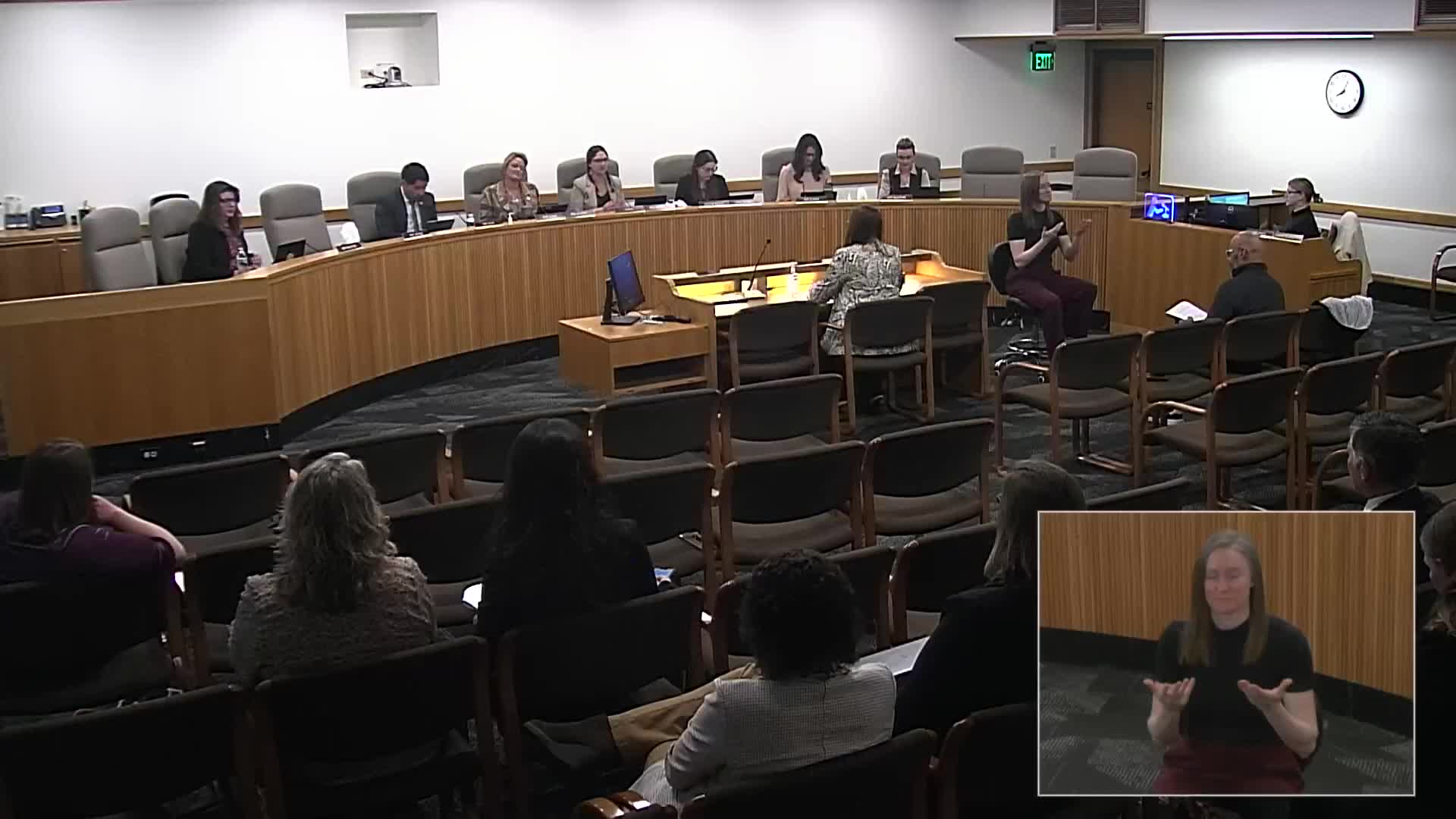
Senate Bill 135A was presented April 22 to the House Committee on Early Childhood and Human Services, proposing that local CASA (court-appointed special advocate) programs have a designated representative at local child-welfare review and response tables.
Senate Bill 135A was presented April 22 to the House Committee on Early Childhood and Human Services, proposing that local CASA (court-appointed special advocate) programs have a designated representative — typically a CASA staff member chosen by the local program — at certain local child-welfare and safety tables.
Sen. Sarah Gaussler Blue, sponsor of the Senate Human Services bill, said the measure would “ensure that we have the voices of youth” at local response and review tables and that CASA volunteers are highly trained and appointed by the court. “CASA’s role is to advocate for the best interest of the child,” Gaussler Blue told the committee.
The bill would add CASA representation to three kinds of local bodies: local domestic-violence coordinating councils, county child-abuse multidisciplinary teams and critical incident review teams that convene after the death of a child who had an open investigation or hotline call in the prior 12 months. The amended bill clarifies that a program may send a CASA staff member rather than a volunteer, that designees are chosen locally and that a meeting may proceed if no CASA representative is available.
Chris Hinkle, staff attorney for the Oregon CASA Network, testified in support. “The Oregon CASA Network is the statewide coordinating entity for the 19 court-appointed special advocate programs in Oregon,” Hinkle said, adding that Oregon statute mandates a CASA be appointed in every dependency action and that the network seeks increased funding to expand capacity. Hinkle told the committee the network is seeking $10,000,000 in combined funds during the session toward a benchmark estimate of about $20,000,000 to serve all children in care.
Committee members asked how local programs would select designees and whether designees could be volunteers. Gaussler Blue said local programs and multidisciplinary teams would choose representatives and that the bill intentionally allows staff designees so representation is current and engaged rather than relying on historic volunteers. Representative Walters noted a strong CASA program in her county and asked whether there were regional gaps in coverage; Hinkle replied that the network’s 19 programs represent all Oregon counties and that he expected staff members to serve as designees often.
Supporters emphasized CASA training and the difference between a CASA and a child’s attorney: the CASA advocates for the child’s best interest while a child’s attorney advocates for the child’s stated preferences. Committee members also discussed funding challenges; Gaussler Blue and Hinkle said some local programs face federal funding shifts that have reduced capacity in particular counties.
The committee conducted the public hearing and closed it without committee action recorded at the meeting.
Ending: The bill was taken under public hearing on April 22; no committee vote or final action was recorded during this meeting. If the committee advances the bill it will return for subsequent legislative steps and possible hearings in the Senate Human Services committee, where committee staff said an informational hearing is planned later in the session.