Get Full Government Meeting Transcripts, Videos, & Alerts Forever!
Get email alerts on the Pensions Side Accounts 2027 topic
No spam. Unsubscribe anytime.
PERS warns many employer side accounts will expire in 2027, schools likely to see biggest rate changes
Summary
PERS actuaries said more than half of about 350 employer side accounts will expire in the next few years, with 181 expiring around 2027; school districts comprise a large share of the high‑impact expirations and employers must notify PERS by May 2027 to reestablish offsets under a proposed process.
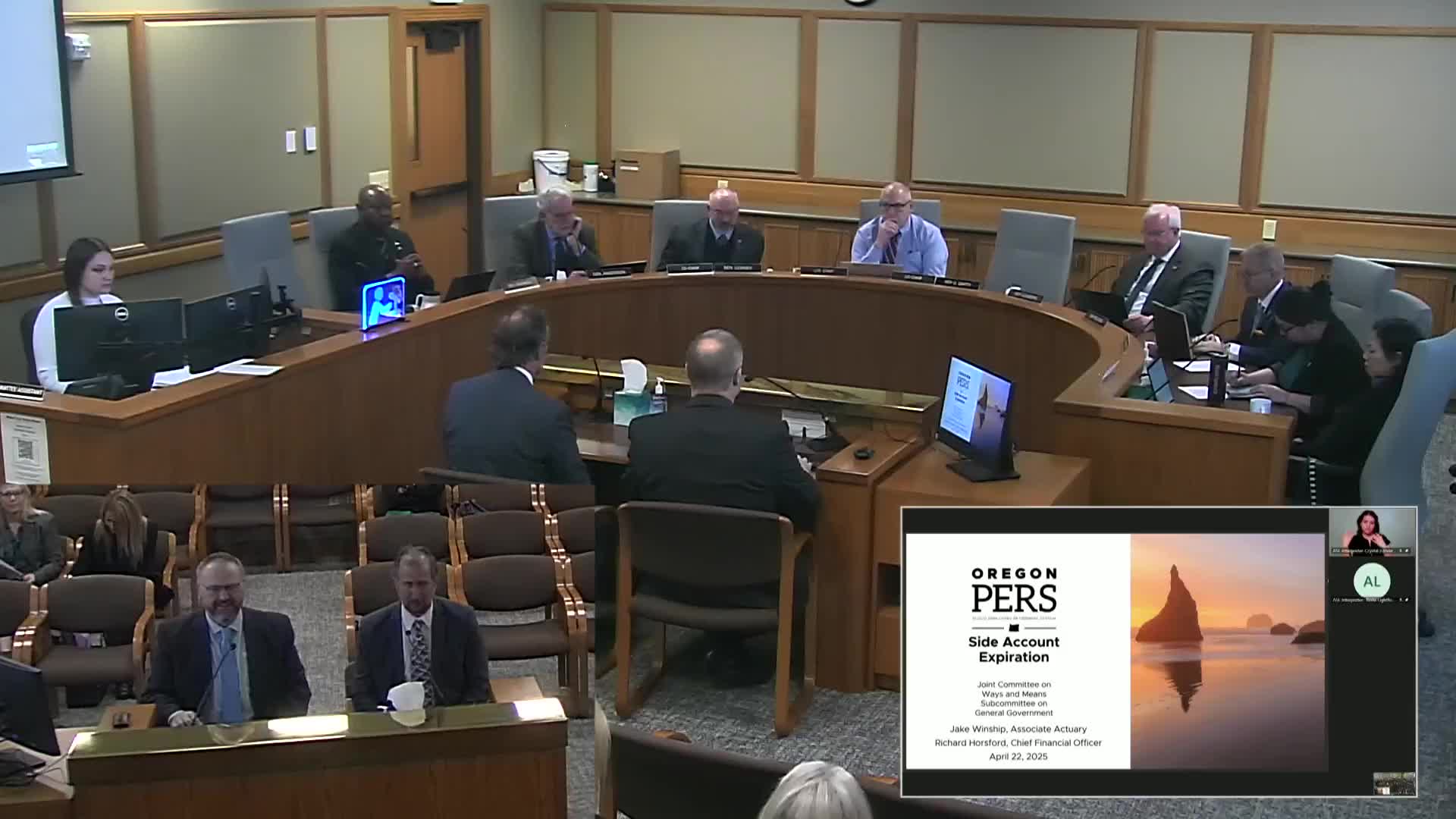
PERS actuaries told the General Government Subcommittee on April 22 that a large number of employer side accounts — prepaid arrangements that offset contribution rates — will expire in 2027 and that school districts and community colleges account for much of the exposure.
"Out of about 350 total side accounts, more than half, 181, are expiring in the next couple of years," Jake Winship, actuarial manager at PERS, said. Winship explained that side accounts are an irrevocable part of the PERS trust whose benefit accrues exclusively to the employer that makes the deposit; they are typically amortized over a 20‑year period and treated as offsets to employer contribution rates.
Winship said employers established side accounts using several tools, including the Employer Incentive Fund and pension obligation bonds. Many pension obligation bonds issued in the early 2000s are scheduled to retire in 2027; where bonds expire and side accounts expire at different times, employers can experience cash‑flow pressure because pension costs and debt service are timed differently.
PERS presented a breakdown showing the largest counts and highest offset percentages in the 2027 expirations were concentrated in school districts (by count and by projected percent‑of‑payroll offset). Winship said PERS will follow a practice of changing contribution rates only at the start of a biennium unless necessary, because ad hoc changes are disruptive to employers and the PERS systems that calculate rates.
To reduce abrupt rate volatility, Winship described an option under development: PERS would calculate each employer’s 12/31/26 balance (plus 2026 earnings, which will be known in April 2027) and notify employers; employers with a remaining balance above a threshold (PERS cited a proposed $250,000 minimum) would be offered the opportunity to reestablish a new side account and set an offset effective Jan. 1, 2028. Employers that do not reestablish a side account would receive credits and the remaining balance would be distributed on scheduled dates (June 30, 2027 and Nov. 1, 2027), per PERS’ described process.
Winship emphasized legal and operational constraints: side accounts are trust assets; PERS must avoid crediting employers beyond actual balance and earnings to prevent trust or invoicing complications. He also noted administrative work steps the agency is developing with fund accounting staff to prevent post‑close transactions on fully distributed side accounts.
Richard Horford, the agency chief financial officer, introduced the item to the committee and thanked Winship; the subcommittee had no immediate questions. PERS said it will provide employers with balances and an opt‑in process to reestablish offsets where feasible, and urged employers to engage with the agency as the 2027 expirations approach.