Get Full Government Meeting Transcripts, Videos, & Alerts Forever!
Get email alerts on the State Of Economy Portland Multnomah topic
No spam. Unsubscribe anytime.
Senate committee hears economists: Portland, Multnomah County face slower growth, housing and fiscal strain
Summary
ECONorthwest and state economists told the Senate Committee on Labor and Business on April 22 that Portland and Multnomah County have seen slower population and job growth, a sharp drop in multifamily permitting, and a fiscal outlook that could strain local services without policy changes.
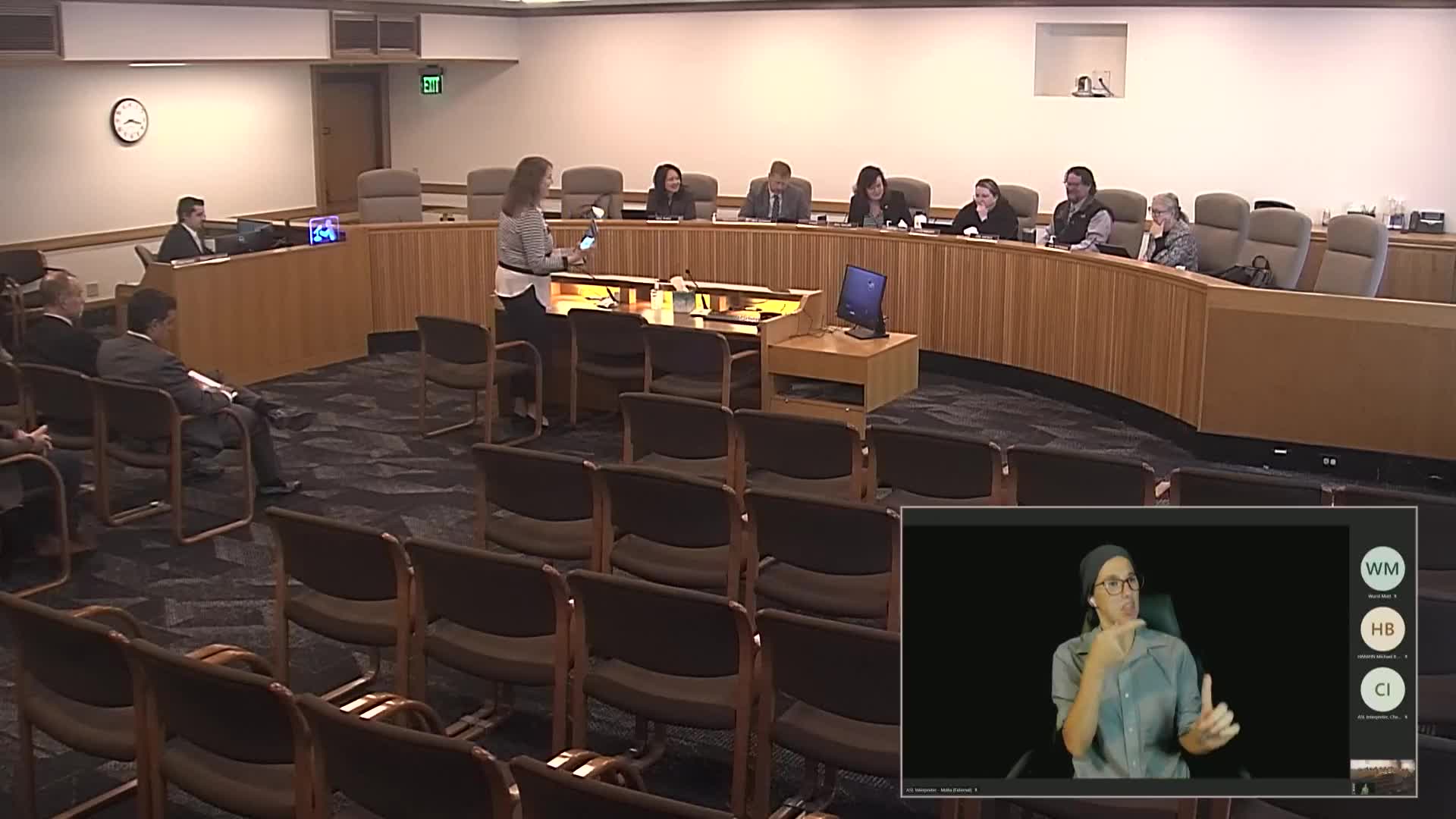
Senate Committee on Labor and Business Chair Taylor convened an informational hearing April 22 on the 2025 state of the economy for Portland and Multnomah County, where ECONorthwest and state economists described slower population growth, weak job recovery and a decline in housing production that they said could depress local revenues.
The briefing matters because Portland is the state’s largest economic hub and prolonged underperformance in jobs, population and housing production can reduce tax revenues, strain public services and create negative feedback loops that further erode local quality of life and economic competitiveness.
Mike Wilkerson, director of economic research at ECONorthwest, told the committee that the region has shifted from being one of the fastest-growing metros before the pandemic to one of the weakest-performing among the largest U.S. metros. "The narrative around the doom loop has, I think, disproportionately taken away from the actual message, which is what are the contributing factors to growth in the region?" Wilkerson said.
Wilkerson emphasized three broad drivers: large structural changes to the economy, an overreliance on population growth as an economic development strategy, and some well-intended policies that produced unintended outcomes. He said domestic migration has been negative for the three Oregon counties in the Portland metro for several years and that a one-time Census methodology change in 2024 increased estimates of international migration without changing underlying domestic trends.
The economists highlighted measurable effects in the housing market. Wilkerson said metro permitting has fallen and the decline is concentrated in multifamily projects: "multifamily permitting in the City of Portland never achieved the levels seen pre-pandemic and is now at 22% of pre-pandemic permitting levels." Statewide housing production targets set by the Oregon Housing Needs Analysis are about 29,500 units per year; Wilkerson said recent permitting totals are roughly half the pace needed, with total permits around 14,400.
Those declines, the presenters said, reduce the construction pipeline and will increase upward pressure on rents. Wilkerson noted that 75% of households earning less than 60% of area median income are already cost-burdened; he warned that reduced delivery will likely worsen affordability for low- and moderate-income renters.
Tax policy and local levies also drew attention. Wilkerson and Legislative Revenue Office analyst Chris Alenek described the state-and-local tax system as tightly interconnected. Alenek told the committee: "The state and local tax system is very interconnected with the restriction on property taxes." Wilkerson pointed to Oregon’s relatively high combined tax burden for a typical household and said Portland’s local tax decisions — including measures that add local income taxes or payroll levies — can affect migration and investment decisions.
Carl Riccadano, chief state economist, summarized the state-level implications: "As goes Portland, so will go the state." Riccadano said Portland’s share of the state economy has grown over decades, so sustained underperformance in the metro would likely weigh on statewide population, GDP and tax revenue growth.
Committee members pressed presenters on longer-term implications and remedies. Senator Pham asked whether Oregon should diversify tax sources; Wilkerson replied, "I don't know that I would go so far as to say a recommendation. I think it certainly warrants a study to evaluate the trade offs." Chair Taylor and other senators discussed how local ballot measures interact with state fiscal capacity and whether changes in the local tax mix risk shifting burdens to state budgets.
Pam Lovett of the Go West Credit Union Association also spoke during the hearing about a technical change in House Bill 3370 that adjusts a notification time frame from 76 days to 75 days; she described it as "just a technical update to fix that." The committee later handled that bill in a separate work session.
The committee requested follow-up data, including more detail on the age and income characteristics of people leaving Multnomah County and Portland, and signaled it may call the presenters back. Chair Taylor closed the informational portion of the hearing and moved on to carryover and work-session business.
Looking ahead, the presenters warned that absent sustained growth or different policy choices, Portland’s trajectory could reduce local revenues, constrain services and make it harder to attract outside investment. The committee carried some bills to future meetings and asked staff to provide additional migration and demographic breakdowns for a later briefing.