Get Full Government Meeting Transcripts, Videos, & Alerts Forever!
Get email alerts on the Faith And Community Office topic
No spam. Unsubscribe anytime.
Senate Appropriations Committee advances bill to codify Office of Faith and Community after heated debate over political activity
Summary
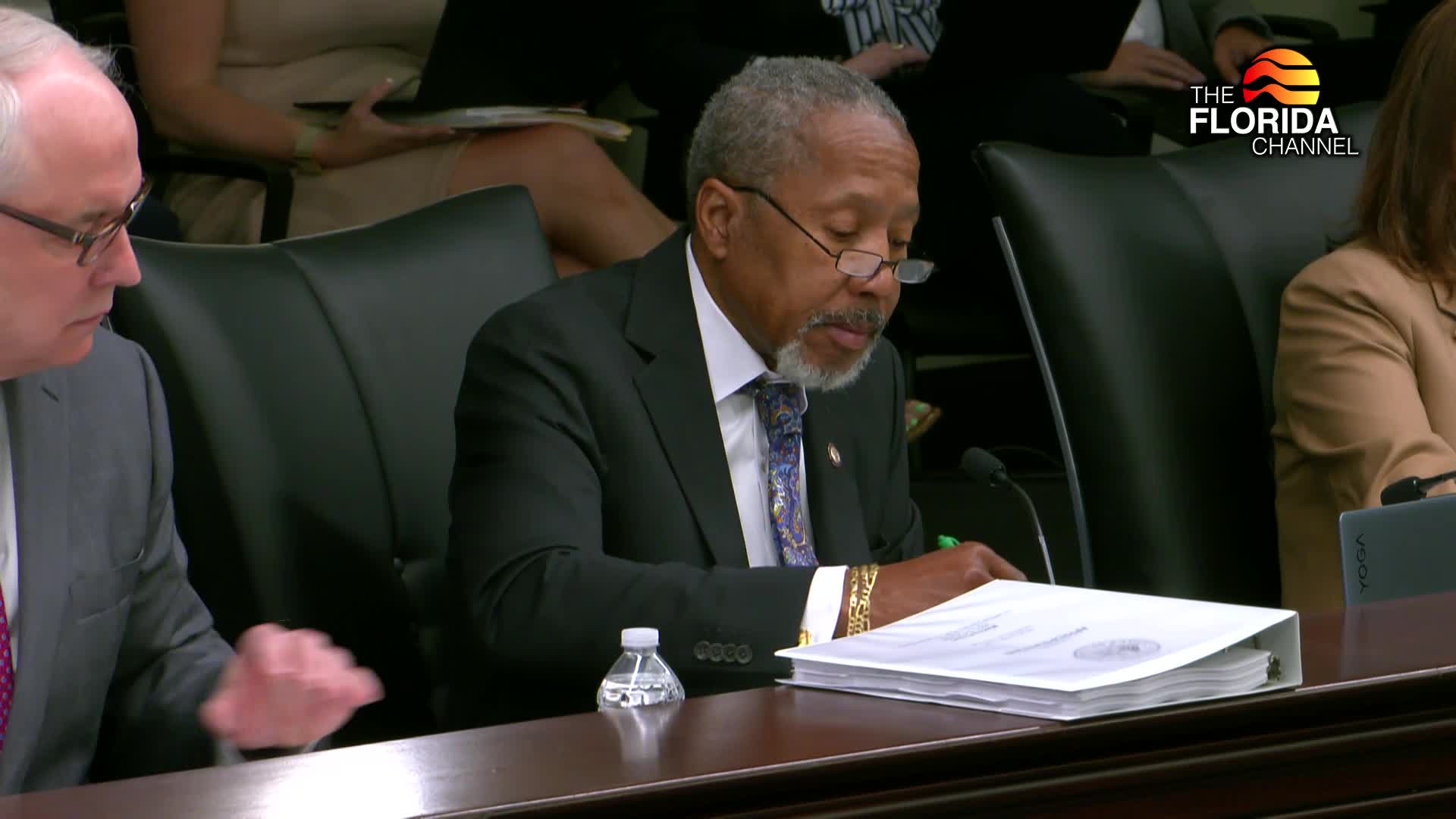
Senate Appropriations advanced CS for SB 820 on a roll call after extended questioning and debate over whether the Office of Faith and Community has engaged in political messaging to faith leaders.
Senate Appropriations advanced CS for SB 820 on a roll call after extended questioning and debate over whether the Office of Faith and Community has engaged in political messaging to faith leaders.
The committee voted to report CS for SB 820 favorably after Senator Robyn Yarbrough explained the measure would codify an office that has operated administratively since 2019 and support the Florida Faith and Community Advisory Council. Yarbrough said the office connects faith- and community-based organizations with state-level decisionmakers, provides outreach to roughly 30,000 organizations and does not direct state grants to nonprofits.
The measure’s sponsor and supporters said codifying the office preserves an existing staff of eight and the office’s liaison role inside the Executive Office of the Governor (EOG). Yarbrough told the committee that the office’s functions include maintaining a liaison, managing outreach and providing data and coordination to help connect Floridians with services.
Opponents and several questioners pressed officials on specific practices. Senator Lori Polsky and others asked whether emails bearing the governor’s letterhead had urged faith leaders to oppose constitutional amendments; Polsky and Senator Anthony Pizzo said they had seen communications bearing the office seal that urged political action and asked the sponsor to produce those messages before the bill advances to the floor. Yarbrough repeatedly said she had not seen the messages and offered to review any examples provided.
Senator Polsky and others raised concerns about the office’s relationship to Hope Florida and whether the liaison’s simultaneous roles created conflicts; the sponsor and committee staff said the entities are distinct and that Hope Florida’s “hope navigators” are a separate program not created by the bill.
Supporters in the committee, including Senator Harrell and others, said the office provides significant nonstate help: Yarbrough reported the initiative has connected or served roughly 13,000 adults and 30,000 children and estimated $52 million in annual savings to Florida’s child welfare system from private faith-and-community activity. Supporters emphasized the office’s stated voluntary nature for participating organizations and said no state funds are distributed to faith groups through the codification.
Much of the debate centered on whether an office connected to the governor’s EOG should send communications that could be interpreted as political. Senators asked the sponsor to produce examples of contested communications before floor debate; the sponsor agreed to review and respond.
Votes at a glance
The committee recorded favorable reports on multiple bills during the same hearing. The following list shows the bill identifier, a one-line description as explained in committee, and the committee outcome as recorded in the hearing minutes.
- CS for CSSB 132 — Study on whether the state should recognize gold and silver as legal tender; amendment shortened the report due date; reported favorably. - CS for CSSB 1050 — Expands and accelerates the Intellectual and Developmental Disabilities (IDD) managed-care pilot to people on the APD preenrollment list and some waiver participants; reported favorably. - CS for SB 818 — Utility relocation grant program (amendment replaced initial funding approach with a $50 million redirect and created grant rules); reported favorably. - CS for SB 1060 — Creates a joint legislative Medicaid oversight committee with its own actuary to review major program adjustments; reported favorably. - CS for CS for HB 1133 — Fish & Wildlife Conservation Commission regional representation act (residency and term requirements; authority access language); reported favorably. - CS for SB 1348 — Changes to DMV and local tax collector services including expanded title/reg/plate authority and other driver-services provisions; reported favorably. - CS for SB 1664 — Requires voter reapproval or expiration dates for many local option taxes and tourist development taxes; reported favorably after debate over tourist tax impacts. - CS for SB 7032 — Presumes continued Medicaid eligibility for permanently disabled individuals during redetermination; reported favorably. - CS for SB 12 — Relief claim bill for LP, a minor; reported favorably.
What the bill would do
CS for SB 820 would codify the governor’s Office of Faith and Community in statute, define its purpose and responsibilities, state that a liaison will provide “vision, direction and voice” to the governor’s office and clarify staff positions that have been funded since 2019. The sponsor said that the bill creates no new FTEs and does not appropriate funds to outside organizations; it formalizes an office the executive branch created administratively.
Concerns and clarifications raised in committee
- Political communications: Senators Polsky and Pizzo told the committee they had seen or been told about emails bearing the governor’s masthead and seal asking faith leaders to oppose recent ballot amendments. Yarbrough said she had not seen those emails and agreed to review any examples provided and return information before floor debate. - Relationship to Hope Florida: Committee members asked whether staff shared roles between Hope Florida and the Office of Faith and Community. Yarbrough and staff said the two entities are distinct and that Hope Florida’s navigators operate separately; the liaison previously served in a role that interacted with both but the bill does not change either organization. - Funding and staffing: Yarbrough said the office has eight FTEs funded since 2019 and that the bill carries no new fiscal impact for positions or direct grants to faith groups. She emphasized the office’s role is convening and facilitating, not awarding state grants. - Outreach channels: Committee members asked about intake and referral mechanisms. Yarbrough confirmed the office maintains a direct phone line for faith leaders ((850) 717‑9494), conducts regular outreach and coordinates with nonstate portals such as the Care Portal but does not fund or vet every participating organization.
Next steps
The committee reported the bill favorably. The sponsor committed to produce or review any disputed communications before the bill reaches the full Senate floor.
Sources and provenance
This article is based on the Appropriations Committee hearing transcript for CS for SB 820 and related agenda items. The committee discussion beginning with Senator Yarbrough’s explanation of CS for SB 820 (transcript timestamp ~1737–1826) and continuing through question-and-answer and debate (roughly 1826–3567 across related exchanges) provide the primary source for the above reporting.
Ending note
Committee supporters said codifying the office preserves an existing state-level coordinator for faith and community activity; critics asked for documentary proof that the office has not been used for partisan messaging. The sponsor agreed to examine disputed communications and provide answers before floor action.