Get Full Government Meeting Transcripts, Videos, & Alerts Forever!
Get email alerts on the Pensions Modernization topic
No spam. Unsubscribe anytime.
PERS modernization: agency resets program, Gartner flags risks and options analysis due in June
Summary
PERS reported a reset of its modernization program, a one‑year roadmap and a solutions analysis due in June; Gartner described four options and warned the full modernization could take 8–12 years, while PERS seeks $24.8 million in upcoming budget requests.
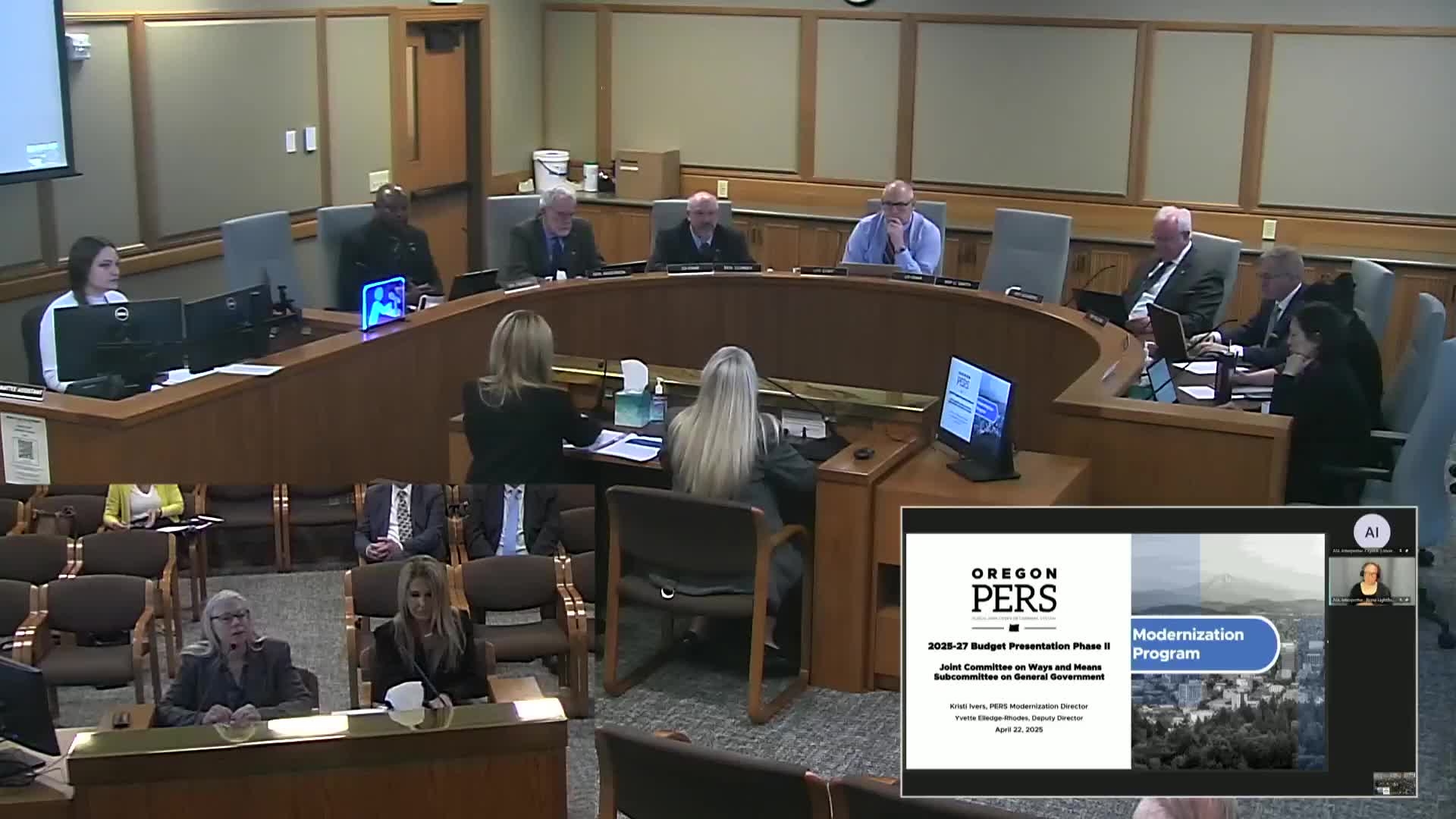
Deputy Director Yvette Elledge Rhodes and newly onboarded modernization director Christie Ivers told the General Government Subcommittee on April 22 that PERS is resetting its modernization program and expects an options analysis from Gartner in June to guide a solutions analysis.
"We are actually resetting the program," Elledge Rhodes said, describing refreshed governance and a one‑year modernization roadmap completed April 11. Christie Ivers, who said she has been in the job about two months, told the committee she is building foundational documents, reestablishing project plans and working to reduce risks identified by oversight bodies.
Ivers summarized risks Gartner and Enterprise Information Services (EIS) flagged: an incomplete solutions analysis, insufficient multi‑year budget detail, competing priorities and constrained resources, and telephony work that may not deliver core functionality by the end of the current biennium. She said Gartner’s options decision framework will present alternatives in June that the agency will use to complete a solutions analysis.
Gartner’s materials, summarized by PERS, lay out four components for consideration: a continuous technology‑readiness and legacy stabilization effort (to run in parallel with other work), rebuilding or modernizing the current J Clarity pension administration system, building a new custom solution, or buying a commercial‑off‑the‑shelf (COTS) product. Ivers said agency staff view modularization — breaking the existing entangled architecture into smaller components — as an important path regardless of which option is chosen.
Ivers acknowledged the agency lost a modernization director and had an extended vacancy; she said recent governance changes and the onboarding of contractors and consultants have reduced program risk. She presented a one‑year budget that would start eight projects (modernization planning, telephony modernization, integration platform, data cleaning, DevOps, hazardous positions build‑out, UI/UX and identity/access management) and estimated a 2025–27 request totaling about $24.8 million (including personnel and consulting services). Ivers said the original policy option package had requested roughly $34 million and the updated package reduces that ask by about $9.2 million.
On the telephony project, Ivers said user acceptance testing uncovered more defects than anticipated, pushing the implementation timeline into question and raising the risk that phase 1 may not go live this biennium. She said phase 2 and 3 are expected in the next biennium.
Ivers and Elledge Rhodes emphasized that PERS must run two tracks in parallel: continue to care for the legacy systems while building or procuring the modern system. "We will be following best practices," Ivers said, adding the program’s purpose is to improve service for members and employers.
The agency framed overall program health as in an early, indeterminate state pending completion of the Gartner analysis and the solutions analysis that follows. PERS asked the committee for continued oversight and said it will return with more detailed plans and a two‑year roadmap when the solutions analysis is complete.