Get Full Government Meeting Transcripts, Videos, & Alerts Forever!
Get email alerts on the E Verify topic
No spam. Unsubscribe anytime.
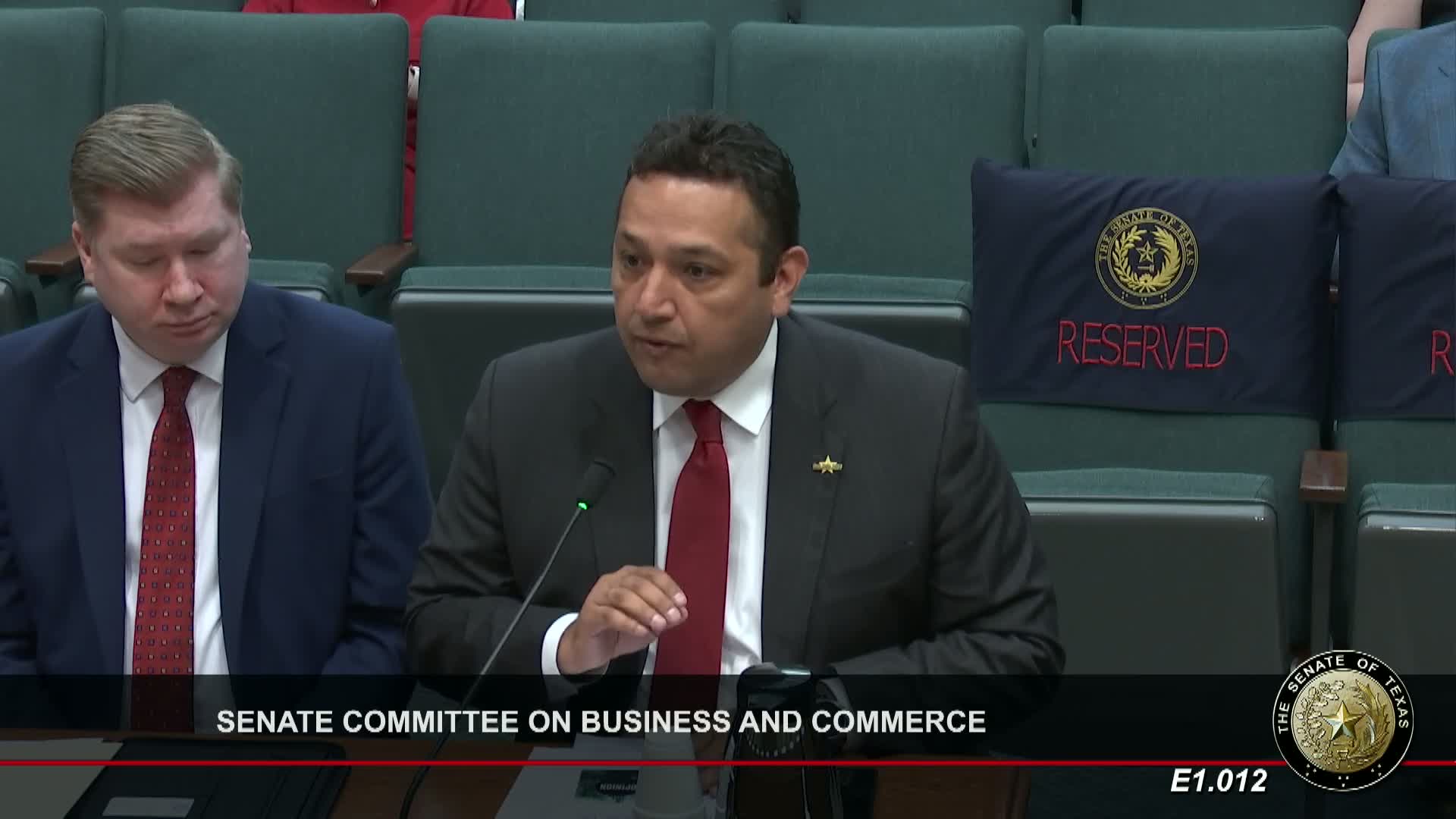
Senate bill would require universal E-Verify for employers and contractors; wide proponent testimony at committee hearing
Summary
Senate Bill 324 would require universal use of E-Verify by public and private employers in Texas, make participation a condition of state contracts and licensure, and authorize the comptroller to debar noncompliant contractors.
Senator Kolkhorst presented Senate Bill 324, a refile of prior measures, which would require all public and private employers in Texas to use the federal E-Verify system to verify employment authorization for new hires. The bill would make E-Verify a condition for state contracts and licensure, authorize the comptroller to debar contractors from state contracting for repeated noncompliance and require agencies to adopt rules to ensure employer compliance.
Proponents testified at length. Labor union representatives (Laborers International Union of North America; Pipeliners Local 798), the Texas Building and Construction Trades, Texans for Strong Borders, the Heritage Foundation, Federation for American Immigration Reform and other groups expressed support. Testimony emphasized: E-Verify is a federal system used to confirm employment authorization; supporters argued mandatory use levels the playing field for law-abiding employers and prevents unscrupulous contractors from undercutting wages by hiring unauthorized workers. Several witnesses cited E-Verify performance statistics and out-of-state studies showing reductions in unauthorized hiring where universal E-Verify laws exist.
Opponents were not represented in the recorded testimony on the hearing record; the committee took proponent testimony and left SB 324 pending for further consideration. The author said the bill provides affirmative defenses (for example when a contractor unknowingly hires a noncompliant subcontractor) and gives the comptroller debarment authority for contractors found in violation.