Get Full Government Meeting Transcripts, Videos, & Alerts Forever!
Get email alerts on the State Preemption Enforcement topic
No spam. Unsubscribe anytime.
Bills to add enforcement to state preemption of local rules draw divided testimony; cities warn of punitive fiscal consequences
Summary
Senate proposals to add an enforcement mechanism to state preemption law would let the attorney general sue local governments and, in some circumstances, withhold state funds while litigation proceeds; the measures drew divided testimony from city, county and industry witnesses.
Senators considered proposals (including Senate Bill 2858 and Senate Bill 3016) that would expand the state's preemption authority over local regulations and create a formal enforcement process giving the attorney general power to initiate actions against local governments alleged to be in violation of state law.
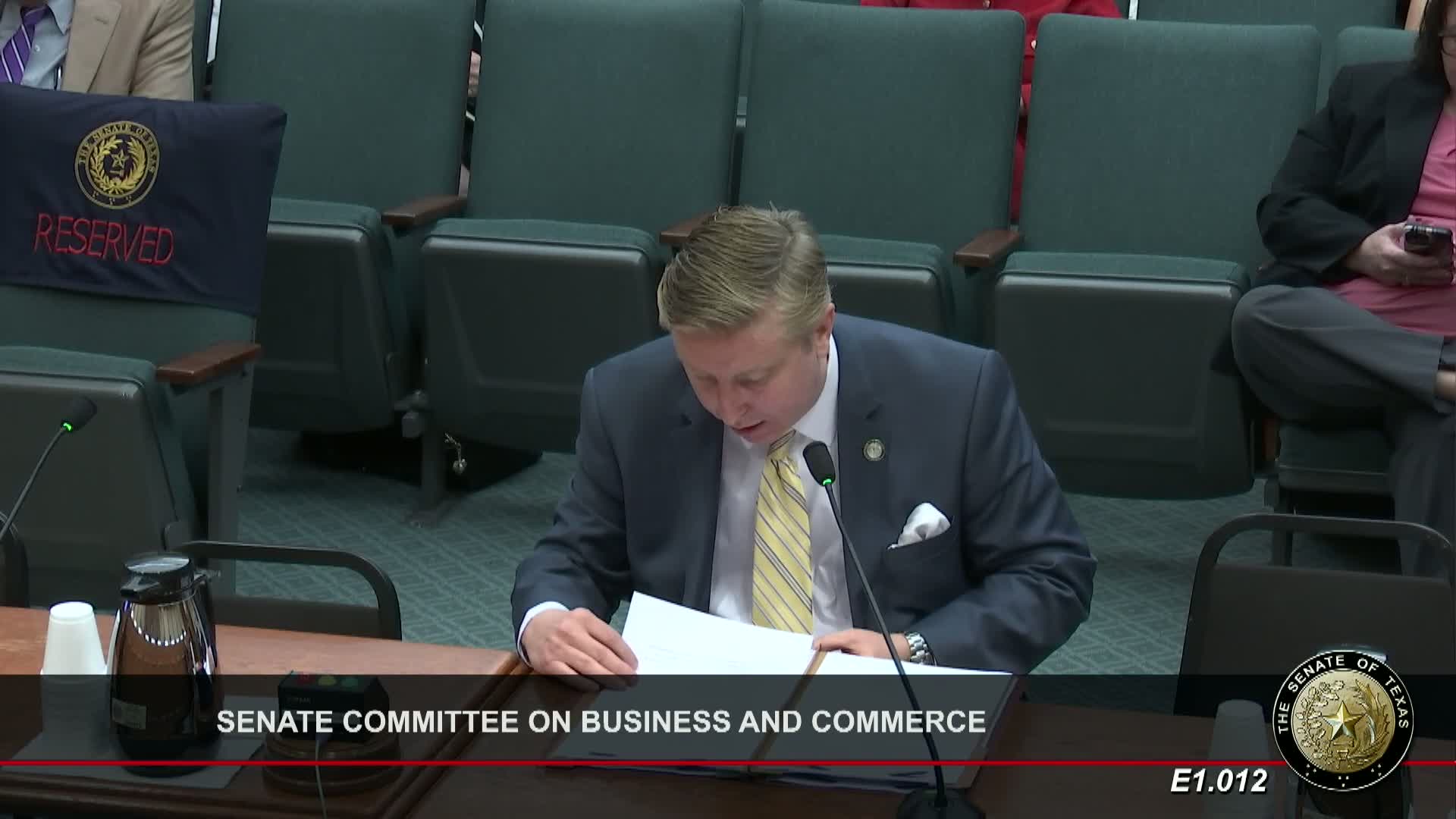
Sponsor Senator Creighton described SB 2858 as providing an enforcement mechanism for the Texas Regulatory Consistency Act and related field preemptions; the substitute added the health and safety code to the list of preempted subject areas, clarified venue and appellate authority, required expedited trial scheduling (a mandatory trial within 90 days of service unless both parties agree otherwise), and included a provision freezing local budgets and state funds to a municipal defendant during the pendency of the AG's suit.
Speakers in opposition included Nicholas Palmer, executive assistant city attorney for the city of Dallas, who said parts of the preemption language are identical to language found facially unconstitutional by at least one Texas court and expressed concern that the bill would allow withholding of sales and use tax revenue, state grants, and changes to tax rates while litigation is pending. He asked whether the pendency period would include appeals and warned that withheld funds could create hardship even where a locality later prevails.
County Judge James Teal of McMullen County testified in opposition, warning the bill could disproportionately affect small counties and erode local control. Cities and county officials urged the committee to preserve due process and avoid front-end withholding of funds that municipalities rely on. Supporters, including the Texas Public Policy Foundation, the Texas Association of Builders, industry representatives and developers, argued that enforcement was necessary to prevent local defiance of state law, citing examples they described as "local lawlessness," and argued for a mechanism that ensures state statutes are followed.
Senators asked about the bill's practical safeguards. Committee members were told the bill includes a fast-track trial provision requiring trial within 90 days and that funds would be released and returned to a locality if a court rules in its favor, but questions remained about appellate timing and whether withholding during appeals was explicitly addressed. The committee opened testimony from multiple municipal, county, industry, and policy witnesses and left SB 2858 and related enforcement measures pending for further work.