Get Full Government Meeting Transcripts, Videos, & Alerts Forever!
Get email alerts on the Wildlife Regulation topic
No spam. Unsubscribe anytime.
Committee advances bill to reduce maximum breeder pen size and increase penalties for serious violations
Summary
SB 28 44 would reduce maximum individual commercial deer breeder pen size from 100 acres to 20 acres (no total facility acreage cap), add enhanced penalties for serious violations, and include grandfathering and clerical‑error exemptions; committee adopted a substitute and reported the bill favorably.
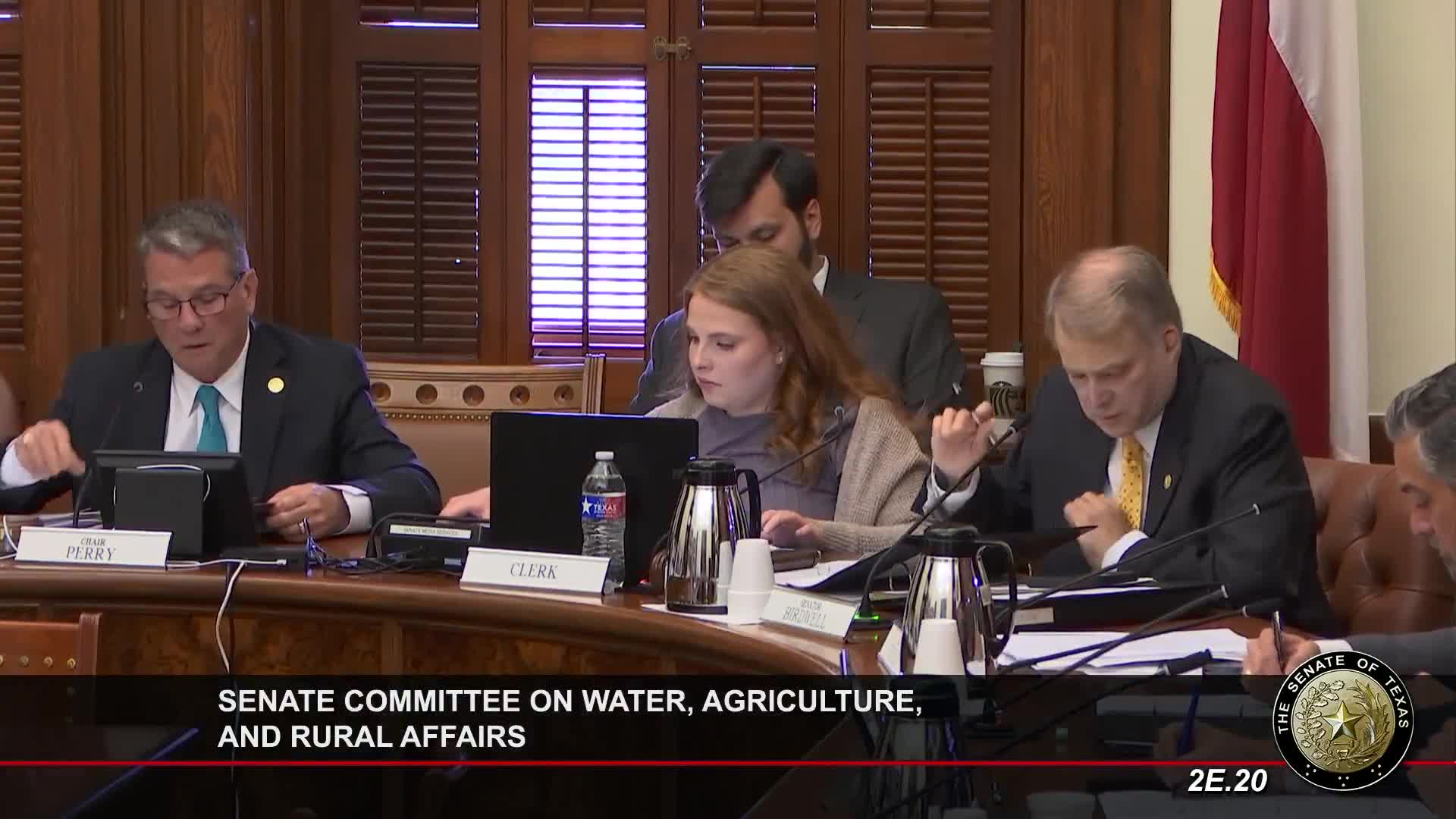
Senate Bill 28 44, presented by Senator Perry, would reduce the maximum size of a single deer breeding enclosure from 100 acres to 20 acres, increase penalties for the most serious violations related to breeder permits, and preserve grandfathering for existing permitted pens larger than 20 acres.
Perry told the committee the change would help permit holders locate and manage pens and more accurately report inventories. The committee substitute added mens rea language and a clerical‑error exemption intended to protect landowners who make inadvertent paperwork mistakes. Supporters including the Texas Deer Association (Jody Phillips), Texas Wildlife Association (Jonathan Letts), the Texas Chapter of The Wildlife Society (Matt Wagner), and private landowners testified they support stronger enforcement against “bad actors” who allegedly moved deer illegally and skirted testing requirements. Witnesses described recent criminal investigations and pending charges related to illegal deer trafficking.
Opponents and some small breeders raised concerns about regulatory burdens on lawful operators, sequencing of enforcement authority, and the economic impacts of facility lockdowns. The committee discussed the bill’s intent to focus enhanced penalties on intentional or organized violations rather than routine or clerical mistakes. The committee adopted the committee substitute and reported the bill favorably to the full Senate (committee vote recorded; see votes). The substitute was described by sponsors as the result of months of negotiation with industry and agency stakeholders.
Why it matters: The bill is intended to reduce disease spread risk from large enclosures and to create stronger civil/criminal deterrents for organized illegal movement of breeder deer; it also aims to preserve due process protections for well‑intentioned operators.
Ending: The committee adopted the committee substitute and reported SB 28 44 favorably; stakeholders said they would continue negotiations on specific enforcement language as the bill moves forward.