Get Full Government Meeting Transcripts, Videos, & Alerts Forever!
Get email alerts on the Government Contracting topic
No spam. Unsubscribe anytime.
Committee backs raising Ascension Parish public‑works contract threshold with bond change
Summary
Lawmakers advanced a local bill to raise the non‑bid contract threshold in Ascension Parish to $500,000 and to require performance bonds at a different threshold; parish officials said the change would speed small projects, while a construction‑industry representative warned about transparency and bond‑cost impacts.
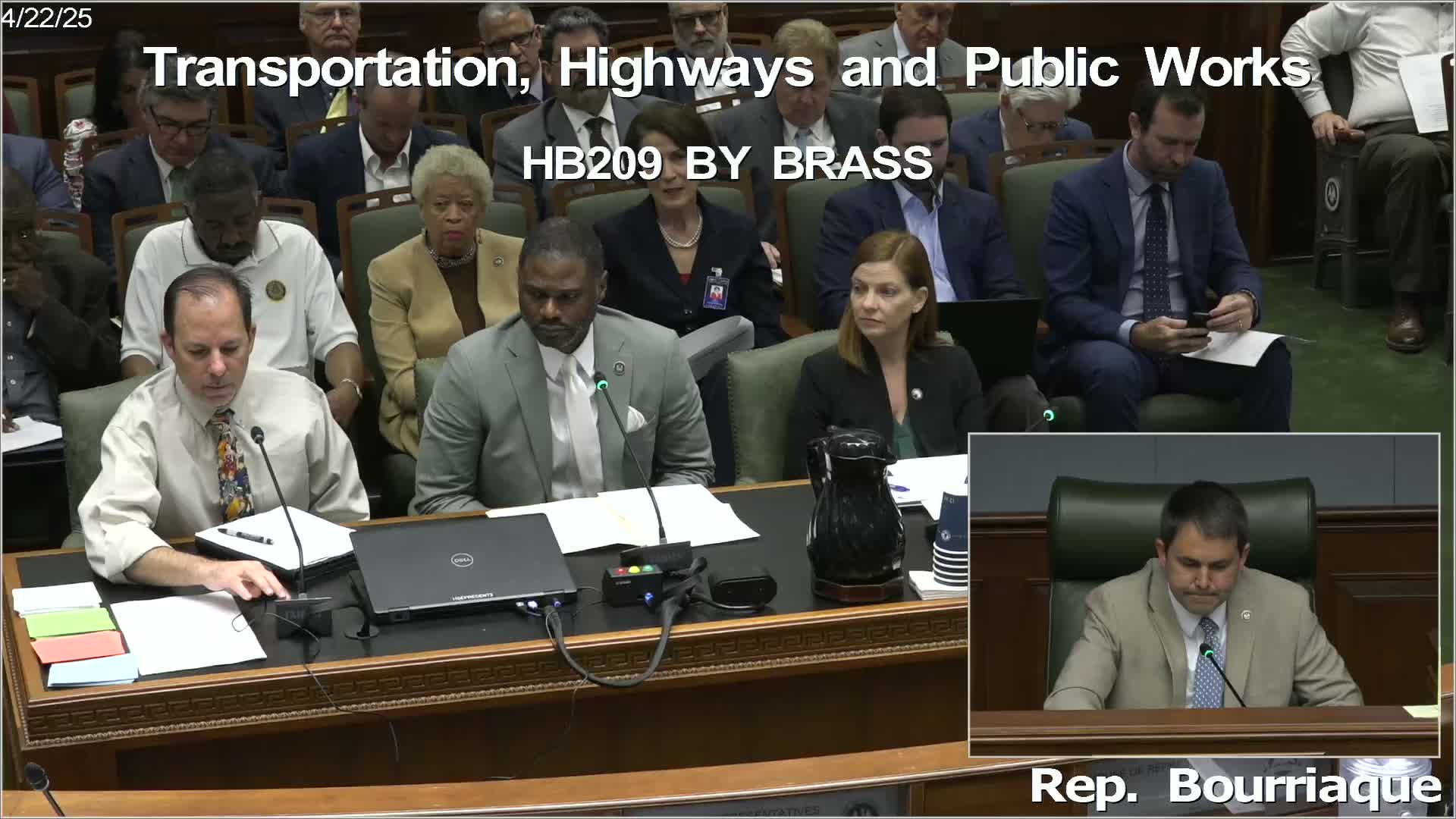
Vice Chairman Brass sponsored House Bill 209, a local Ascension Parish bill that raises the contract threshold for public works from $150,000 to $500,000 and changes the bonding requirement so that contracts in excess of $500,000 must include a performance bond for at least 50% of the contract value. The committee adopted an amendment that raised the bond threshold language in the draft.
Ascension infrastructure director Ricky Compton told the committee Ascension Parish had spent “over a million dollars on performance bonds” for contracts under $250,000 and that those bonding costs are passed to taxpayers. He gave a local example: a $32,000 park pipe‑rail job required a $3,200 bond premium. Ruth Phillips, chief administrative officer for Ascension Parish Government, said the parish is having trouble getting contractors for projects under $500,000 because mobilization is not cost‑effective for many firms; raising the threshold and matching bonding requirements, she said, would let parish crews or local contractors handle smaller projects more quickly.
Darryl Cahoon of Capital Partners, representing the Associated General Contractors (AGC), opposed aspects of the change. Cahoon said raising the limit means more work could be done “with your own forces up to $500,000 with no transparency,” and cautioned that increased thresholds shift costs to contractors because of bonding requirements; he cited industry data that only a small share of performance bonds are ever called but that the premium is a real cost to contractors and ultimately to owners.
Representative Wiley moved to report House Bill 209 with amendments; the committee adopted the amendments and voted to report the bill to the floor. Support and opposition cards were submitted and noted in the record. Committee members and the bill author said they would continue to work with local contracting organizations on technical fixes as the bill moves forward.
Why it matters: the change would allow Ascension Parish to use local forces and shortened procurement steps for projects up to $500,000 and would alter when performance bonds are required; proponents say it will speed repairs and small capital work, while construction industry groups worry it reduces competitive transparency and increases costs borne by contractors.
Next steps: the bill was reported out of committee to the House floor with amendments; the author and interested trade groups said they will negotiate technical language before a floor vote.