Get Full Government Meeting Transcripts, Videos, & Alerts Forever!
Get email alerts on the Pharmacy Benefit Managers topic
No spam. Unsubscribe anytime.
Panel hears patient and pharmacy testimony calling for PBM reform and stronger oversight
Summary
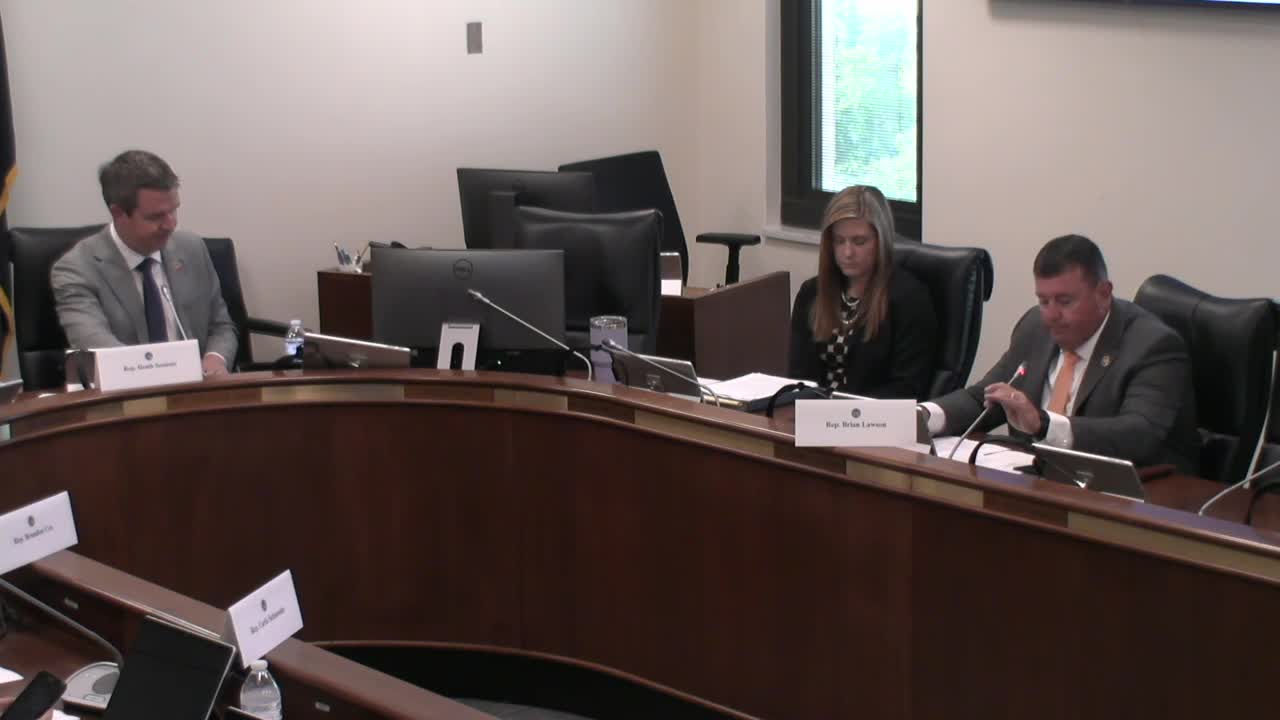
An ad hoc Medical, Military, Public and Municipal Affairs committee heard testimony on PBM (pharmacy benefit manager) practices and 340B program impacts that witnesses said are reducing patient access to specialty medicines and squeezing community pharmacies.
An ad hoc Medical, Military, Public and Municipal Affairs committee heard testimony on PBM (pharmacy benefit manager) practices and 340B program impacts that witnesses said are reducing patient access to specialty medicines and squeezing community pharmacies.
The discussion matters because witnesses described patient harm and financially fragile community providers, while the South Carolina Department of Insurance said its current authority and resources limit rapid enforcement or full review of PBM business practices.
Virginia Maxwell, a South Carolina patient who described years of denied prior authorizations and step-therapy delays, told the committee she and family members repeatedly faced denials even after physicians provided required documentation. Maxwell said her family’s specialty medication costs rose from about $6,000 to roughly $33,000 per dose and that manufacturer copay assistance previously counted toward her deductible was being removed by PBM practices, leaving her with an out-of-pocket maximum of about $16,000. Maxwell said those changes forced her to consider moving out of state if copay accumulators are not addressed. “They still have the right to deny that,” Maxwell said of the prior-authorization process.
Katie Scanlon, senior director of pharmacy administration for Publix Supermarkets, described PBMs’ market concentration and contract power. Scanlon said three large PBMs now control roughly 80% of the pharmacy-benefits market nationally and that the largest PBM holds about 83% market share for retail network management in South Carolina. She cited a Federal Trade Commission interim report and a bipartisan attorneys-general letter alleging vertical integration and preferential treatment for PBM‑owned pharmacies. “PBMs operate within healthcare conglomerates, providing them with unparalleled control of every aspect of the pharmaceutical supply chain,” Scanlon said, arguing that that leverage produces “take it or leave it” contracts and below-cost reimbursement that threaten community pharmacy sustainability.
Sue Veer, chief executive officer of Carolina Health Centers and legislative chair of the South Carolina Primary Healthcare Association, explained how community health centers use pharmacy margins and the federal 340B discount program to sustain primary care, behavioral health and other services for low-income patients. Veer said 340B savings must be reinvested in patient care for grantees and described how discriminatory PBM contracting—offering much lower reimbursement on 340B‑purchased inventory than on open‑market purchases—can shift margin intended for care into PBM revenue. “When people don’t have access to affordable medication, it can be a death sentence,” Veer said, and she warned that shrinking pharmacy margins would force closures or reductions in services in rural and underserved areas.
Rebecca Gillespie, a pharmacist with the South Carolina Department of Insurance, told the committee the agency is an outlet for PBM complaints but that it currently receives relatively few formal complaints and faces limits when trying to enforce remedies. Gillespie said the department gained authority this year to conduct examinations of PBMs and has started audits modeled on recent work done by Tennessee; those reviews can take six months to a year and rely on PBM cooperation and outside contractors. She said the department lacks both sufficient authority to compel some disclosures (including some ERISA‑related plan data) and resources to analyze high volumes of claims-level complaints. “We really aren’t getting many complaints,” Gillespie said, adding that limited statutory authority and staffing slow enforcement and that stronger, faster regulatory tools would help.
Committee members questioned witnesses about specific practices raised in testimony, including copay accumulators that stop manufacturer assistance from counting toward patients’ deductibles, annual or end-of-year clawbacks and offsets that reconcile reimbursements, and discriminatory contract terms applied to covered-entity 340B purchases. Witnesses and members discussed federal programs and terms mentioned in testimony: Section 340B of the Public Health Service Act, NADAC (National Average Drug Acquisition Cost) and a March 2025 FTC interim report on PBM specialty-drug revenue.
No formal committee vote or legislative action was taken during the hearing. The Department of Insurance said it is proceeding with contracted examinations of PBMs and will report findings as available; legislators and witnesses urged consideration of statutory changes to strengthen the department’s investigatory authority, require clearer claims-level transparency, prohibit discriminatory contracting or PBM ownership of mail-order/specialty pharmacies, and ban copay accumulators for patient assistance funds.
The committee concluded with staff confirming follow-ups: the Department of Insurance will provide updates on the contracted PBM examinations and on responses to the department’s request for plan-level materials, and members signaled interest in drafting or considering legislation to address the problems described in testimony.