Get Full Government Meeting Transcripts, Videos, & Alerts Forever!
Get email alerts on the Comprehensive Plan Dei topic
No spam. Unsubscribe anytime.
Residents debate DEI commission as council suspends 2026 annual comp-plan amendment cycle to prioritize periodic update
Summary
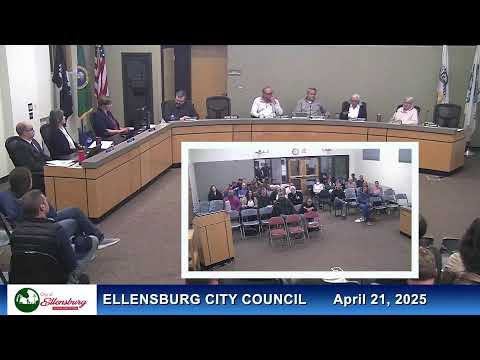
Public comment at the Ellensburg City Council meeting centered on the city's Diversity, Equity and Inclusion (DEI) commission and competing views about whether the commission should remain.
Public comment at the Ellensburg City Council meeting centered on the city's Diversity, Equity and Inclusion (DEI) commission and competing views about whether the commission should remain. Dozens of residents took the microphone in pro- and anti-DEI remarks during the non-agenda public-comment period; many later submitted comprehensive-plan amendment forms asking the council to remove Chapter 9 (DEI) from the city's comprehensive plan.
Why it matters: More than 300 comprehensive-plan amendment requests and repeated public comment indicate a strongly felt community dispute. The city is simultaneously preparing a state-mandated periodic comprehensive-plan update due June 30, 2026; council action to suspend the 2026 annual amendment docket reallocates staff resources toward that larger, legally required review.
Community speakers expressed sharply divided views. Supporters of the DEI commission argued it improves access to services, amplifies underrepresented voices and hosts listening sessions used to inform city work. Christy Stepton, who identified herself as a resident, said the commission's listening sessions helped her learn about a local Nepalese community and praised programming including Juneteenth commemorations and work with local nonprofits.
Other speakers warned about public-safety concerns and spoke against DEI. Adria Besdicek Dono (transcribed name) said she was worried about locker-room access at the city pool and called for eliminating DEI; Mike Wallace described DEI as divisive and said the policy forced people to act against conscience. Candace Comfort urged council not to suspend the amendment cycle, saying the March 31 filing deadline produced 309 applications and that removing the annual amendment avenue before those applications are heard would damage trust.
City staff reported the scale of the 2025 filings in the context of the planned, state-required periodic update. Community Development Director Dan Carlson explained there are two separate processes under the state Growth Management Act: an eight-year periodic update (the periodic review) that requires a robust public-participation process, and an optional annual amendment cycle for discrete changes. Carlson said the city had received roughly 309 amendment applications for 2025, the majority seeking removal of Chapter 9, and requested suspension of the 2026 annual amendment process so staff can concentrate on the periodic update with a June 30, 2026 statutory deadline. Carlson told the council the periodic update will "involve extensive public outreach and staff resources to complete" and that the city is preparing a public participation plan and seeking a consultant to help.
Several residents asked for detailed information about how the periodic update will reach diverse populations and whether the public-participation plan would be posted and shared. Carlson said a draft public-participation plan exists, that it will include surveys, open houses, a website, social media and outreach at community events (farmers market, fair and rodeo), and that staff will return with a consultant contract to begin the periodic review.
Council debate reflected two themes: (1) procedural fairness for residents who filed amendment requests in March 2025, and (2) the practical need to meet state deadlines for the periodic review. Some councilmembers argued the periodic review offers wider, deeper public engagement (surveys, in-person outreach) than the annual amendment process and that concentrating staff time on the periodic review is the most effective way to address long-range planning questions; others in the meeting said the council should not curtail avenues for citizens to be heard while the current docket is still pending.
Councilmember (name not specified in transcript) moved to approve the staff request to suspend the 2026 annual comp-plan amendment process to prioritize resources for the periodic update; the motion was seconded and approved by voice vote. Several councilmembers emphasized that the 2025 amendment docket will still be considered on the July 21 hearing date and that public comment opportunities would continue at council meetings in the months ahead.
Ending: The council approved the suspension to allow staff to focus on the periodic update required by state law; staff will return to council with the consultant contract and the public-participation plan for the periodic review. The July 21 agenda will include the 2025 amendment docket and offer additional public hearings for the forms already submitted.