Get Full Government Meeting Transcripts, Videos, & Alerts Forever!
Cleveland officials outline progress and gaps in Lead Safe program as funding, data and enforcement strain effort to lower child poisonings
Summary
City departments, the Lead Safe Cleveland Coalition and the Lead Safe Advisory Board gave a joint update showing steady numbers of children with elevated blood lead levels, a shift toward lead risk assessments, new enforcement steps and slow grant spending that coalition leaders say must accelerate to reach high‑risk homes.
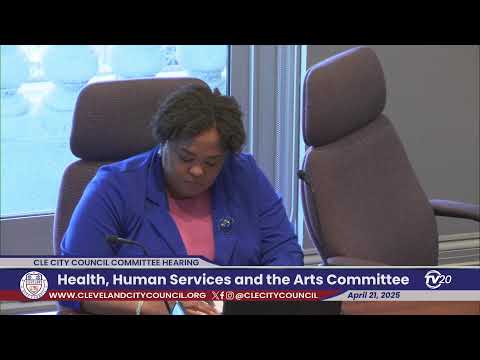
Council members and city and nonprofit officials on Wednesday laid out where Cleveland’s Lead Safe program stands, saying some administrative fixes are working but that the city still is not reducing childhood lead poisoning fast enough.
The most immediate figures came from Dr. David Margolius, director of the Cleveland Department of Public Health, who said 1,369 children were referred to the health department in 2024 with elevated blood lead levels above 3.5 micrograms per deciliter and that the city’s overall lead poisoning rate has been “stable over the last 5, 6 years.” He told the committee Cleveland’s rates remain higher than peer cities and attributed most local poisoning to deteriorated lead paint in older housing, not water.
The city and partners described multiple strands of the program: inspection and enforcement by the Department of Building & Housing, remediation and grant management by the Department of Community Development, the privately administered Lead Safe Home Fund and Lead Safe Cleveland Coalition, and the advisory role of the Lead Safe Advisory Board. Each organization reported progress and constraints: backlog work cleared, more rigorous inspection standards adopted, new enforcement tools being used — but limited contractor capacity, slow grant outlays and gaps in shared data that hamper oversight.
“We accept either a clearance exam or a lead risk assessment to indicate that lead hazards are not identified in the unit,” said Sally Martin O’Toole, director of Building & Housing, describing a policy shift the city has implemented to align with HUD and the Ohio Department of Health. “Clearance exams are only accepted if abatement or renovation work has been completed; risk assessments are the recommended way to determine presence or absence of hazards.”
Martin O’Toole and her staff reported operational improvements: a cleared backlog of about 1,200 files, consolidation of reports into a single Acela database, and a plan to issue a first bulk batch of 278 civil tickets to property owners who previously submitted failing dust-wipe results but never…
Already have an account? Log in
Subscribe to keep reading
Unlock the rest of this article — and every article on Citizen Portal.
- Unlimited articles
- AI-powered breakdowns of topics, speakers, decisions, and budgets
- Instant alerts when your location has a new meeting
- Follow topics and more locations
- 1,000 AI Insights / month, plus AI Chat