Get Full Government Meeting Transcripts, Videos, & Alerts Forever!
Get email alerts on the Public Health topic
No spam. Unsubscribe anytime.
Butte-Silver Bow health director outlines services, grant dependence and staffing shortages
Summary
Health Officer Karen Malogni told the commission the county health department runs environmental and clinical programs — from food safety and sanitation to syringe services, WIC, family planning and a developing crisis-response model — and that more than half the staff are grant funded.
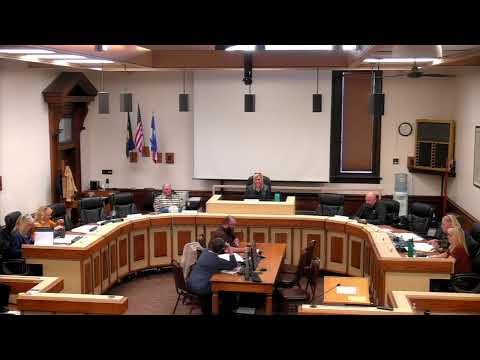
Karen Malogni, health officer for Butte-Silver Bow County, gave a comprehensive overview of the health department’s programs, staffing and near-term concerns during the study commission’s interview.
Malogni said the department runs two main divisions: environmental health (food safety, public‑pool inspections, on‑site wastewater and land‑sanitation reviews, air-monitoring and mosquito control) and health services (WIC, family planning, Ryan White HIV services, harm reduction and communicable-disease surveillance). “My statutory duties are listed in MCA 50‑2‑118,” she said, citing the state law that defines public-health officers’ responsibilities.
Why it matters: the county health department directly manages services that affect community safety and preventive health — vaccination clinics, communicable‑disease investigations, syringe-service and harm‑reduction programs, maternal and child services, and emergency‑preparedness functions.
Malogni said the department has 25 full‑time staff, two positions being filled and one on an “immediate wish list.” She listed programs that require sustained resources: WIC nutrition services, family planning that includes provision of certain medications and limited pharmacy services, Ryan White-funded case management for people living with HIV, and a syringe‑service program that the county operates in partnership with state services.
The department is implementing a crisis-diversion model aligned to the “somewhere-to-call, someone-to-respond, somewhere-to-go” framework (the speaker described it as a three‑legged approach). Malogni said interviews were under way for a community‑based coordinator to link clients to mental‑health, social‑service and medical resources.
Funding and staffing were central concerns. Malogni said more than half the department’s positions are grant‑funded; funding volatility has been a persistent problem. She described an instance in which one grant appeared terminated and then was reinstated within an hour, and said recent reductions in some COVID-era program funding have created shortfalls. “Last week we received a letter that one of our grants was terminated in the amount of $100,000. Within an hour we got another letter saying it was reinstated,” she said.
Accreditation is also on the department’s agenda: Malogni said the department is participating in the state’s “pathways to accreditation” process and noted Butte‑Silver Bow is the largest Montana health department not yet accredited.
Commissioners asked about building capacity and outreach. Malogni said current facilities are adequate for privacy‑sensitive services such as family planning and harm reduction but that population growth would require more nurses and sanitarians to keep up with inspections and disease investigation.
Ending: Malogni asked the commission to consider the department’s need for stable funding, competitive wages to recruit and retain clinical staff and continued investment in accreditation and emergency preparedness.