Get Full Government Meeting Transcripts, Videos, & Alerts Forever!
Get email alerts on the Finance Treasury topic
No spam. Unsubscribe anytime.
Butte-Silver Bow treasurer details tax collection, staffing and technology gaps
Summary
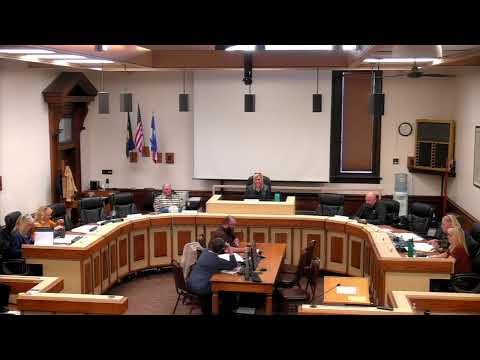
Lori Baker Patrick, Butte-Silver Bow County treasurer, described the treasurer's office as the county’s fiscal agent and outlined a wide range of duties from property-tax billing to motor-vehicle services during an interview with the county study commission.
Lori Baker Patrick, Butte-Silver Bow County treasurer, described the treasurer's office as the county’s fiscal agent and outlined a wide range of duties from property-tax billing to motor-vehicle transactions during an interview with the county study commission.
Patrick told commissioners the office handles property-tax billing and collection, motor vehicle functions, accounts for the county’s school-district finances and serves as a point of contact with the Montana Department of Revenue. “The treasurer is basically, responsible for the collection of property taxes,” she said.
Why it matters: the treasurer’s office controls cash flows that fund schools, public safety and numerous special districts. Operational changes at the state level — and local choices about billing, notification and technology — affect how much revenue reaches those jurisdictions and how quickly.
Patrick said the office has nine employees and described a long list of day-to-day responsibilities and recent projects: introducing online and ACH payments, implementing a new cash-receiving and check-scanning process, moving motor-vehicle operations to new state-supported software in March 2025, and redesigning the county tax bill to display taxing jurisdictions more clearly.
She gave specific figures for recent activity: the office’s real-estate tax roll for 2024 totaled $57,287,925.08 and the treasurer reported that it had collected $33,319,585.76 (about 58 percent) as of the time of the presentation. Patrick also described an unpaid-tax receivable report that, she said, includes long‑outstanding mobile-home balances from 2019.
Operational changes required by legislation have affected how the office processes delinquent taxes and assignments. Patrick described House Bill 18 and House Bill 23 as drivers of procedural changes on tax-lien and assignment processes and said the office now charges a $65 assignment fee (established by local resolution in April 2018) plus a $25 redemption fee to cover administrative costs. She also said an alternative payment schedule created by state law was implemented locally in September and that the office has received a small number of applications that will be reviewed later in the year.
Patrick said fraud prevention and digital record management are the office’s top ongoing risks. She described incidents the office handled in past years — wire-hacking and check whitewashing — and credited the county’s bank for recovering funds. She urged investment in IT and digital-records infrastructure to reduce exposure.
On relationships with other county offices, Patrick said some duties should remain separate: “No. They cannot be incorporated in the treasurer's office,” she said when asked whether auditor or assessor duties should move into the treasurer’s office, citing segregation-of-duties concerns and limited staff capacity.
She said state-level changes — including litigation and proposed legislative fixes related to mill levies and the 95-mill issue — forced the county to send a supplemental tax bill in 2023 and increased public confusion about tax notices. “There are so many people that we can't reach with notification,” she said.
The treasurer described programs intended to limit tax deeds and sales, including outreach to the state Housing Assistance Fund that has helped taxpayers redeem liens. She also described the office’s role for school-district accounting and said the office implements positive-pay and other anti-fraud practices for school payrolls.
Commissioners asked about staffing, central purchasing, public-notification options and whether a more full-time county commission would help outreach; Patrick suggested stronger IT resources, formal digital-records policy and greater public-outreach capacity would help.
Ending: Patrick said she intends to run again before retiring, and she provided commission staff with balancing and tax-roll documents for further review.