Get Full Government Meeting Transcripts, Videos, & Alerts Forever!
Get email alerts on the Parks Recreation Finance topic
No spam. Unsubscribe anytime.
Casa Grande staff outline $67 million recreation complex, propose November ballot for financing
Summary
City staff presented concept plans for new sports fields and an aquatic complex with preliminary cost estimates of about $67 million and recommended asking voters to consider financing in November 2025; staff said design and construction would take roughly two years if approved.
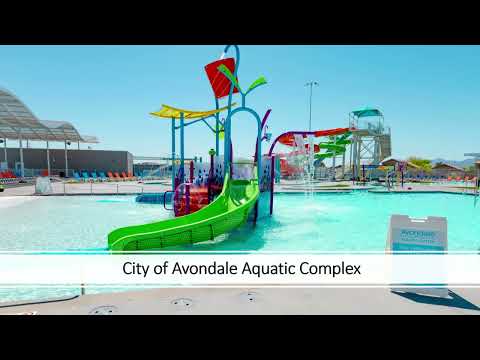
Danny Gallegos, a city staff member, presented concept plans for a multi-field sports complex and a heated aquatic facility and estimated total costs around $67 million for the scope discussed: roughly $39 million for a cloverleaf-style cluster of baseball/softball and multipurpose fields and about $27,000,700 for an aquatic complex and related infrastructure.
Larry, a city staff member leading the finance discussion, told Mayor Fitzgibbons and the council that Casa Grande has roughly $8 million collected in development impact fees for parks and that the gap between those funds and the roughly $67 million proposal makes financing likely necessary. “If you consider just the estimates that have been introduced tonight, $67,000,000 for what has been proposed,” Larry said, explaining staff had reviewed sales-tax-based financing and general obligation bonds as possible tools.
Why this matters: staff said community demand for fields and year‑round aquatics is high; existing fields are often fully booked Monday–Thursday and weekends see heavy tournament use. Gallegos showed rental and utilization examples (O'Neal South and other fields) to illustrate limited weekday availability. Public commenters and councilmembers cited youth sports, tournament economic impact and programming for seniors as reasons to accelerate investment.
Staff presented several financing options and calendar constraints. Larry said general obligation (GO) bonds require voter approval and, to place a question on a November ballot, the council would need to call an election and adopt the ballot language in May. “General obligation bonds can only be taken to the voter for their consideration on a November ballot,” Larry said. He added that a November 2025 ballot would require council action in early May to meet county deadlines.
Staff also gave a working example of tax impact: at current tax rates, issuing $50 million in GO debt would roughly create a 50¢ per $100 of assessed value increase to service that debt; Larry described that as translating to about $250 a year on a $100,000 assessed-value example. He stressed the figure was an estimate and that bond sizing and structure would change the final taxpayer impact.
Councilmembers and residents asked about phasing and cost efficiencies. Gallegos and others described the “cloverleaf” field layout (four fields per node) and said one cloverleaf box could hold three side-by-side multipurpose fields depending on orientation. Several councilmembers encouraged staff to evaluate whether adding one or more fields during initial construction would reduce per-field marginal cost because much of the site mobilization and infrastructure would already be in place. Gallegos: “If we can get more fields, even if it were just one more field would be a benefit to the community. Getting three would be ideal.”
Alternatives discussed included sales-tax‑backed bonds and paying-as-you-go using development impact fees and construction sales tax receipts. Staff noted that sales-tax pledges have funded past recreation projects, while GO bonds (property-tax‑backed) are another established tool in Casa Grande. Larry said the city’s debt capacity for GO bonds had grown since 2022 because assessed values have increased and that staff can present more precise cost and tax-impact scenarios if the council wants to pursue a ballot measure.
Public comments during the study session voiced support and cited local impacts. Resident Sandy, who identified herself as a former water-aerobics instructor, said an indoor heated pool would benefit senior fitness and mental health programming. Resident Eric Rivera and tournament organizer Sal D’Alessandro described travel burdens for teams and the potential local economic boost from hosting tournaments.
Next steps: staff said they will prepare the agenda items needed for the May 5 council meeting (the draft ballot question, scope and an estimate of capacity) if the council directs staff to pursue a November 2025 ballot item; staff also noted that civil design has not been completed and that the earliest realistic operational date, assuming prompt voter approval and project delivery, would be about 24 months from project start. Larry summarized the schedule trade-offs: design work, permitting and construction together would push major capital expenditures into fiscal year 2027 under current timelines.
No formal motion or vote was taken during the study session; council direction was to have staff prepare the ballot materials and financial scenarios for the May 5 meeting so the council could decide whether to call an election and set ballot language.