Get Full Government Meeting Transcripts, Videos, & Alerts Forever!
Get email alerts on the Grants Funding topic
No spam. Unsubscribe anytime.
Grants coordinator outlines CDBG, transportation and OPWC opportunities; HapCap role discussed
Summary
The county's grants coordinator briefed commissioners on Community Development Block Grant programs (NRG, RPIG, CI), OPWC, LTIP and regional transportation planning and explained HapCap's historical role in administering CDBG funds for Hocking County.
Hocking County's grants coordinator reviewed multiple funding programs and planning efforts on April 17, telling commissioners the office is pursuing state and federal opportunities for infrastructure, housing and public services.
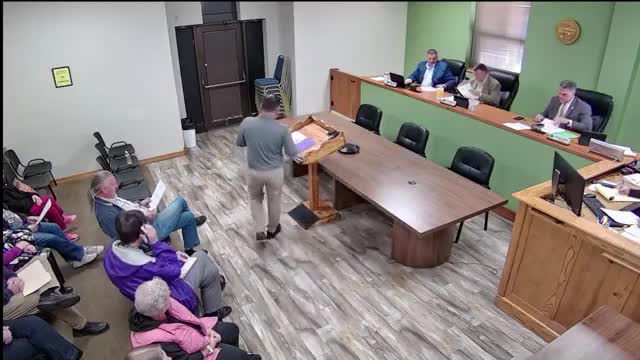
The presenter, identified in the meeting as Deshaun Brooks (grant coordinator), said the office currently manages three Department of Justice awards and is monitoring open cycles for community development block grants, Ohio Public Works Commission (OPWC) funds and local transportation improvement programs (LTIP).
Brooks summarized Community Development Block Grant (CDBG) subprograms that could benefit local projects: Neighborhood Revitalization Grant (NRG), Residential Public Infrastructure (RPIG) and Critical Infrastructure (CI). He said Hocking County has three low-to-moderate-income communities that qualify for NRG — Logan, Laurelville and Murray City — and named Salt Creek and Perry townships as eligible townships.
"In this cycle, Hapcap's gonna come to you and ask you to consider an NRG in 1 of these locations," Brooks said, noting Hocking County previously received approximately $750,000 in competitive NRG funds for Murray City in an earlier cycle.
He described RPIG as allowing up to three county applications, including a $200,000 connection-assistance component for low-to-moderate income residents, and said CI grants have a $500,000 ceiling with no local match required. Brooks said HapCap has historically administered some CDBG functions for the county but that state procurement rules have changed and future procurements will require more formal processes.
On transportation, Brooks said the county is participating in a multi-county regional transportation plan led by Buckeye Hills and that a broad set of transportation funding requests statewide far exceed available funds. He noted OPWC and LTIP cycles are open and that the grants office continues to identify pipeline projects for infrastructure, transit and economic development categories.
Brooks also reported as a board member of Bur Oak Regional Water: Bur Oak is building a new building in Morgan County, expects delivery of a vac truck this month, is replacing filtration equipment and is pursuing a lab license that would allow in-house testing and lower costs.
Why it matters: The grants office steers applications that can fund roads, sewer and community projects. Commissioners were reminded that some programs are competitive while others provide guaranteed allocations and that program rules (and the county's use of third-party administrators such as HapCap) have procurement implications.
Commissioners asked whether functions currently performed by HapCap could be done internally; Brooks said it can be, but pointed to Fair Housing program requirements and historical multi-county arrangements. He also said the grants office is coordinating with county departments, the prosecutor and other local partners on specific funding opportunities including opioid-settlement spending.
No formal funding decisions were recorded during the presentation; staff said HapCap will return with more detailed proposals and project pipelines for commissioners to consider.