Get Full Government Meeting Transcripts, Videos, & Alerts Forever!
Get email alerts on the Attendance Policy topic
No spam. Unsubscribe anytime.
Board hears first reading of chronic-absence policy; staff propose mental-health–informed interventions
Summary
Trustees received a first reading of updated board policies and administrative regulations addressing chronic absenteeism and related interventions; staff said the updates align district practice with state law and emphasize mental-health and inclusionary supports.
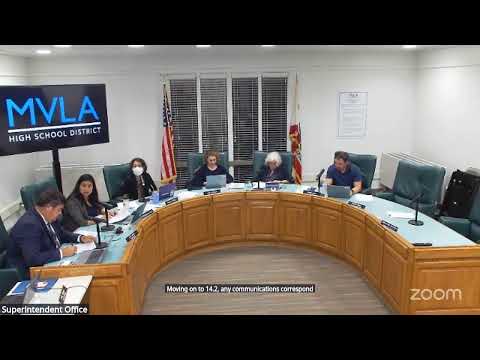
The Mountain View–Los Altos Union High School District board reviewed a first reading April 21 of an updated board policy and an administrative regulation addressing chronic absenteeism and interventions.
District staff said the revisions bring the policy into alignment with recent Education Code updates and with California Department of Education expectations. The policy defines chronic absenteeism as missing 10% or more of school days (for any reason) at any point in the year; staff clarified that a chronic truant is a student with 10% or more unexcused absences.
Key points in the first reading - Definitions and coding: Staff explained that different absence codes (excused, unexcused, home hospital, etc.) determine when intervention tiers are triggered. Home-hospital placements or other medically documented supports do not count toward chronic-absence penalties because they are coded differently and accompany supportive services. - Intervention focus: The updated guidelines emphasize outreach, mental-health supports and tiered interventions rather than punitive measures. Staff referenced Safety Care professional development and district mental-health resources as part of the response continuum. - Measurement nuance: Because chronic-absence is counted as a percentage of days, a student may trigger the 10% threshold earlier in the school year with fewer total absences; staff said local intervention thresholds are calibrated to avoid automatic punitive responses for short-term illnesses.
Why it matters District staff and trustees framed chronic-absence policy as a tool to identify students who need sustained supports — whether for medical, mental-health, transportation or other reasons — and to channel resources to re-engage learners.
Speakers relevant to this topic - William/Willie (district staff) — staff lead on policy revision (presenter)
Next steps The draft policy and administrative regulation will return for a future second reading and adoption vote after trustees and staff resolve details and board members submit follow-up questions by email.