Get Full Government Meeting Transcripts, Videos, & Alerts Forever!
Get email alerts on the Water Conservation Grant topic
No spam. Unsubscribe anytime.
Seminole soil-and-water group pitches Oviedo conservation grant funded by higher water rate for largest users
Summary
A local conservation district proposed a matching grant program funded by moving a potable water rate breakpoint to 8,000 gallons and modest surcharges on the highest-usage buckets; council and residents debated education, HOA constraints and program verification.
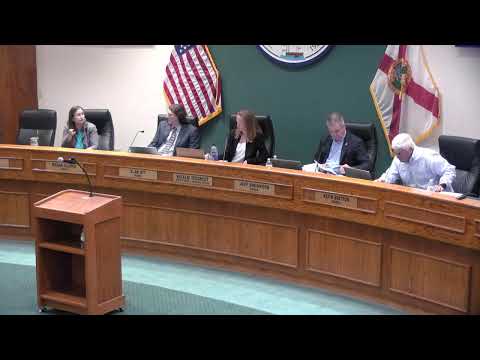
Seminole Soil and Water Conservation District representatives proposed an Oviedo Conservation Grant Program at the April 21 City Council meeting, asking council to create a dedicated funding source — likely through a change to potable water billing buckets — to pay matching grants to residents or city projects that reduce irrigation demand.
Karen Herriot, identified in the meeting as chair of the Seminole Soil and Water Conservation District, told council the program is nonregulatory and would target the city’s highest residential potable-water users (staff identified the threshold discussed tonight as 8,000 gallons). The district proposes using additional revenue from a shift in billing buckets — for example beginning a higher conservation rate at 8,000 gallons rather than 10,000 — and returning that revenue in the form of matching grants targeting conversions to low-water landscaping or city-owned landscape retrofits.
Herriot said the math shows modest dollars collected from the highest users could fund many matching grants; presenters estimated moving the conservation breakpoint to 8,000 gallons could yield “over a quarter million dollars” a year, and small per-1,000-gallon surcharges could raise substantially more. She emphasized education and working with homeowners associations, and said the district would help with outreach, model landscape templates and free technical help through extension services and master gardeners.
Council members questioned program design and verification. Staff and district representatives said grant applicants typically complete approved plans, perform work and receive reimbursement after verification; the district suggested reimbursements could be scaled (for example a $5,000 project with a $2,500 reimbursement or incremental reimbursements during implementation). Council members urged a strong education-first approach and expressed concern that wealthier homeowners who already could afford landscape conversions might capture grants. Herriot and staff suggested the program could prioritize demonstrable reductions in usage, nonresidential city-owned retrofits or programs targeted to properties that actually pay into the surcharge.
City staff said a spreadsheet in the water packet showed 7,061 customer addresses used more than the 8,000-gallon threshold; staff said that represents roughly 25% of accounts, but promised to confirm totals. Public comment included a resident who urged staff to review the city’s earlier Florida-Friendly landscaping program and its results.
Council did not take a final vote on a rate change or the grant program; staff said the proposal would be refined and could be included as a dedicated funding source in the next budget cycle if council directs further work.