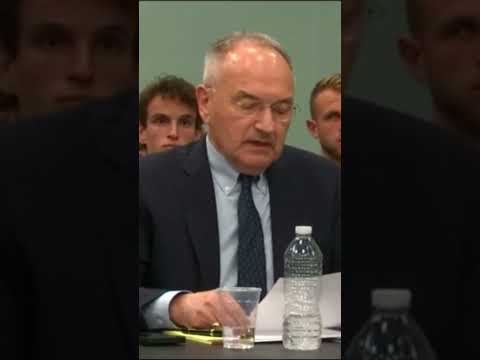
Witness at U.S. Helsinki Commission: Russia’s war on Ukraine signals end of post‑Cold War order
Get AI-powered insights, summaries, and transcripts
SubscribeSummary
At a hearing of the Commission on Security and Cooperation in Europe (U.S. Helsinki Commission), an unnamed witness described Russia’s invasion of Ukraine as a systemic, revisionist campaign aligned with China, Iran and North Korea and said it marks an end to three decades of relative peace after the Cold War.
A witness told the Commission on Security and Cooperation in Europe (U.S. Helsinki Commission) that Russia’s war on Ukraine represents a systemic transformation of conflict and ‘‘marks unequivocally the end of 3 post Cold War decades of relative peace.’’
The witness said the war should be understood as part of a broader, long‑running strategy by Vladimir Putin’s Russia to ‘‘relitigate the post Cold War settlement’’ and to rebuild an inner imperial core, arguing that Moscow seeks a sphere of influence across Central and Eastern Europe and beyond. "It is a manifestation of Vladimir Putin's drive to restore what he calls, that is rooted in the fundamentals of Russian thinking about geopolitics and strategy that it form its formative experience experience as an empire," the witness said.
The speaker characterized Russia as a ‘‘quintessentially revisionist state’’ aligned with China, Iran and North Korea — described in the testimony as four states forming "an axis of dictatorships intent on overthrowing the international system established by The United States and its democratic allies after World War II." The witness said this alignment and Russia’s long‑term aim to restore control over the Eastern Slavic core (‘‘the Great Russians, the Little Russians or Ukrainians, and the White Russians, Belarusians’’) help explain the scope and durability of the conflict.
The transcript records no vote or formal action on the testimony. The remarks consisted of analysis and characterization of geopolitical strategy rather than policy recommendations or binding Commission decisions.
The testimony emphasized historical depth and duration: the witness said Russia has for ‘‘over 2 decades now’’ been challenging the post‑Cold War order and framed the Ukraine war as part of that continuity rather than a standalone event. The record includes direct characterizations but does not attribute specific policy prescriptions to the Commission or to other participants in the hearing.
No named speaker beyond the generic label in the transcript addressed or disputed the witness’s characterization during the captured segments. The Commission’s full hearing record (not included in the provided transcript excerpts) may contain additional testimony or questioning.
The exchange in the transcript focused on geopolitical analysis and did not include legislative language, references to statutes or motions. The Commission did not take any formal action in the recorded segment.