Get Full Government Meeting Transcripts, Videos, & Alerts Forever!
Get email alerts on the Housing And Homelessness Staffing topic
No spam. Unsubscribe anytime.
OHCS asks legislature to restore 24 positions and add 16 new staff to run shelter, rehousing programs under HB 5011
Summary
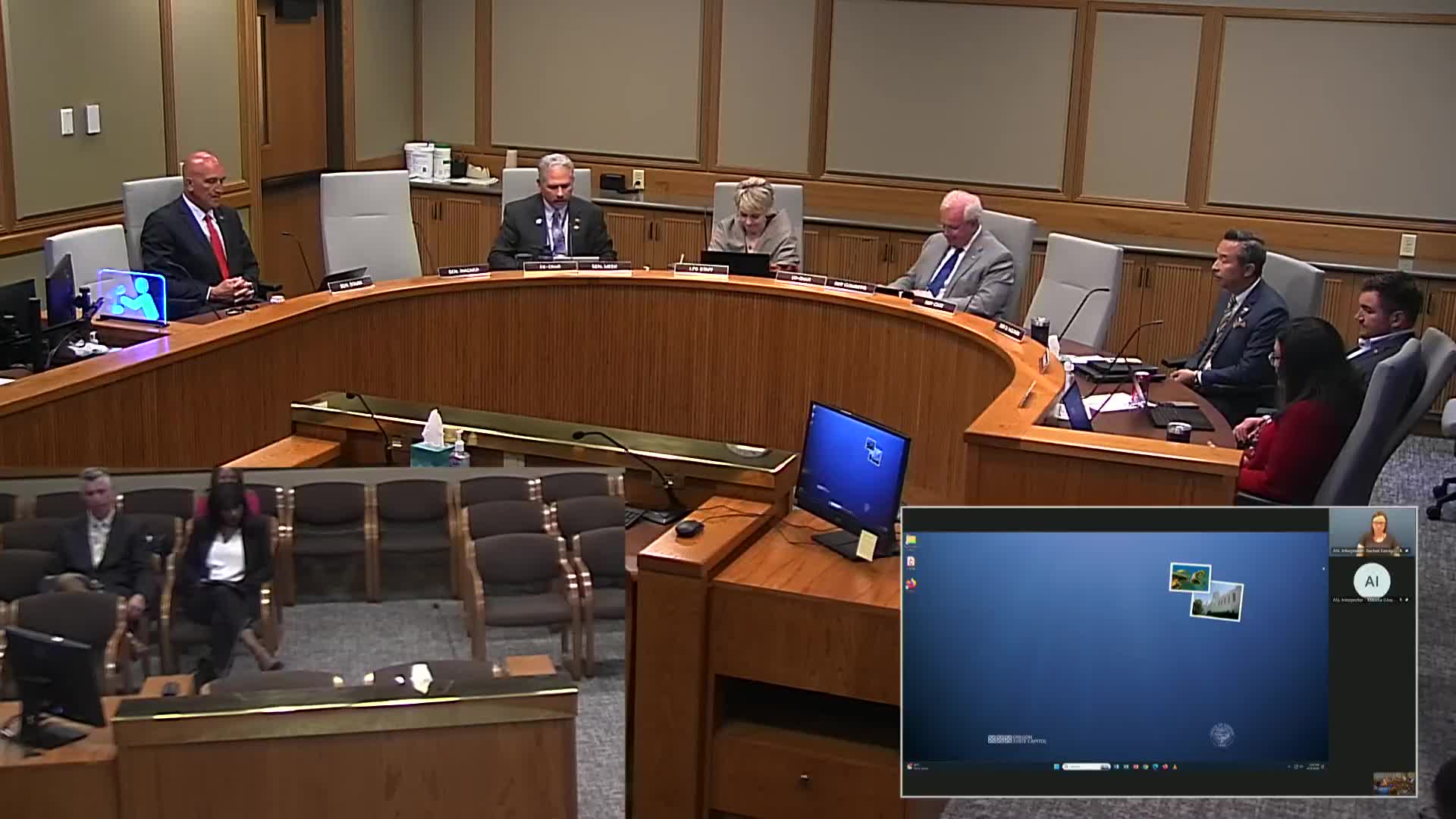
Salem — Oregon Housing and Community Services on April 25 asked the Transportation and Economic Development Subcommittee to approve staffing changes tied to House Bill 5011, policy option package 508, saying roughly $13 million in operational supports would restore 24 positions previously funded one time, shift three positions to manufactured-housing funding and create 16 new roles to run shelter, rehousing and other programs.
Salem — Oregon Housing and Community Services on April 25 asked the Transportation and Economic Development Subcommittee to approve staffing changes tied to House Bill 5011, policy option package 508, saying roughly $13 million in operational supports would restore 24 positions previously funded one time, shift three positions to manufactured-housing funding and create 16 new roles to run shelter, rehousing and other programs.
The staffing request comes as OHCS implements a large increase in homelessness and housing investments recommended in the governor's budget. "People are the most important aspect of any organization and ours is no different," OHCS Executive Director Andrea Bell told the committee. The agency said the additional staff would support homeless services, affordable rental housing programs, centralized administrative functions and a larger Homeless Management Information System (HMIS).
Why it matters: Committee members said the state’s investments have grown far faster than the agency’s staffing and pressed OHCS on how much of new funding will reach people versus administrative overhead. OHCS officials said agency operations must scale with new contracts, reporting requirements and expanded grantee networks to ensure accountability and outcomes.
OHCS outlined the package as follows: the total operational-support request is a little over $13 million; it would make permanent about 24 positions that were previously one‑time hires linked to the governor’s executive order on homelessness; it would move funding for three positions to support manufactured-housing programs; and it would add 16 net-new positions, most of them to the housing stabilization (homeless services) and central services teams.
Agency officials gave more context on scale: OHCS said homeless-services funding in the governor's recommended budget rose from about $97 million in the 2021-23 recommended budget to about $911 million in the 2025-27 recommended budget, while staff in the homeless-services team would expand from roughly 17 positions then to about 50 under the proposed structure. The agency said the statewide system now includes roughly 4,800 shelter beds and that about 3,300 people were rehoused in the current biennium.
OHCS described organizational changes tied to the staffing ask. The agency said it has reorganized its housing-stabilization functions to create a distinct homeless performance and evaluation team (to improve HMIS data quality and program evaluation) and a policy, planning and operations team to manage new initiatives and contracts. OHCS said the HMIS work will help providers case-conference and avoid duplicate awards and inefficient service delivery across counties.
On affordable rental housing, OHCS noted it is Oregon’s largest division with more than 100 staff and described a shift away from repeated competitive rounds toward a centralized application process intended to accelerate deal construction. The agency said the governor's recommendation includes about $780 million in "article 11 coupons" aimed at producing tens of thousands of units and that roughly $3 billion in development projects now sit in the agency's active pipeline.
Lawmakers pushed back on administrative overhead and mission creep. Representative Nguyen asked for outcome comparisons between the prior biennium and the current one to understand how many more people are being served, and he requested follow-up materials showing outputs and the degree to which funding reaches households rather than being consumed by administrative costs. "In order to inform our future outcomes, it would be good to see what we've achieved so far," Representative Nguyen said.
Co-Chair Gomberg voiced a separate concern about duplication with local providers and used the phrase "mission creep," asking why OHCS would need many more staff if community action agencies and local partners continue to deliver front-line services.
OHCS responded that the state is now administering many more contracts and a broader set of providers—"probably an excess of 30 to 40 different providers"—so state staff are needed to oversee reporting, compliance and coordination in places that lack local resources. The agency agreed to provide the committee with additional follow-up: a written disaggregation of how the governor's recommended budget funds translate into direct outcomes, an administrative-cost breakdown for grantees and a list of nonprofit partners used in the current biennium.
Other specifics discussed: OHCS said about five or six of the 16 new positions would support affordable rental housing, and that a larger HMIS team will be roughly 10–12 staff. The agency described several limited-duration roles tied to earlier bills including positions to release five‑year forgivable liens from a COVID-era foreclosure-prevention program, positions tied to a manufactured-home replacement program (about $2.5 million), and half-time positions linked to a $20 million modular-housing grant program created by prior legislation.
The agency also noted that several staffing costs are effectively fixed for the current portfolio of contracts: a reduction in funding for some policy packages would not reduce administrative workload proportionally because the same number of contracts, reporting and data requirements remains in place.
No formal action or vote occurred during the informational meeting. Committee staff said they posted an updated presentation to OLIS and that the subcommittee will meet the next day to hear from the Oregon Business Development Department on ports and dredging.
Ending note: OHCS told lawmakers it would return the requested follow-up data on program outcomes, administrative-cost shares and a list of grantees to help the subcommittee evaluate whether the staffing ask is proportionate to the proposed growth in homelessness and housing investments.