Get Full Government Meeting Transcripts, Videos, & Alerts Forever!
Get email alerts on the Ocean Health topic
No spam. Unsubscribe anytime.
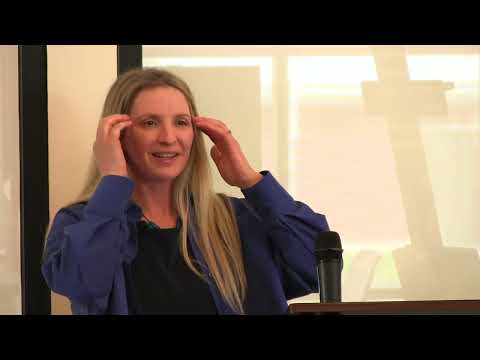
Dr. East Keaton Britton urges 'blue attunement' in Missoula lecture
Summary
Dr. East Keaton Britton, a marine social scientist and ocean activist, told a Missoula audience that reconnecting with water—what she calls “blue attunement”—can improve well‑being and bolster conservation, drawing on science, folklore and personal surfing experience.
Dr. East Keaton Britton, a marine social scientist, surfer, writer and ocean activist with a PhD in Environment and Society, on Tuesday spoke at the Montana Museum of Art and Culture in Missoula about what she calls “blue attunement”—a practice of aligning body and attention with nearby waters to support physical and emotional health and encourage stewardship.
Blue attunement, Britton told the audience, blends “story, embodied knowing, science, mythology and even language” to create “a way of being” that reconnects people with rivers, lakes and seas. She opened by recognizing the region’s Indigenous stewards, saying she acknowledged “the traditional, ancestral and unceded territory of the Salish, Kootenai and Pend d’Oreille people.”
Britton described water’s multisensory effects and presented research and anecdotes that tie physical immersion to measurable health outcomes. “Water leaves its fingerprint on us,” she said, summarizing findings from surf microbiome studies that show regular ocean immersion alters human microbial communities. She also noted broader ocean changes, saying the ocean “gives us the air we breathe—over 60% of the oxygen in the atmosphere”—and that its chemistry is shifting; she told the audience ocean acidity and warming are altering marine systems.
Drawing on personal stories from Donegal, Ireland, and examples from Hawaii and Sri Lanka, Britton framed surfing and other water practices as forms of attunement that can help people process grief and trauma and rebuild community ties. She told the crowd about Sea Sisters, a nonprofit surf and swim program formed after the 2004 tsunami to help women and girls reconnect with the sea; one member, Britton said, overcame a fear of the beach after a surf lesson and later brought her daughters to the water.
On conservation, Britton addressed salmon declines. She said Atlantic salmon populations in Ireland are “really not good” and added, “it’s quite likely that even in my lifetime they might be gone, as we know them.” She urged acknowledging grief over losses while also supporting restoration where possible.
The event closed with questions from the audience. Britton expanded on the surfer‑biome research (work she attributed to Hawaiian researcher Dr. Cliff Kapono) and discussed how myths and indigenous knowledge complement scientific findings. She also noted the limits of local actions and the large, systemic threats facing oceans, saying the scale of the problem is “huge” but advocating for a mix of science, art and local stewardship.
Copies of Britton’s books Salt Water in the Blood and Ebb and Flow were available after the talk, and the moderator, Erin Costello Wecker, associate professor of English and Irish Studies at the University of Montana, invited the audience to continue the conversation.