Get Full Government Meeting Transcripts, Videos, & Alerts Forever!
Get email alerts on the Local Comprehensive Plan topic
No spam. Unsubscribe anytime.
Yarmouth planning board advances draft local comprehensive plan; hires consultants for mixed‑use study
Summary
At its April 16 meeting the Town of Yarmouth Planning Board reviewed a revised draft of the local comprehensive plan, discussed water, wetlands and Route 28 policies, and confirmed consulting work and a timeline for a community planning grant to study mixed‑use development.
The Town of Yarmouth Planning Board on April 16 reviewed draft No. 2 of the town's local comprehensive plan and confirmed consultant work under a community planning grant to develop mixed‑use guidance for Route 28 and other village areas.
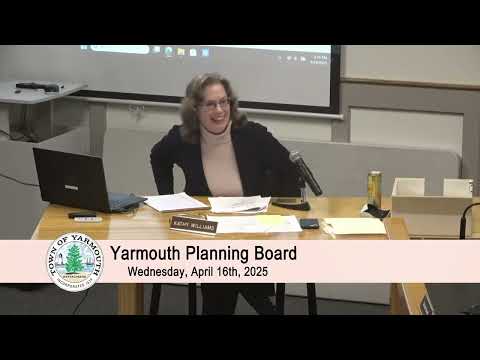
The discussion identified key issues — drinking‑water contamination (including PFAS), freshwater‑pond deterioration, wastewater and denitrification goals, protection of wetlands and vernal pools, and the need for a clearer vision for redevelopment along Route 28. Town planner Kathy Williams, who led the presentation, told the board the consulting teams will deliver benchmarking and design concepts that the board must review before the June 30 grant deadline: "the benchmarking needs to be done by April because that's something that needs to be done for the next consultant," Williams said.
Why it matters: the local comprehensive plan sets the town's policy direction on development, water and wastewater priorities, and climate and transportation resilience. Board members said clearer language and specific action items are needed so the plan guides permitting, public investments and future zoning changes.
Board comments and edits focused on tone and scope. Members asked the plan to identify problems (for example, "threats to drinking water quality, especially PFAS and other contaminants") rather than prematurely listing solutions. The board agreed to tighten wording so key issues read as problem statements rather than goals. On community design, members pressed for a vision for Route 28 to guide where municipal wastewater should be used to encourage redevelopment and to preserve commercial land for business uses. "Balancing a mix of commercial and residential development along Route 28" was adopted as preferred phrasing after members rejected language that said there could be "too much" residential development.
Natural‑systems edits included adding the Cape Cod Commission's freshwater pond work where applicable and an action item to "work with regional partners to evaluate potential for joint monitoring and mitigation strategies." The board also discussed wetlands buffers, invasive species mitigation efforts at West Yarmouth parks, and concerns about roof and stormwater drainage flowing directly to a vernal pool on the Mattakee site.
On wastewater and infrastructure the board reiterated the town's denitrification goals. Members noted the town transfer station and septage receiving facility remain regionally important even after sewer expansion because trucks from neighboring towns still use the site and grease cannot be accepted into sewer systems. The board discussed the need to keep the transfer facility viable under the town's capital plan.
Transportation and connectivity items included broadband access and bridge infrastructure. Members asked that the plan acknowledge the role of the Sagamore and Bourne bridges and Route 6 in the town's economy, and they discussed working with regional partners to expand OpenCape and other high‑speed service into underserved pockets.
Consulting work and schedule: the Affordable Housing Trust provided a $25,000 local match for a community planning grant. The board confirmed it has selected supplemental consultants: BSC Group will supply benchmarking and regulatory review and Union Studios (with Horsley Witten Group subcontracting) will prepare mixed‑use layouts and concept renderings. Williams asked board members to provide examples of mixed‑use buildings they like and to keep Wednesdays available for extra meetings in May and June; she said the grant work and supplemental services must be completed by June 30. "We can't hold them up in any way," she said, urging the board to meet April 30 if possible for an interim review.
Board members also discussed action items the plan will carry forward, including revised architectural and site design standards, options for a transfer‑of‑development‑rights mechanism, and potential expansion of the town's Medical Overlay District if the public hearings and outreach show support.
The board did not take final votes on plan language at the April 16 meeting. Members agreed the planner will incorporate the edits, coordinate with consultants, and return products for the board's review in late April and May.
Community engagement and next steps: Williams said consultants will present benchmarking materials and early concept sketches to the board and that the planning board may need extra meetings in May and June to meet the grant deadlines. The board asked staff to notify members when draft materials are available and to schedule an April 30 meeting if a quorum can attend. The planning board also directed staff to coordinate public outreach and to clarify technical terms (for example, the meaning and implications of expanding an overlay district) before broad public hearings.