Get Full Government Meeting Transcripts, Videos, & Alerts Forever!
Get email alerts on the Workplace Misconduct topic
No spam. Unsubscribe anytime.
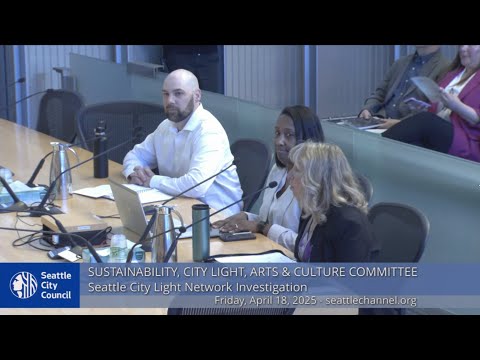
City Light leaders brief council committee on network‑group investigation; officials announce multiple disciplinary and culture‑change steps
Summary
Seattle City Light leaders briefed the committee on the results of an outside investigation into misconduct in the utility’s network group and outlined disciplinary actions and a multi‑part plan to change workplace culture and oversight.
Seattle City Light leaders briefed the Sustainability, City Light and Arts & Culture Committee on an outside investigation into misconduct in the utility’s network group and outlined immediate and longer‑term steps to change workplace culture, increase reporting, and protect employees.
At the committee meeting Don Lindell, general manager and chief executive officer of Seattle City Light, said the network group — part of Transmission and Distribution Operations — had “a pattern of very disturbing and concerning misconduct.” Lindell told the committee the utility worked with the press to announce the investigation publicly and described actions already taken and planned to improve safety and accountability.
Scope and disciplinary outcomes City Light provided the committee with counts and outcomes from the inquiry: the utility has about 1,800 employees; the network group has roughly 90 members; City Light said 40 employees were investigated in connection with the inquiry. Lindell reported disciplinary outcomes including five terminations, seven suspensions, nine written warnings and 13 employees assigned training. Lindell said apprentices in the group reported feeling pressured to drink “in order to succeed in the program.”
Steps already taken and planned City Light officials described multiple changes put into effect or under way: - Mandatory‑reporting training for all people leaders, including the general manager, to ensure supervisors know reporting obligations. - Anti‑retaliation posters and an anonymous hotline/ombuds contacts to increase reporting options. - Employee support and coaching for those impacted by the misconduct; outside support services were engaged for survivors. - Routine checks of work vehicles and work areas, and explicit rules that drinking or recreational drug use before or during work and on breaks is a terminable offense. Lindell said, “We will not tolerate drinking or recreational drug use before work, at breaks, at lunch, dinner, or between work and overtime shifts. This is a terminable offense.” - Required on‑site leadership visits and goals for supervisor engagement in the field to improve oversight and relationships. - Leadership training focused on conflict resolution, problem solving and safe team building; changes to overtime policies and clearer transparency on overtime assignment.
Office of People & Culture and investigative process Davana Johnson, People & Culture officer, said managers and employee relations staff reached out to employees and provided safety plans for those who had reported concerns. Johnson told the committee that employees were afraid to come forward for years and that a leadership change in 2023 helped some employees feel able to speak. She said some staff who remained in the department committed, during disciplinary meetings, to change behavior and to not retaliate.
Rob Santoff, transmission and distribution operations director, described immediate leadership briefings and meetings held with crew chiefs and the network group. He said leadership secured commitments during an extended meeting to “move our culture into the proper place” and that open, ongoing group conversations would continue.
Council questions and oversight requests Councilmembers pressed utility leaders on past handling of allegations, survivor protections, random drug and alcohol testing and how the committee and council would receive ongoing updates. Councilmember Teresa Moore said the pattern of allegations dating to 2017 is “appalling and unacceptable” and urged stronger measures, including contemplating random drug and alcohol testing for positions where on‑the‑job impairment could create public risk. Moore also asked how survivors who reported felt about continuing to work alongside individuals with sustained allegations.
Lindell and Johnson said the utility is evaluating testing approaches consistent with Washington law and collective bargaining agreements and noted that the utility already conducts random testing for CDL holders. Lindell said the utility would consult its attorneys and labor partners as it develops any broader testing program.
Accountability and follow‑up Lindell told the committee he had fired the people identified as the “ring leaders” in the investigation and described an ongoing partnership with union leadership. He said the utility will use repeated culture surveys and field visits to measure progress; cited culture survey results that showed low agreement on responsiveness and cross‑functional work (29%–34% on several items) while noting strengths such as 87% agreement that coworkers treat each other with respect.
Several councilmembers asked that City Light return to the committee to report progress. Councilmember Alex Saka explicitly requested that the utility come back later in the year and on a cadence thereafter so the committee can monitor progress and hold leaders accountable.
What the committee recorded: This item was a briefing and discussion; there was no committee vote. Committee members thanked City Light leaders for the briefing and requested follow‑up oversight and reporting.