Get Full Government Meeting Transcripts, Videos, & Alerts Forever!
Get email alerts on the Budget topic
No spam. Unsubscribe anytime.
Finance Committee narrows budget target, presses audit timeline and re‑evaluates incubator funding
Summary
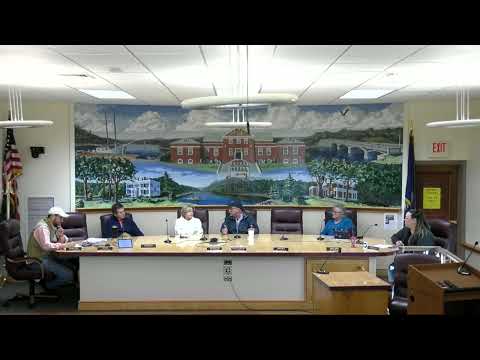
Members of the Finance Committee debated a 2.9% inflationary budget target, the status of an overdue audit and options for the Union River Center for Innovation during a long budget discussion that included public comments about taxes and city economic development.
Members of the Finance Committee spent the meeting reviewing the draft municipal budget, pressing staff on an overdue audit and discussing the future of the city-owned Union River Center for Innovation, with residents raising concerns about taxes and the incubator’s costs.
Charlie, a Finance Committee member, opened the committee’s substantive discussion by saying, “I’ve been at this inflationary 2.9% target,” and that he believes “we have an excellent chance of getting there, at the same time, making some pretty critical investments in parks and recreation, our staff, our public safety units, some needed capital investment.”
The committee discussed several process changes intended to streamline review of department operating budgets. One recurring suggestion was to accept departmental operating budgets that stay within the consumer price index (CPI) — and only “dive into the weeds” on line items that exceed that benchmark. Advocate Steve (Finance Committee member) argued that if department operating budgets are within the CPI, “there could be less time spent on the department head,” while others, including Nancy (Finance Committee member), pushed back that councilors still need enough detail to understand and defend budget choices before voting.
Audit, disclosures and tax timing
Committee members and staff repeatedly returned to the city’s financial audit. A staff member said meetings are scheduled with the auditor (named Cassello in the record) and set an aspirational completion date of April 30: “I’m not gonna hold my breath, but I’m gonna do everything in our power to get them everything they need,” the staff member said. Committee members said timely audits matter both for internal accountability and for getting tax bills out on schedule. One staff comment projected tax bills would go out “a month more than earlier than last year” if the process stays on track.
The committee also discussed an annual disclosure requirement for people who receive more than $1,000 from entities that do business with the city. Committee members said Sue circulated the request and staff agreed to resend it to ensure everyone files what the transcript described as a statutory disclosure.
Solid waste contract, vehicles and capital priorities
Committee members flagged the upcoming solid‑waste contract with Casella as a negotiation to begin and discussed vehicle purchases and other capital items that remain under review. The city manager and staff emphasized that some capital items are likely to be prioritized in coming meetings and that more inventory work is underway: “I think the May meeting, we’re trying to get the inventory of all land that the city owns,” Charlie said, describing work to separate city‑owned parcels from tax‑acquired parcels and to get condition assessments.
Union River Center for Innovation and public comments
Several residents spoke during public comment. Jared Wilbur, a resident, praised the finance process — “you guys have done, like, an awesome job compared to, like, past” — and asked whether the city’s incubator was a net cost to taxpayers and whether its rent terms were subsidized. The record shows staff saying the Union River Center for Innovation (referred to in the transcript by several short forms) is under review and that a consultant has been engaged to “reimagin[e]” the facility. Staff estimated prior analysis showing a net loss on the building of roughly $25,000 a year and said filling vacant spaces and rethinking programmatic priorities are immediate goals.
Roger Gilly, a resident, urged the committee to prioritize revenue growth to reduce pressure on property taxpayers: “The big thing that keeps coming up, with everybody that talks to me is, you know, taxes, taxes, taxes,” he said, arguing that attracting larger commercial development could broaden the tax base.
Code enforcement notice mentioned
During public comment a citizen described a recent code‑enforcement civil notice on private property and cited a figure of about $47,000 in a notice; staff responded that some of that information is public and that staff would follow up with more detail privately and with records where appropriate.
What’s next
Committee members identified several follow‑up items: staff will resend the disclosure notice for recipients of more than $1,000, continuing work on a full inventory of city‑owned land and condition assessments, begin negotiation and review related to the Casella solid‑waste contract, and press the auditor to finish work with the stated April 30 goal. Committee members also scheduled at least one more budget meeting to finish remaining items, including vehicles and outstanding capital questions. The record shows members divided on how much detail the full council needs versus what can be filtered earlier in the process, but the group repeatedly described the conversation as a sign the finance process has “improved.”