Get Full Government Meeting Transcripts, Videos, & Alerts Forever!
Get email alerts on the Rebuild Fireflow topic
No spam. Unsubscribe anytime.
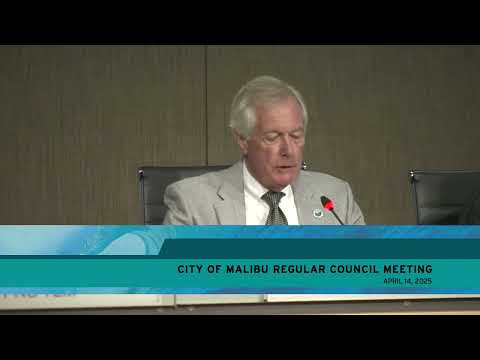
Council presses fire department, water district for rebuild solutions; schedules work sessions on septic, geotech and self‑certification
Summary
Malibu City Council set focused work sessions to address fire‑rebuild bottlenecks after lengthy public testimony about water supply, geology and timelines. Council directed staff to bring fire‑flow options and potential on‑site water‑storage solutions back for a council discussion with LA County Fire and Water District 29.
Malibu City Council directed staff to assemble technical briefings and return with actionable options to help homeowners rebuild after the Palisades and Franklin fires, focusing first on fire‑flow gaps in eastern Malibu and options for temporary on‑site water storage.
The council set a special work session on April 24 to cover septic/sewer policy, geotechnical standards and self‑certification rules identified by residents as critical rebuild bottlenecks. Councilmembers also asked staff to schedule the planned “rebuild czar” item for the next regular meeting and to hold a May 8 session to examine whether additional outside resources are needed to accelerate rebuilding.
Why it matters: homeowners on Carbon Mesa and Big Rock described repeated delays tied to required fire‑flow (gallons‑per‑minute and duration) that the regional water system currently cannot deliver. Several residents and consultants told the council that on‑site tanks, temporary hydrant hookups or other interim measures could enable immediate rebuilds while longer‑term infrastructure is planned.
What the council asked for: staff was directed to request LA County Fire and Water District 29 attend the April 24 meeting to explain (1) which specific parcels lack required fire flow, (2) whether temporary on‑site tanks would meet fire department operational needs and (3) what conditions or monitoring the department would require for tanks or other interim measures. Councilmembers asked staff to return with draft technical options, cost ranges and recommended eligibility rules so the council could decide whether to authorize temporary relief for fire rebuilds.
Public testimony and context: dozens of residents from Carbon Mesa, Big Rock and other fire‑impacted neighborhoods spoke during the meeting, saying many households cannot begin reconstruction until a fire‑flow solution is in place. Speakers — including homeowners, local engineers and commission members — urged the council to allow temporary water storage on lots and to clarify whether rebuilt homes can reuse existing foundations where safe and appropriate.
Staff and council comments: Acting city staff said the city’s recent Local Coastal Program changes and emergency coastal development (ECDP) rules already allow certain rebuild pathways, but that different parcels present distinct constraints (geology, septic, slope). Council members emphasized the city’s limited bandwidth and asked staff to present narrow, implementable choices rather than open‑ended studies.
What’s next: A technical package and a public agenda item will return to the council following the April 24 work session. The council’s stated priorities are to (a) identify interim fire‑flow measures that the fire department will accept for rebuilds, (b) clarify geotechnical self‑certification rules for lots that previously had safe foundations and (c) accelerate permit workflows for verified rebuilds.
Ending: City staff said they will coordinate with LA County Fire and Water District 29 and bring back the requested technical briefings and policy options at the April 24 meeting; councilmembers said they will decide on next steps after hearing those agencies’ assessments.