Get Full Government Meeting Transcripts, Videos, & Alerts Forever!
Get email alerts on the Commercial Redevelopment topic
No spam. Unsubscribe anytime.
Committee sends Baobab Fair redevelopment-district request to formal, recommends approval
Summary
The committee voted to send a request to establish a Commercial Facilities Redevelopment District for Baobab Fair at 16900 East Warren to formal with a recommendation to approve; the district would allow future tax-exemption certificates to be requested after the developer completes the investment.
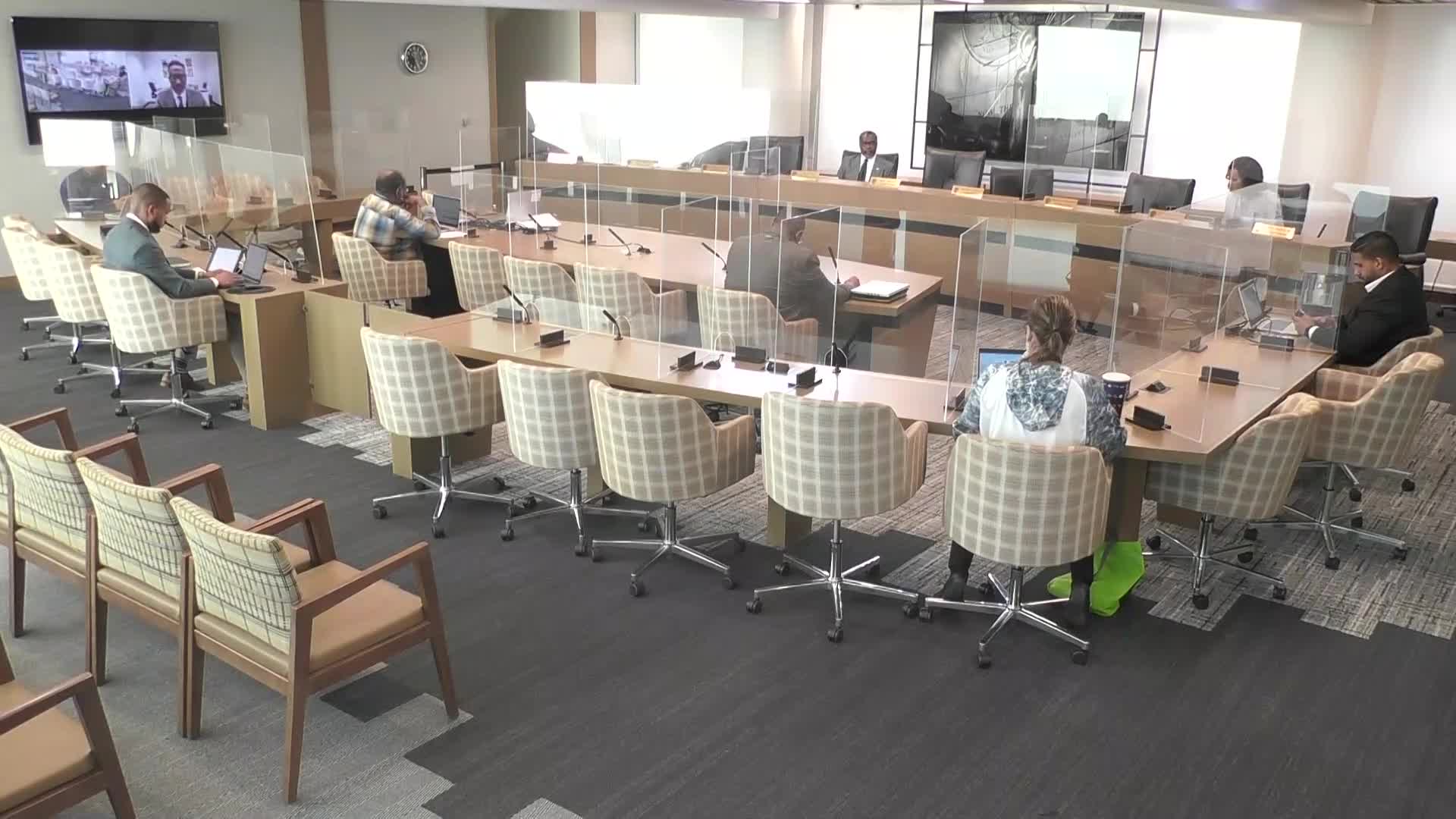
The Planning & Economic Development Standing Committee on April 17 moved to send a request to establish a Commercial Facilities Redevelopment District for Baobab Fair, R.E. LLC, at 16900 East Warren to formal with a recommendation to approve.
The district request, filed under the Commercial Facilities Exemption Act (Public Act 255 of 1978), was presented by Nicole Scott of the Detroit Economic Growth Corporation and Justice Cook of the Housing and Revitalization Department. Scott told the committee the project’s “total development costs are $1,600,000” for a 3,104-square-foot restaurant space, and that the developer estimates about 20 construction jobs and 30 post-construction jobs tied to the project. Scott said the assessor’s office had confirmed eligibility on Feb. 3, 2025, and that the abatement request itself would come later if the property owner applies for a certificate.
Why it matters: establishing a commercial redevelopment district only creates eligibility to request a tax-exemption certificate; it does not itself grant the tax abatement. Scott explained the estimated annual tax burden to the developer in the first full year would be about $5,000, with the abated portion roughly $7,000 a year; once any abatement ends the full tax bill would be just under $14,000 (figures presented by DEGC).
Developer Hammis Namba, identified in the hearing as the co-founder and co-owner of Baobab Fair, described the business and its local roots: “Baobab Fair is more than just a restaurant. It’s a place where I celebrate East African culture, provide jobs, and bring people together,” he said, adding the project would be the company’s third Detroit restaurant and that construction could start if the committee’s actions and financing proceed as expected. Architect Cassandra Kale and consultant Omar Uddin joined the presentation to describe building repairs, ADA accessibility upgrades, insulation and energy-efficiency measures, window and roof replacement, Energy Star appliances and accessible restrooms.
Committee members and public commenters asked about timeline, parking, accessibility and local hiring. Councilmember Leticia Johnson asked when the community would see on-site activity; Namba said the team was about “85%” finished with preconstruction and hoped to start work in October (year given by presenter as “this year”). Johnson pressed for stronger universal-design features and suggested automatic doors; Cassandra Kale said automatic doors could be added but would increase cost. On hiring, Namba said the team planned to recruit locally and attend neighborhood job events; he said several current staff live on the East Side and that the project has already generated local interest.
Members of the public who spoke during the project’s public hearing included Chase Cantrell of Building Community Value, who urged approval and described the developer’s participation in neighborhood development training; several callers expressed support for the restaurant and for bringing dining options to the East Warren corridor.
A motion by Councilmember Leticia Johnson to send the district request to formal with a recommendation to approve passed by voice vote with no objections.
Next steps: if a property owner in the proposed district later applies for an exemption certificate, that certificate must be approved by Detroit City Council and by the Michigan State Tax Commission before any tax abatement takes effect. The district designation alone does not change tax liability until a certificate is issued and approved.