Get Full Government Meeting Transcripts, Videos, & Alerts Forever!
Get email alerts on the Brownfields topic
No spam. Unsubscribe anytime.
Council committee interviews Crystal Rogers for Brownfield board; asks law to check conflicts and residency
Summary
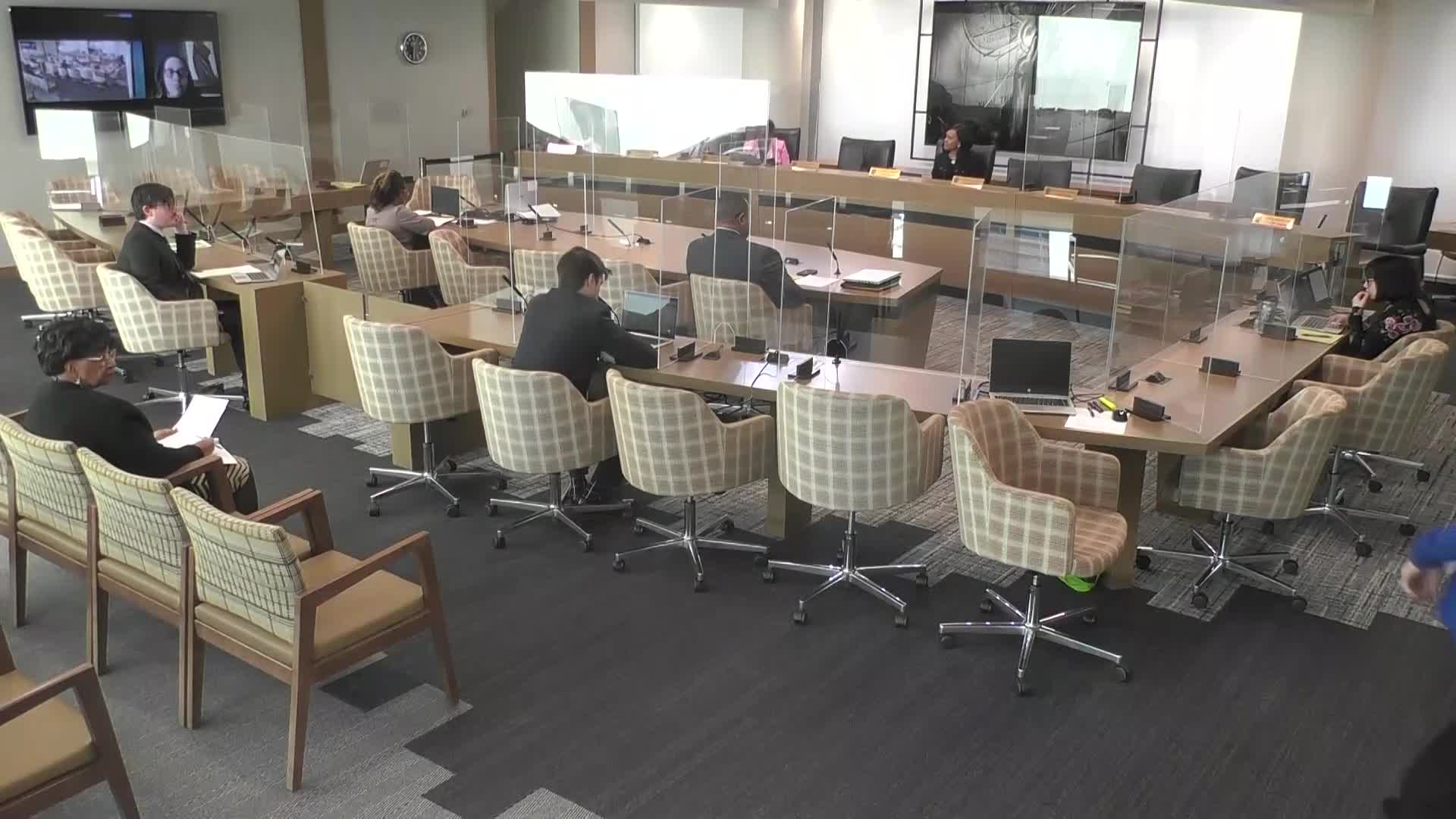
The Internal Operations Standing Committee interviewed Crystal Rogers, the mayor's nominee to the Detroit Brownfield Redevelopment Authority, and voted to ask the Law and Legislative Policy Division to check for conflicts of interest and whether residency is required before bringing the appointment back to the committee.
The Internal Operations Standing Committee interviewed Crystal Rogers on April 16 as the mayor's nominee to the Detroit Brownfield Redevelopment Authority (DBRA). Committee members asked the Law and Legislative Policy Division (LPD) to research potential conflicts of interest for Rogers and to confirm whether board members must live in Detroit; the committee voted to bring the appointment back at a later date.
The committee heard Rogers describe her background and technical experience. Rogers said she is "general manager for environmental affairs with BC," has worked in Detroit for about 25 years, studied chemistry, started in the health department and moved into environmental affairs, and has reviewed brownfield plans and hazardous waste permitting. "Any opportunity I have to help my brothers and sisters stay in the city of Detroit, I'm going to take it," Rogers said.
Members pressed Rogers and LPD on governance details the DBRA handles before matters reach council. Council member Mary Waters asked whether Rogers has the time and discussed that DBRA decisions include community outreach and financial review beyond the technical work Rogers described. Attorney Philip Keller of LPD said he was not aware of any conflict under the Brownfield Redevelopment Act but agreed the division would "look into" the question further. Edward King, parliamentarian and LPD, clarified differences between the DBRA board and the Brownfield Community Advisory Council and said the committee should be provided the precise composition and appointment process.
The committee recorded three formal requests: LPD was asked to draft a written response on whether any conflict of interest exists for Rogers; LPD was asked to provide the DBRA board composition and confirm any residency requirement; and the committee postponed the appointment (line item 7.1) to a date to be determined so those items can be answered. The motions were approved "hearing no objection."
Council members also raised anticipated DBRA work, including whether the Renaissance Center could qualify as a brownfield and whether tax exemption packages approaching $250 million for demolition would be appropriate; Rogers declined to take a position without reviewing community input and a specific plan. Rogers said she had not reviewed site assessments for the Renaissance Center and would reserve judgment until the DBRA process, including community hearings, had run its course.
The committee closed the interview after agreeing to request the LPD report and additional composition details before acting on the nomination.