Get Full Government Meeting Transcripts, Videos, & Alerts Forever!
Get email alerts on the Student Wellbeing topic
No spam. Unsubscribe anytime.
District presents spring 2025 well-being survey: most students report belonging but staff and district support responses leave opportunity for growth
Summary
Mukilteo School District presented results from a January well-being survey showing generally positive student responses on belonging and behavior, areas of opportunity in self-management and critical thinking, lower positive responses among some staff groups, and plans to pilot an SEL screener and strengthen MTSS.
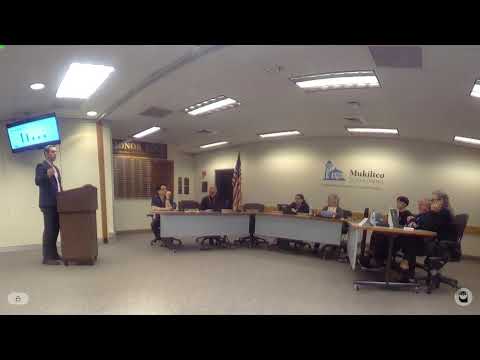
Mukilteo School District staff presented the results of the district’s annual well-being survey, administered in January through the Center for Educational Effectiveness (CEE), and outlined next steps including piloting a social-emotional learning (SEL) screener and continuing multi-tiered systems of supports (MTSS) work.
The presenter, identified in the meeting as Ms. Fabian, told the board that 7,901 students took the district survey: 6,165 students in grades 2–3 and 2,906 in grades 4–12 (the transcript notes slight differences in counts reported). Family responses increased to 845, and staff response overall rose compared with the previous administration. Ms. Fabian emphasized that the survey uses statement-based items on Likert scales and that neutral responses (the “Opportunity Zone”) are important targets for intervention.
Key student findings presented: - Belonging: 83–88% of younger students (grades 2–3) reported having friends at school; 72–78% indicated favorable responses to statements such as “I like this school.” - Self-awareness/critical thinking: About 65–73% of students reported positive responses to statements like “I think of more than one solution when I have a problem” and “When my solution to a problem is not working, I try to figure out what went wrong.” - Self-management: 70–78% of students reported they can concentrate, calm themselves, or pay attention to how they feel; Ms. Fabian flagged these areas as having a broad opportunity zone for growth. - Collaboration/interpersonal skills: 86–88% reported being respectful or comfortable interacting across racial/ethnic backgrounds, while only about 63% said students are involved in problem solving at their school.
Ms. Fabian and board members discussed disaggregation. The presenter reported that positive responses ranged across racial groups; for the sample statement “There is at least one adult in this school I can talk to,” positive response rates ranged approximately 73%–80%, with Pacific Islander students showing higher rates in the sample but small subgroup counts for some groups (e.g., 117 Pacific Islander respondents and 9–11 American Indian/Alaska Native respondents), which the presenter cautioned reduces confidence for small categories.
Staff and family results: - Families: Very positive overall—96% said materials were provided in a language they could understand; about 80% said they feel welcome at their school and that students feel safe. - School staff: Approximately 65% responded positively on collaboration and communication; 69% on effective leadership; 75% on supportive school environments. - District support staff (custodial, transportation, nutrition, etc.): Lower positive responses were reported (about 46%–63% depending on the question), which board members and staff noted as an area of concern.
On methodology and limits, Ms. Fabian explained the survey is perceptual and captures how respondents feel at the time of completion; she noted response rates vary by grade and that elementary grades receive a different (4-point) scale than grades 4–12. She said student demographic items (multilingual learner status and disability) are self-reported in the anonymous student survey; income was not collected.
Planned next steps reported to the board include: - Piloting an SEL screener that will be student-identifiable (or teacher-completed for some students) to identify students needing Tier 2 or Tier 3 supports. - Continuing MTSS implementation through principal and instructional leadership team actions. - Goal-team work to address staff morale, communication, and supportive practices, using interviews, focus groups, and subgroup analysis.
Board members raised questions about response-rate effects (for example, a drop in high-school respondents may affect apparent changes year-over-year) and asked for more granularity at grade and school levels; Ms. Fabian confirmed schools receive grade- and school-level reports and an interactive platform to desegregate data for local use.
Ending: The presenter said the district intends to continue analyzing the data, implement targeted actions, and administer the survey again next January to track changes.