
Laguna Woods backs state reforms for sober living oversight, directs city to prepare supporting correspondence
Get AI-powered insights, summaries, and transcripts
Subscribe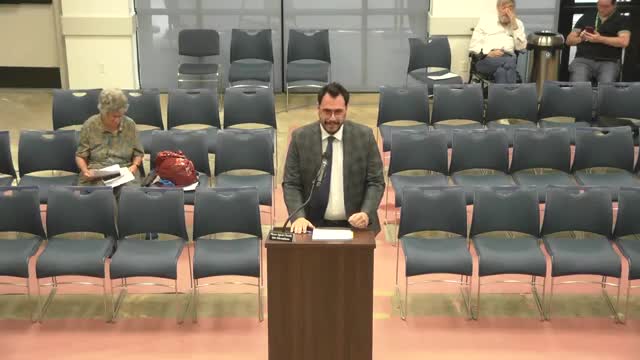
Summary
Council voted unanimously to support recommendations from the California Sober Living and Recovery Task Force and to back related bills aimed at improving state oversight of recovery housing, and directed staff to prepare corresponding mayoral or city-manager correspondence and consider ordinance drafting.
Laguna Woods City Council on April 2025 voted to support a package of state-level reforms and local actions intended to improve oversight of sober living and recovery housing operators.
Connor Medina, regional public affairs manager for the League of California Cities (Orange County division), briefed the council on a set of bills and administrative reforms the League is sponsoring to address complaints about unregulated or poorly run recovery homes. Medina said cities have limited enforcement options under current federal and state frameworks, and that state action is needed to close enforcement gaps. He summarized four sponsored measures, including AB 424 (which would require the Department of Health Care Services to inform complainants of complaint status), AB 492 (notification to cities when a license is approved), SB 329 (shorter timelines for investigations and requirement to inform local leaders when investigations slip beyond set timeframes) and SB 35 (which would permit cities to enforce existing state law on the department's behalf where the department lacks capacity).
After discussion Councilmember Moore moved, and the council seconded, a motion to adopt the staff recommendations: to authorize the mayor to sign or for the city manager to sign correspondence supporting the task force's recommendations and relevant legislative proposals, to register the city's support for the listed bills and task-force recommendations, and to direct staff to prepare an ordinance for future consideration. The motion passed unanimously.
Supporters at the meeting and council members emphasized two points: that recovery housing provides vital services to people in need, and that some operators are alleged to have provided inadequate services while collecting public or private funds with little oversight. Council discussion and public comment noted the need for both stronger enforcement of existing law and assurance that licensed facilities provide appropriate medical or therapeutic supports; speakers urged reforms that increase transparency and accountability without blocking legitimate treatment providers.
The action does not itself change city code; staff will prepare the correspondence and a draft ordinance for later council consideration.